
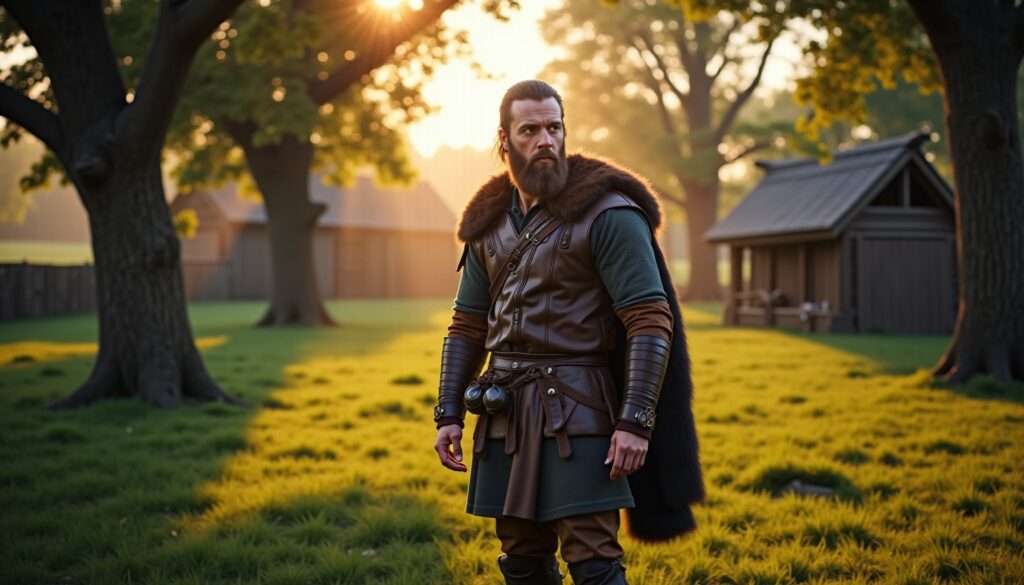
In the bustling world of Assassin’s Creed Valhalla, where axe battles rage and Nordic lands stretch as far as the eye can see, a less conventional form of duel shines brightly: the epic verbal jousts. Far from physical confrontations, these oral exchanges add a new dimension to the video game, blending strategy, narration, and a sharp mastery of speech, subtle reflections of Viking culture. Far from the clichés of brutal warriors, the Vikings of AC Valhalla prove that sometimes, the tongue is sharper than the axe.
These verbal battles are not just simple accessory mini-games, but constitute an important gameplay mechanic, rewarding rhetorical skill and quick wit. Each victory in these jousts increases the character’s charisma, unlocking exclusive dialogues and enriching the main adventure. Geographically spread across Norway, England, and even the mythological realms of Asgard and Jötunheim, these oral trials form a true initiation journey for any player eager to master the art of Viking speech.
This phenomenon captured the attention of enthusiasts in 2026, offering a refreshing alternative to traditional combat and immersing players in a world where every word counts. Let’s dive together into the heart of these mind duels to discover their richness, complexity, and strategies to adopt to triumph.
Verbal jousts in Assassin’s Creed Valhalla: a key mechanism to boost charisma
In Assassin’s Creed Valhalla, the verbal jousts represent much more than a simple fun challenge. Each duel is a battle of minds where your ability to choose the most impactful retort can change the course of your adventure. The charisma gained this way is crucial to unlocking many dialogue options, influencing both relationships with NPCs and the outcomes of certain major quests.
The mechanism appears simple at first glance: facing an opponent, you are presented with three replies, among which only one is strong enough to overturn the adversary’s argument. For example, during the first jousts in Norway, choosing the correct reply like “My boldness and my words will bring you down!” can secure an easy victory. But as you progress toward England or the mythological realms, subtlety and strategy become indispensable.
Charisma does not just improve Eivor’s image. It acts as a key unlocking additional narrative paths. For players seeking a complete experience, it becomes essential to participate in all verbal jousts to optimize this attribute, making dialogues richer and opening doors to alliances or alternative outcomes to conflicts.
Here are the concrete effects of enhanced charisma:
- Unlocking exclusive dialogues: gain options that allow calming or dominating key characters.
- Increased reputation: influence the perception of Viking tribes and Anglo-Saxon kingdoms.
- Facilitation of side quests: some achievements are only accessible with high charisma.
In 2026, the player community praised this narrative integration, which offers greater depth and a striking contrast with the usual physical fights. Thus, verbal jousts are no longer seen as mere supplementary content but as a fundamental element of gameplay, requiring preparation and reflection.
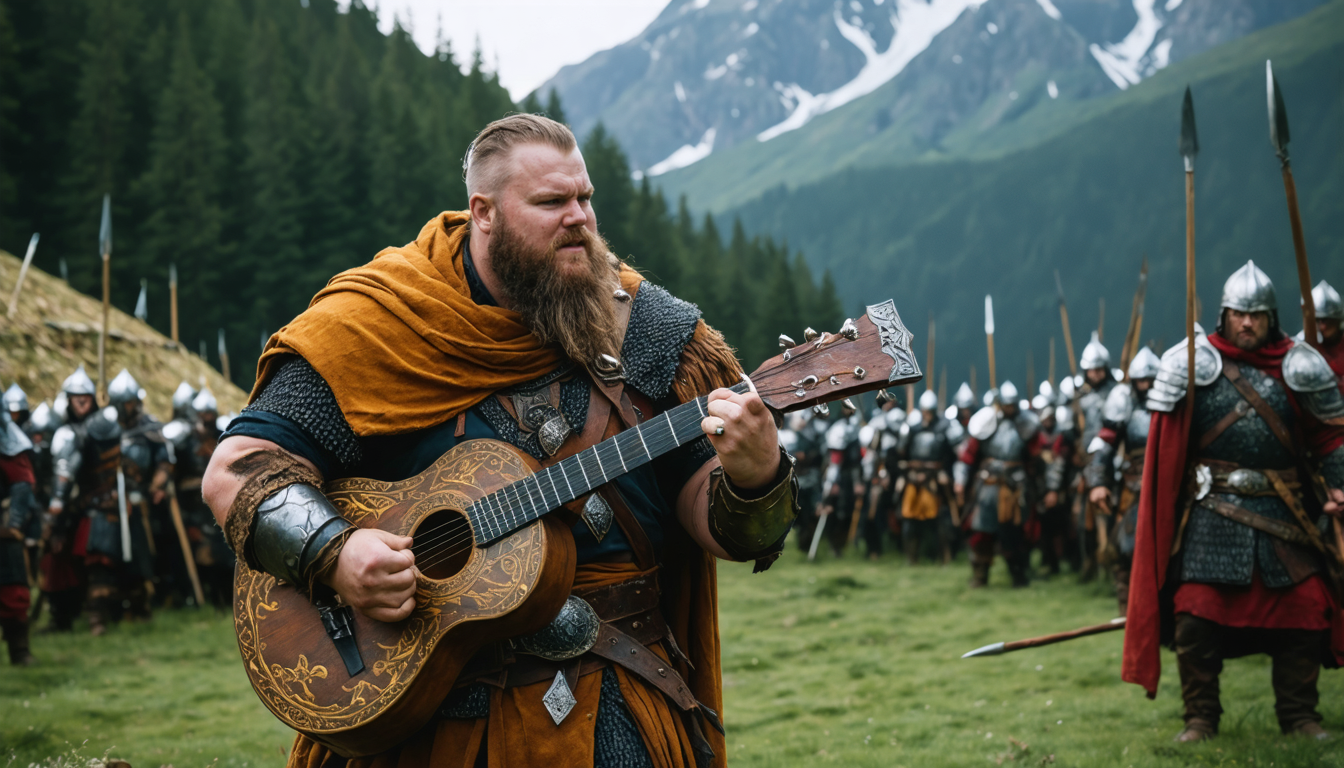
Distribution and location of the 15 verbal jousts: Norway, England, and mythological realms
For players wishing to master the art of verbal jousts in Assassin’s Creed Valhalla, finding each duel is the first step toward complete mastery of this game aspect. In total, fifteen jousts are scattered across three main zones, each offering a distinct difficulty level and unique narrative context.
Verbal jousts are marked on the map by a characteristic bright blue tint, allowing easy identification even during intense exploration. The table below summarizes their geographic distribution:
| Region | Number of jousts | Difficulty level |
|---|---|---|
| Norway | 2 | Easy |
| England | 11 | Medium |
| Asgard and Jötunheim (mythological realms) | 2 | Hard |
Each region has its own distinct atmosphere. Norway offers relatively simple confrontations, ideal for getting started with the mechanics, while England presents a variety of opponents as diverse as the lands it covers, requiring sharp wit. Finally, the mythological realms pose a real challenge by mixing legendary opponents with dialogue rich in symbolism.
For example, in Fornberg, in the icy cold of Norway, you will face your first opponent, a warrior ready to match wits with you. In England, in the ports of Repton or the city of Lunden, the duels become tougher with characters having strong personalities and sharp retorts. Even more surprising, in the mythological realms, you will face Thor, the god of thunder, and Ratatosk, a talking squirrel, who push the verbal exercise to an entirely different and more creative level.
The natural progression is thus to start in Norway, continue with England, and then finish with these disconcerting yet culturally rich mythological jousts. This logic guarantees a progressive skill increase while immersing the player in the diversity of the Viking worlds.
Effective strategies to triumph in Assassin’s Creed Valhalla verbal jousts
The secret to excelling in the verbal jousts of Assassin’s Creed Valhalla does not lie solely in a good knowledge of the replies, but above all in the ability to adopt a tailored strategy. Every option must be carefully chosen, as the slightest misstep can cost the victory, and with it, precious charisma points.
First of all, it is essential to carefully listen to or read your opponent’s argument. Generally, the best path is the one that reverses the attack against its author while staying on the same theme. For example, if the opponent insults your strength, you must respond by emphasizing your superiority or that of your allies, without deviating from the subject raised.
Another method is to observe the duel’s context. Some places or types of opponents favor answers that play on honor, bravery, or even cunning. Don’t hesitate to adapt your speech to this setting to maximize the impact of your phrases. For instance, facing a boastful warrior in a longhouse, a glorious retort about courage can prove decisive.
Moreover, several experienced players recommend saving before each joust. Thus, in case of failure, it is possible to go back and test different answers until finding the winning combination. This method, although tactical, requires time but avoids unnecessary frustration.
- Analyze the topic addressed and choose a reply directly related.
- Turn over the opponent’s argument with finesse rather than seeking brute confrontation.
- Observe body language and atmosphere to guess which reply will have the most impact.
- Save frequently to retry without penalty.
Finally, never underestimate the power of timing. Knowing how to respond at the right moment, in the right context, or even with a particular tone can tip the victory. The “performance” aspect of these verbal duels is an immersive experience that goes beyond simple text choice.
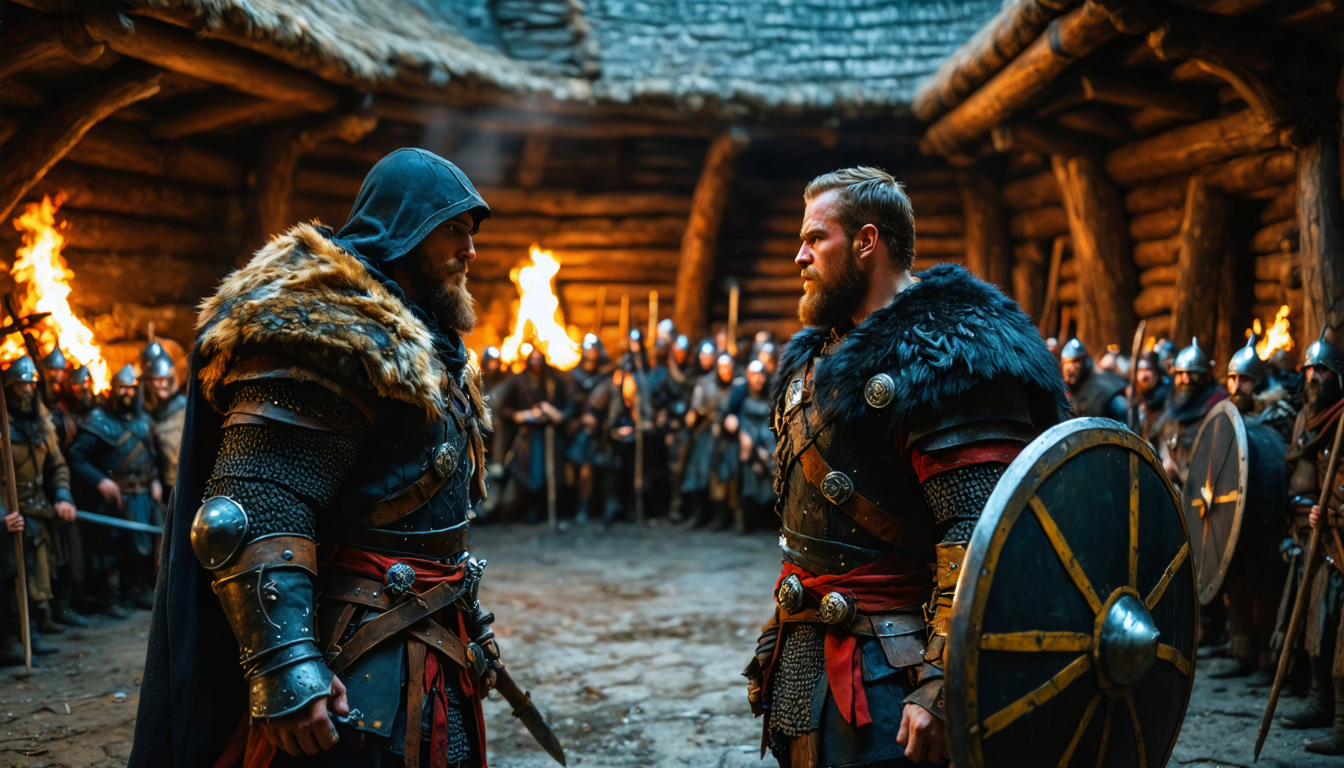
Detailed exploration of jousts in Norway: first steps towards verbal mastery
The first verbal jousts take place in the grand, snowy landscapes of Norway, serving as training ground for any player wishing to sharpen their mind. These first two duels, though technically the most accessible, are essential for understanding the mechanics and subtleties of the system.
In Fornberg, the first opponent challenges you in front of the longhouse, a symbolic place of Viking gatherings. The sentences you must choose are targeted, focusing on boldness and direct criticism:
- “For under your tutelage, my next opponent will be my prey”
- “I’d say you are no artist either”
- “My boldness and my words will bring you down!”
This joust quickly familiarizes you with the importance of turning over the opponent’s arguments without losing the theme of provocation.
Further south, in Stravanger, you meet Manning, a formidable opponent in a more strategic context. The replies that secure victory mix mockery and psychological attack:
- “Sure, but big muscles without backbone are nothing”
- “The question is: who did your mother cheat with…?”
- “Like your arms, he is far from exquisite”
These exchanges already show that verbal combat requires sharp wit and a careful reading of enemy psychology, elements that will be indispensable in the more complex jousts to come.
In summary, these first experiences in the Norwegian lands are the perfect immersion into this often underestimated mini-game, and prepare you to face more challenging oratorical contests with confidence.
Verbal jousts in England: diversity of opponents and increased complexity
England offers a true festival of oratorical confrontations, with eleven verbal jousts scattered across different regions. This area proves to be the heart of challenges, where the diversity of characters and their narrative richness force the player to develop great versatility.
Each location reveals a natural joust style suited to its atmosphere. For instance, in Ledecestrescire, at Repton, Jungulf welcomes you at the port with sharp retorts. Victory requires choosing among these phrases:
- “But defeat comes, I will know how to tame you”
- “And you, you’re just a rat I chase away with a flick of the hand!”
- “If pride is noble, know that arrogance serves you ill.”
In the heart of Lunden, the confrontation with Augusta near the Abbey is one of the most memorable jousts. This refined warrior challenges you with three propositions that demand tact and finesse:
- “But you are endowed with great elegance”
- “Your worth is praised in many tales.”
- “It would be nothing without your so sublime gift”
These examples demonstrate that strategy is not limited to aggressiveness but sometimes must respect mood, emotions, or a softer tactic to carry the victory. The variety of styles in England makes these jousts a rich and stimulating feast for eloquence lovers.
Another notable opponent is Fergal at Grandebridge, whose challenge comes with specific conditions, like obtaining a special key. Here, replies must be both incisive and fitting:
- “But your rhythm is off, for you cannot defeat me.”
- “Admit anyway that your phrases lack brilliance.”
- “If you continue, I prefer to die instantly”
Facing these various characters offers an impeccable school of oral expression and narrative tactics, essential in 2026 to fully enjoy all the possibilities offered by Assassin’s Creed Valhalla.
The mythological jousts of Asgard and Jötunheim: an extraordinary experience
Among all the adventures offered in Assassin’s Creed Valhalla, the verbal jousts in the mythological realms of Asgard and Jötunheim hold a special place. They mark the pinnacle of verbal combat in the game, mixing folklore, Norse legends, and bold challenges.
The duel against Thor, the god of thunder, is a unique experience that few video games offer. This challenge, available only after completing the quest “Large Family,” requires total mastery of the jousting mechanics. The player must not only anticipate the god’s oratorical attacks but also adopt an impeccable strategic stance.
Even more eccentric is the confrontation with Ratatosk, a talking squirrel from Jötunheim, surprising by its originality. This mythical animal challenges Eivor in an exchange of short, sharp, and sometimes absurd phrases, making the trial both complex and hilarious:
- “You’re not clever enough”
- “They cannot overcome my strength”
- “I want to stun you”
These jousts are not only linguistic challenges but enrich the narration by plunging the player into an incredible mythological universe, where every word resonates with ancestral Viking culture. Winning these duels is a true consecration, often compared by players to rare and rewarding feats in other modern games.

Practical tips to master the verbal jousts and achieve the “Master of Slam” trophy
The quest for the “Master of Slam” trophy represents the ultimate challenge in Assassin’s Creed Valhalla. To achieve it, you must win all fifteen verbal jousts scattered across the three key regions. Here are some practical tips to optimize your progress and not waste time:
- Plan your route by starting in Norway, then moving to England before tackling the mythological realms. This progression ensures a gradual increase in difficulty.
- Save systematically before each joust so you can quickly retry in case of failure.
- Analyze the themes addressed during each joust to choose the reply that effectively reverses the opponent’s argument and stays true to the context.
- Don’t neglect observing the opponent’s reactions: their body language can offer valuable clues about the most effective reply.
- Use online aids if you get stuck, but first try to sharpen your listening and strategy skills.
With patience and perseverance, obtaining the “Master of Slam” trophy becomes an accessible and rewarding goal, bearing witness to your true mastery of Viking oratory subtleties. This unusual reward also serves as proof that in Assassin’s Creed Valhalla, words can be as potent weapons as the finest swords or axes.
The cultural and narrative importance of verbal jousts in the Viking world
Beyond their playful function, verbal jousts in Assassin’s Creed Valhalla reflect an aspect deeply rooted in Viking tradition. In this culture, speech held a sacred power, and mastery of language was a sign of wisdom and strength.
Eloquence duels represent an honorable way to settle disputes and prove intellectual worth within clans, while physical violence was not always the wisest solution. These narrative exchanges, fully integrated into the storyline, proudly uphold the nordic culture, avoiding the cliché of the barbarian deaf to the refinement of language.
For instance, the encounter with Thor or Ratatosk goes beyond mere entertainment: it anchors the player in Viking myths and legends, offering an enhanced immersion in this fascinating universe. These verbal combats become a common thread of the narration, skillfully balancing action, diplomacy, and humor.
In 2026, as the video game industry moves toward deeper and more immersive scenarios, the integration of such mechanics in Assassin’s Creed Valhalla illustrates a major media trend: blending gameplay and cultural heritage to create an authentic and engaging experience.
- Verbal jousts embody a non-violent conflict resolution method.
- These duels enrich the development of secondary characters.
- They strengthen immersion in Viking traditions and beliefs.
- They invite reflection on the power of speech in ancient and modern societies.
The balance between playful dynamism and cultural depth makes verbal jousts one of the most appreciated and studied aspects of the title, both within the community and among specialized critics.