
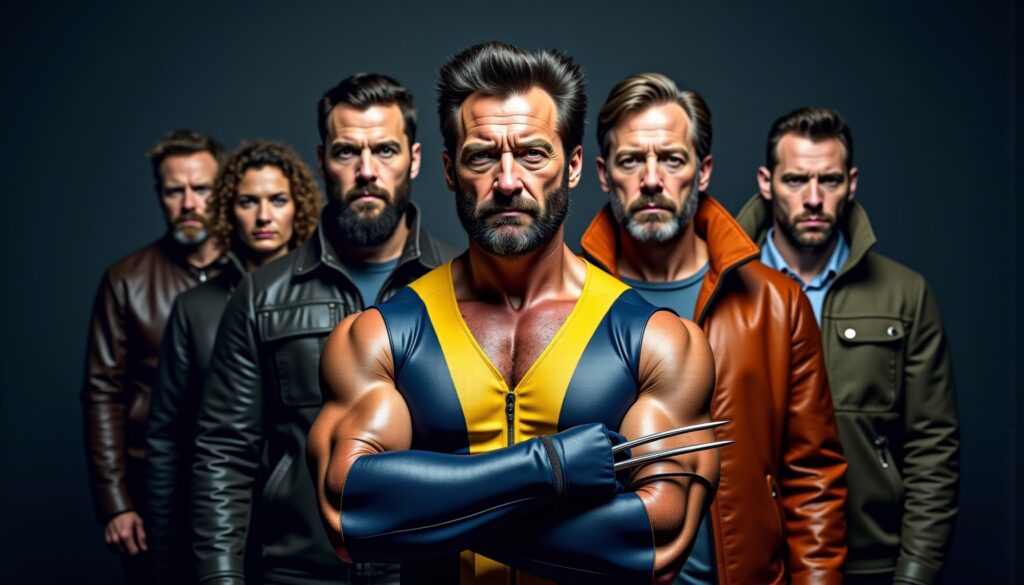
For more than two decades, Wolverine has become an indispensable pillar of the Marvel cinematic universe, brilliantly portrayed by the Australian actor Hugh Jackman. This complex mutant character, with adamantium razor-sharp claws and a near-immortal regeneration ability, has fascinated several generations of viewers through his many appearances in the X-Men films and other Marvel productions. While 2024 marked the long-awaited return of Logan in the film “Deadpool & Wolverine,” his influence now extends both on the big screen and in the video game world with the upcoming exclusive PS5 game by Insomniac Games scheduled for 2026.
But behind this iconic portrayal, many actors have brought the clawed mutant to life, sometimes in more obscure adaptations or in youth roles. From the depiction of the character’s origins to the various developments of his story, each interpretation has added an extra nuance to the Wolverine legend. Let us therefore explore in detail this unique cinematic journey, the challenges of embodying such a particular mutant, as well as the cultural and playful impact of this iconic Marvel figure.
Hugh Jackman, the inseparable actor of Wolverine: a commitment spanning nearly twenty years
The image of Wolverine in the public eye is undeniably linked to that of Hugh Jackman, whose role transcended the comic book universe to become a global cinematic icon. From his first appearance on the big screen in 2000 in “X-Men,” Jackman infused a nuanced and powerful interpretation into the character of Logan, blending brutality, melancholy, and a dramatic depth rarely seen in a mutant hero.
His performance continued to evolve with a series of landmark films, ranging from “X-Men Origins: Wolverine” in 2009, which explored the dark and painful roots of the character, to the final “Wolverine” trilogy (2013, 2017) which offered a more mature and introspective vision of this complex anti-hero. This last installment, “Logan,” was particularly praised for its dark, almost modern western approach, where the mutant’s vulnerability is revealed through a story that ends his cycle of apparent immortality.
What is remarkable in Hugh Jackman’s work is his ability to embody Wolverine’s dual face, both brutal and human, capable of murderous rage but also deep attachment. This mastery has greatly contributed to embedding the character in the collective imagination, to the point that his return in 2024 in “Deadpool & Wolverine” became a major event for fans and critics alike.
Jackman’s longevity in this role is exceptional in the film industry where franchises evolve rapidly. His decision to retake the mantle of Logan after several years of absence reflects both his passion for the character and the importance of extending this mutant legend on the big screen. This film, mixing action, humor, and exploration of the multiverse concept, allows a new dimension to the mutant and expands his universe in unexpected ways.
Finally, Jackman’s involvement is not limited to acting: he has often participated in productions, helping to shape the image and development of the character in these extended universes, demonstrating the deep bond between the actor and his mythical role.
The other actors who lent their features to Wolverine: youth, stand-ins, and alternative portrayals
While Hugh Jackman remains the flagship figure of Wolverine in cinema, this character has also been portrayed by several other actors, thus bringing different nuances depending on eras or formats. Among them, Troye Mellet and Michael-James Olsen marked the young years of the mutant in “X-Men Origins: Wolverine.” These performers allowed exploring the temporal and human aspect of Logan, giving body to his origins and illustrating his gradual evolution toward the legendary warrior he became.
These youth roles are not trivial, as they strengthen the character’s complexity by showing his first psychological wounds and the circumstances that forged his personality. In parallel, some animated adaptations or alternative Marvel projects have sometimes proposed other incarnations, notably in parallel universes or divergent timelines, opening a fascinating debate on the multiplicity of the mutant’s faces.
In “Deadpool & Wolverine,” for example, the multiverse play allows meeting different versions of the same character, offering fans a diversity of interpretations where other actors could potentially take up the torch. Rumors about probable appearances of celebrities like Blake Lively or Taylor Swift in alternative (even female) versions of the character show how versatile and evocative Wolverine remains as a figure.
Indeed, while the general public is mostly attached to Hugh Jackman, the multitude of Marvel productions – films, series, or games – constantly explore new facets of this iconic mutant. These alternative incarnations do not just keep the character alive; they also enrich his myth by offering unseen perspectives on his personality, animal rage, and inner fight.
It would also be interesting to mention stunt or voice doubles who have helped shape the emblematic dimension of Wolverine on screen, thus highlighting the collaborative and multifaceted nature of embodying such a complex hero.
Wolverine’s role in the X-Men films: an evolving and pivotal saga in Marvel cinema
Wolverine’s presence in the X-Men saga has been crucial to the success of this franchise and to the growing popularity of Marvel adaptations in cinema. From the launch of the first X-Men films in the early 2000s, Logan’s character brought a darker and more complex dimension than traditional superheroes, contributing to the genre’s evolution toward more mature and nuanced stories.
The character appeared in multiple films, often at the center of the plot or in key support, blending intense action elements, moral conflicts, and psychological development. Each installment attempted to expand the mutant universe, introducing powerful antagonists such as Mystique, Omega Red, or the Reavers, who embody direct threats to Wolverine’s personal destiny.
This evolution culminated in “Logan” (2017), which was praised by critics as a masterpiece, recognized for its very human tone and tragic ending marking the close of a cycle. The success of this film proved that superhero stories can appeal to mature audiences, relying on genuine emotions and fragile characters despite their superhuman strength.
Moreover, “Deadpool & Wolverine” in 2024 brought a fresh breath to the franchise by combining Deadpool’s irreverent humor with Wolverine’s gravity. This genre blend attracted a wide audience while exploring new facets of the Marvel multiverse, which has become a major trend in recent productions.
Finally, Wolverine’s character has been a powerful vector to address societal themes such as marginalization, self-control, and identity quest, reinforcing his role not only as an action hero but also as a figure of reflection in contemporary cinema.
Wolverine’s iconic powers: adamantium claws and super-powered regeneration factor
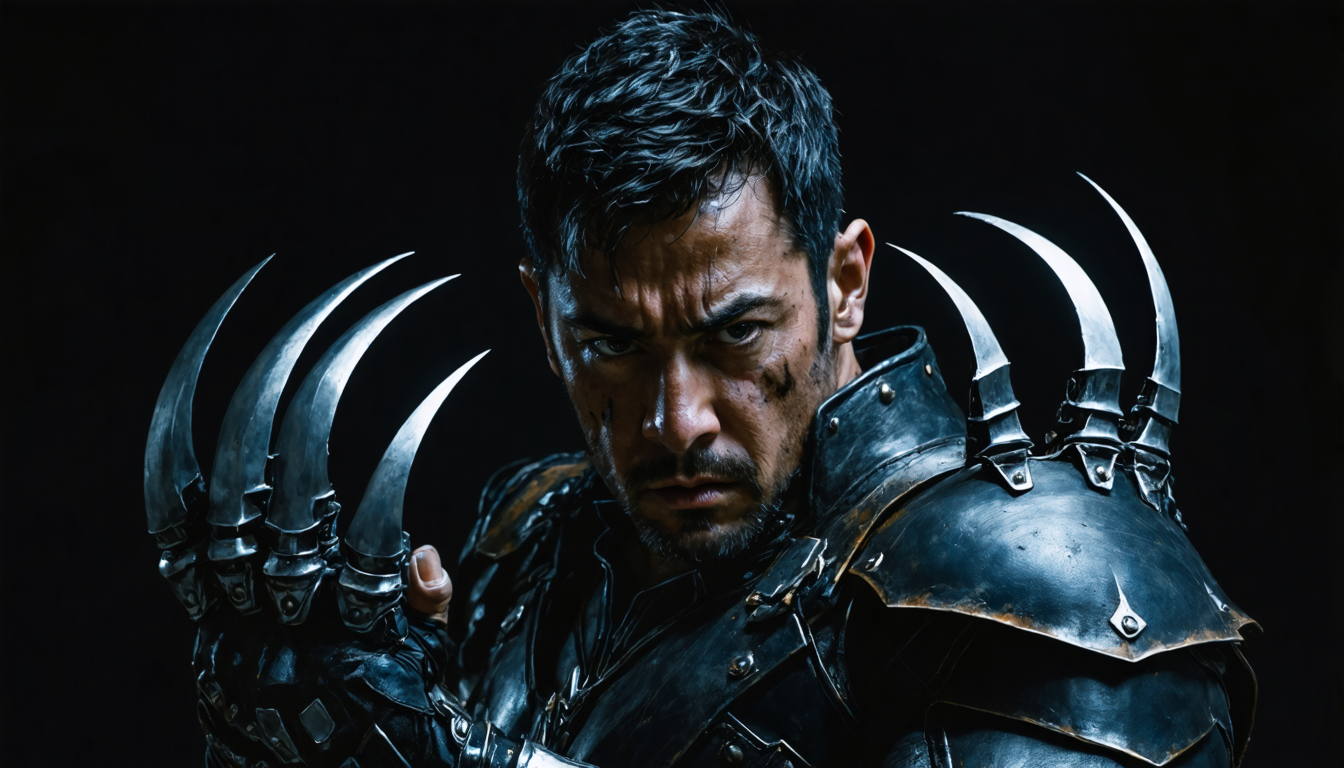
At the heart of Wolverine’s character, his powers remain his most emblematic and spectacular attributes. The retractable adamantium claws and his exceptional regeneration factor have greatly contributed to his popularity and to the fascination he exerts over fans from comics to cinematic adaptations.
The fictional metal adamantium, known for being nearly indestructible, makes Wolverine’s claws fearsome in combat, allowing him to slice through almost anything, including superhuman opponents. This weapon, combined with his sharpened senses and instinctive combativeness, forms an impressive arsenal that makes him an almost invincible adversary.
But it’s not just his brute strength that defines Logan: his accelerated healing factor allows him to quickly recover health after an injury, which is a strategic advantage in his incessant battles. This regeneration goes hand in hand with an almost immortal longevity, although it does not shield him from psychological pain or emotional wounds, which are, on the contrary, amplified by his troubled past.
This duality is often explored in films and video games, where the use of his powers requires balance. For example, in certain games, relying on his mutant senses or animal rage temporarily interrupts his regeneration, forcing the player to make tactical choices that enhance the human dimension of the character.
Over the years, these powers have also been integrated into story arcs that question their nature, consequences, and limits, offering both breathtaking action scenes and moments of dramatic tension deepening the mutant’s psychology.
The development of Wolverine in the video game universe: from X-Men Origins to Marvel’s Wolverine in 2026
Since his very first appearances in video games, Wolverine has always been a prized character to embody brute strength and agility in the Marvel universe. His adaptation in “X-Men Origins: Wolverine,” released in 2009 on PS3, GameCube, and Wii, already offered a very gory and intense experience, faithful to the dark atmosphere of the film, with frenetic melee gameplay and a skill progression system.
This game stood out for its violent side, characteristic of the mutant, giving the player the opportunity to express all of Wolverine’s rage and ferocity in fights where hand-to-hand combat reigns. It also introduced the theme of the viral bomb in the skull, creating a strong narrative stake by combining action and suspense.
More recently, “Marvel’s Wolverine” by Insomniac Games, expected in autumn 2026 exclusively on PlayStation 5, promises to revolutionize the gaming experience around the character. Developed by the creators of the famous “Spider-Man” game, this title is announced to be darker, exploring Logan’s mysterious origins through an original storyline.
The game will take players through several environments, from the fictional island nation of Madripoor, known in the Marvel universe for its moral grey zones, the icy landscapes of Canada, to the narrow and dangerous alleys of Tokyo. This varied journey should offer a full immersion into Wolverine’s mutated multiverse.
The fights will fully benefit from the adamantium claws, with fast and technical gameplay, confronting the player with iconic enemies such as Mystique, Omega Red, and the Reavers. The appearance of a Sentinel in the trailer evokes the expected strategic complexity, promising confrontations that are both dynamic and deep.
This approach highlights how Wolverine is today a transversal character influencing both cinema and video gaming worlds, reinforcing his status as a timeless icon.
Exploration of Wolverine’s varied universes: from Madripoor to Tokyo via Canada
Wolverine’s character is not limited to a simple setting or a single atmosphere. His adventures in cinema and video games unfold across several universes, offering a narrative and geographical richness rarely achieved in comic adaptations. These multiple settings contribute to the complexity of the story and to the depth of the character.
The fictional island city of Madripoor is one of the most striking action grounds for Wolverine. Known in comics as a place of chaos where laws and morality are blurred, Madripoor is often described as an urban jungle populated by assassins, mercenaries, and fugitive mutants. This island offers an ideal context for brutal confrontations where survival is a fight at every moment.
On the other hand, the frozen expanses of Canada, Logan’s birthplace, constitute a symbolically rich setting full of emotion. This cold and hostile land reflects the mutant’s inner struggles, his solitude, and his deep roots, while adding an epic dimension to action scenes. These vast landscapes also allow exploring themes of return to origins and redemption.
Finally, Tokyo’s narrow alleys introduce a cosmopolitan and modern aspect, mixing tradition and technology. This city offers a contrasting setting where stakes are often linked to conspiracies and secret organizations, adding a layer of intrigue and mystery to Wolverine’s adventures. The juxtaposition of these geographical universes underlines Logan’s versatility and the constant expansion of his myth.
These different atmospheres also help strengthen the appeal of current productions that seek to surprise and captivate viewers and players by offering varied experiences, while remaining true to the essence of Wolverine’s character.
The major actors and the production behind the Wolverine films: a fruitful collaboration
The success of the Wolverine films rests not only on the performances of the actors but also on the essential work of screenwriters, producers, and technical teams who have brought this extraordinary mutant to life. The cinematic adaptations, from the first X-Men to the latest films, have benefited from the collaboration of key talents.
Screenwriters David Benioff and Skip Woods played a crucial role in the faithful transcription of the comics to the screen, balancing action and psychological development. Their work has sometimes been controversial, but it allowed anchoring the mutant universe in a global narrative reality.
On the production side, names like Lauren Shuler Donner and Richard Donner have supervised projects, bringing continuity and a shared vision to the various films. Their involvement helped ensure a certain quality level and coherence in the character’s evolution and his stories.
Added to this is the work of directors who have varied approaches, some favoring pure action while others opted for more introspective dramas. This mix guarantees a rich fresco, exploring the mutant clawed warrior’s multiple facets.
Finally, voice actors, stunt coordinators, and special effects teams deserve special mention. They contribute to the authenticity of fight scenes and the visual embodiment of Wolverine’s powers, elements essential to the films’ fidelity and their appeal on the big screen.
| Support | Year | Particularities |
|---|---|---|
| Film: X-Men Origins | 2009 | Exploration of origins with Hugh Jackman |
| Video game: X-Men Origins (PS3) | 2009 | Gory action, skill progression system |
| Film: Deadpool & Wolverine | 2024 | Jackman’s return, multiverse exploration |
| Video game: Marvel’s Wolverine (PS5) | 2026 | PS5 exclusive, original storyline and technical fights |
| Board game: Dice Throne Marvel | Current | Brawler character with special abilities |
Why Wolverine continues to fascinate: a charismatic character between rage and humanity
What makes Wolverine so fascinating is his unique combination of raw power and deep vulnerability. He is not simply an invincible mutant, but a man haunted by his choices, his past, and the pain he endures, both physical and emotional. This complexity is reflected in his cinematic portrayal, notably thanks to Hugh Jackman’s performance which expressed all the ambiguity and richness of the character.
Wolverine’s animal rage and fierce determination come with an almost constant isolation, a difficulty in trusting others, which makes him deeply human despite his superhuman abilities. This duality is at the heart of many stories, whether written for cinema, video games, or comics.
The themes of sacrifice, redemption, and identity quest are omnipresent, positioning Wolverine as a modern tragic hero. He embodies the fight against oneself and against a world often hostile, making him a timeless figure with whom many can identify.
In 2026, with the character’s return in different media and renewed interest in his adventures, Wolverine remains a strong symbol within the Marvel universe, attracting not only loyal comic fans but also a new generation, ready to discover the man behind the steel claws.