
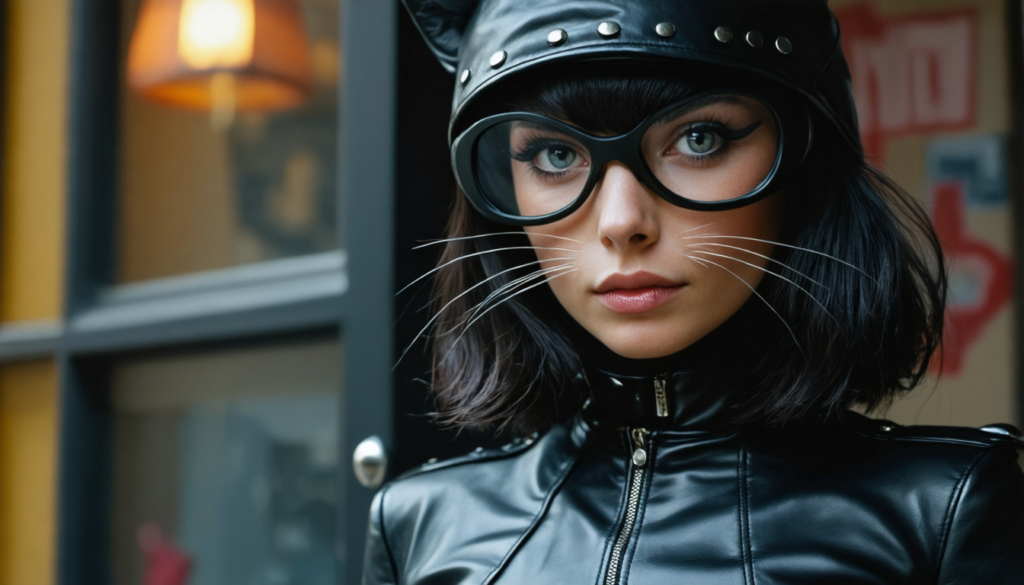
For more than half a century, the character of Catwoman has fascinated audiences with her complexity and undeniable charisma. Embodying a mysterious seductress, this iconic female figure in the Batman universe appears in multiple interpretations, each offering a unique perspective on this anti-heroine who is both vulnerable and formidable. Over the decades, the actresses who have lent their face and talent to Selina Kyle have not only left a mark on the history of superhero cinema but have also reflected the evolution of female representation on screen. From the 1960s television to modern blockbusters, let’s dive into the fascinating world of Catwoman and discover the actresses who brought this iconic role to life.
In the rich landscape of comic adaptations, Catwoman occupies a unique place: simultaneously ally, enemy, and independent figure, her character has reinvented itself over time. Her legendary costume, feline looks, and complex personality come together to offer a powerful symbol of the modern feline woman. From her debut on the small screen to cinematic productions, Catwoman has been an inspiring muse for many actresses, each adding their personal touch to this role as glamorous as it is dangerous. This journey is much more than a simple succession of portraits; it illustrates a dialogue between the fictional character and the diverse cultural, social, and artistic contexts that have shaped her portrayal.
The first portrayals of Catwoman in the 1960s Batman series
The character of Catwoman first appeared on screen in the 1960s with the television series Batman, an adaptation that popularized the comics among a broad audience while establishing the visual codes of many characters, including the famous burglar in a black costume with pointed ears. This prosperous period, marked by a colorful aesthetic and often humorous tone, saw three actresses successively take on this role, each laying the foundations of the character on the small screen.
Julie Newmar was the first actress to portray Catwoman, starting in 1966. Her interpretation mixed charm, mischief, and a refreshing hint of playfulness. Dressed in her shiny fitted costume adorned with sequins, she succeeded in bringing life and personality to a thief who had often been viewed until then as a simple antagonist. Her performance captured attention thanks to her feline gestures and pin-up allure, establishing an archetype of Catwoman both seductive and independent. This version of the character strikes a subtle balance between humor, tension, and mystery, appealing to a broad audience ranging from children to adults.
The same year, Lee Meriwether took over the role in the film Batman: The Movie. Her portrayal somewhat moved away from Julie Newmar’s playful character to adopt a more elegant and classic posture, marking another possible reading of the character. Despite a more discreet screen presence, Meriwether established through her walk and expression a sober Catwoman, endowed with a refined elegance that would influence future portrayals. She thus demonstrated that a character can maintain its symbolic strength while varying in interpretation.
Finally, Eartha Kitt took over for the third season of the television series, between 1967 and 1968, giving a renewed dimension to the anti-heroine. The first African American actress to play Catwoman, she brought a breath of modernity both in the acting and the aesthetics of the role. Her version, spicier, rebellious, and subtly provocative, enriched the character by incorporating a pronounced sensuality and strong presence. Her profile engaged another perspective on Selina Kyle, supporting the idea that this character can assume countless facets according to the personality of those who play her and the social context.
Michelle Pfeiffer and the consecration of the role in Batman Returns (1992)
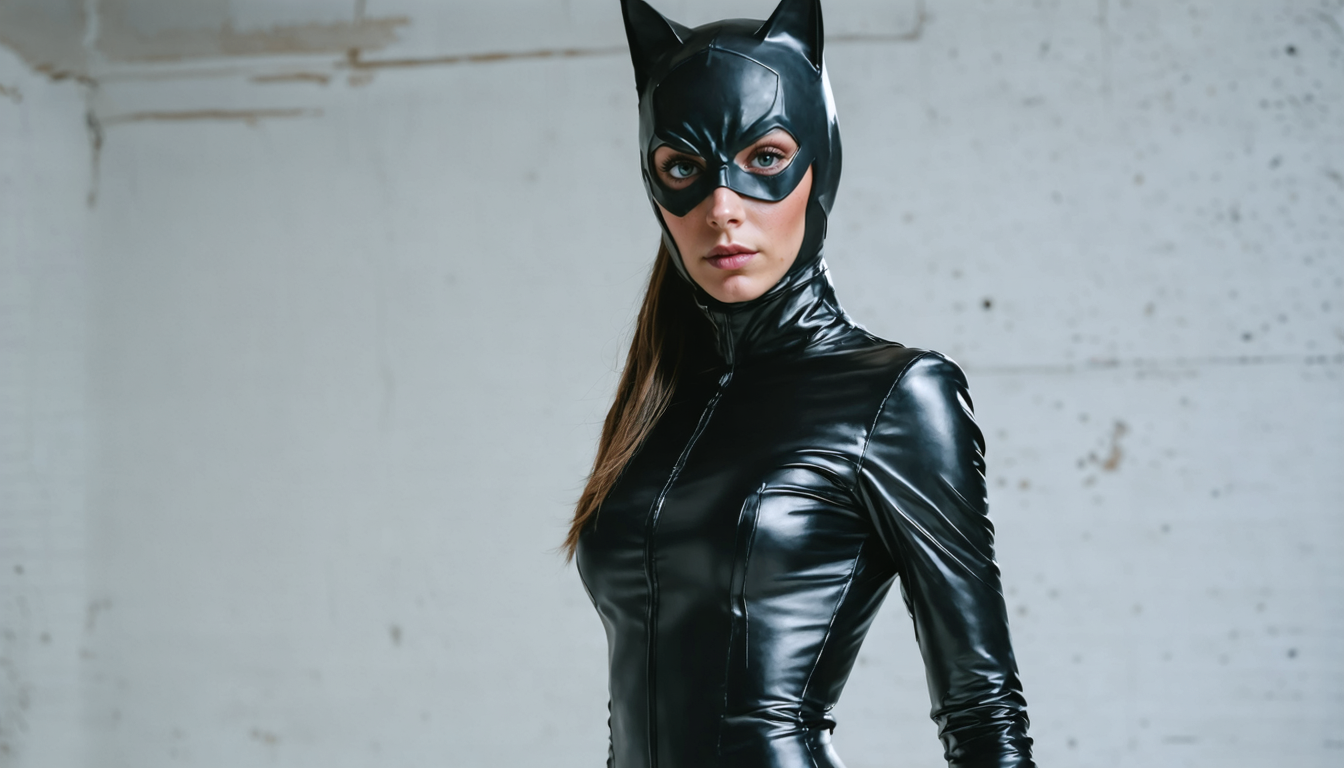
Although Catwoman had already undergone several incarnations, it was in 1992 that Michelle Pfeiffer delivered a now-iconic performance in Tim Burton’s Batman Returns. Here, beneath a black latex costume, are added a psychological depth and a dramatic dimension completely new to the character. Pfeiffer portrays a tortured Selina Kyle, transitioning from a naive, withdrawn secretary to a vigilante as dangerous as she is fascinating. Her physical transformation, as well as her subtle acting combining vulnerability and strength, imprinted an iconic image of Catwoman in the collective memory.
The costume, designed with visible seams, reinforces this impression of both delicacy and danger, symbolizing the fragility behind the aggressive appearance. Her gestures, oscillating between heightened sensuality and feline-precise movements, redefined the character’s codes. The screenplay also provides a clear origin story, humanizing Selina Kyle and justifying her sometimes contradictory choices. This narrative and visual treatment allowed the actress to deliver a performance as intense as it was multidimensional, solidifying Catwoman no longer as a simple antagonist but as a complex and endearing female figure.
This interpretation greatly influenced how Catwoman is perceived in popular culture. The critical and public success propelled Michelle Pfeiffer onto the podium of the best portrayals of the character, her screen appearance still celebrated in discussions on comic adaptations. The lasting impact of this role can be seen in tributes, parodies, and also in the darker approach adopted in subsequent films. Taking into account societal evolution and the representation of women in cinema, Pfeiffer’s role stands as a major milestone blending glamour, psychological complexity, and symbolic power.
The lingering shadow of Halle Berry and the film Catwoman (2004)
Twelve years after Michelle Pfeiffer’s brilliance, Halle Berry took on the challenge of portraying Catwoman in a standalone work outside the Batman universe: the film Catwoman directed by Pitof in 2004. Despite Berry’s undeniable reputation and talent, the feature encountered very negative critical reception and a commercial disappointment. The screenplay caused confusion as it significantly diverged from the original character, creating an autonomous story that neither respected her lineage nor the known iconic elements familiar to fans.
The costume, which departed from the traditional style, was also heavily criticized, considered by many as unconvincing and ill-suited to the role. However, Berry’s performance, oscillating between dynamic scenes and introspective moments, tried to inject authentic energy into an interpretation diminished by the overall treatment of the film. Despite the flop, Halle Berry showed great elegance and self-mockery by accepting her Razzie Award with humor, demonstrating a rare professionalism in difficult circumstances.
This cinematic episode highlights the stakes of embodying a character as mythical as Catwoman. It underlines the importance of a coherent screenplay and a strong artistic vision to enhance the role. This turning point increased caution in future approaches, while leaving a mark in the anti-heroine’s history as an experimental and contrasting episode.
Anne Hathaway and the modern strategy in The Dark Knight Rises (2012)
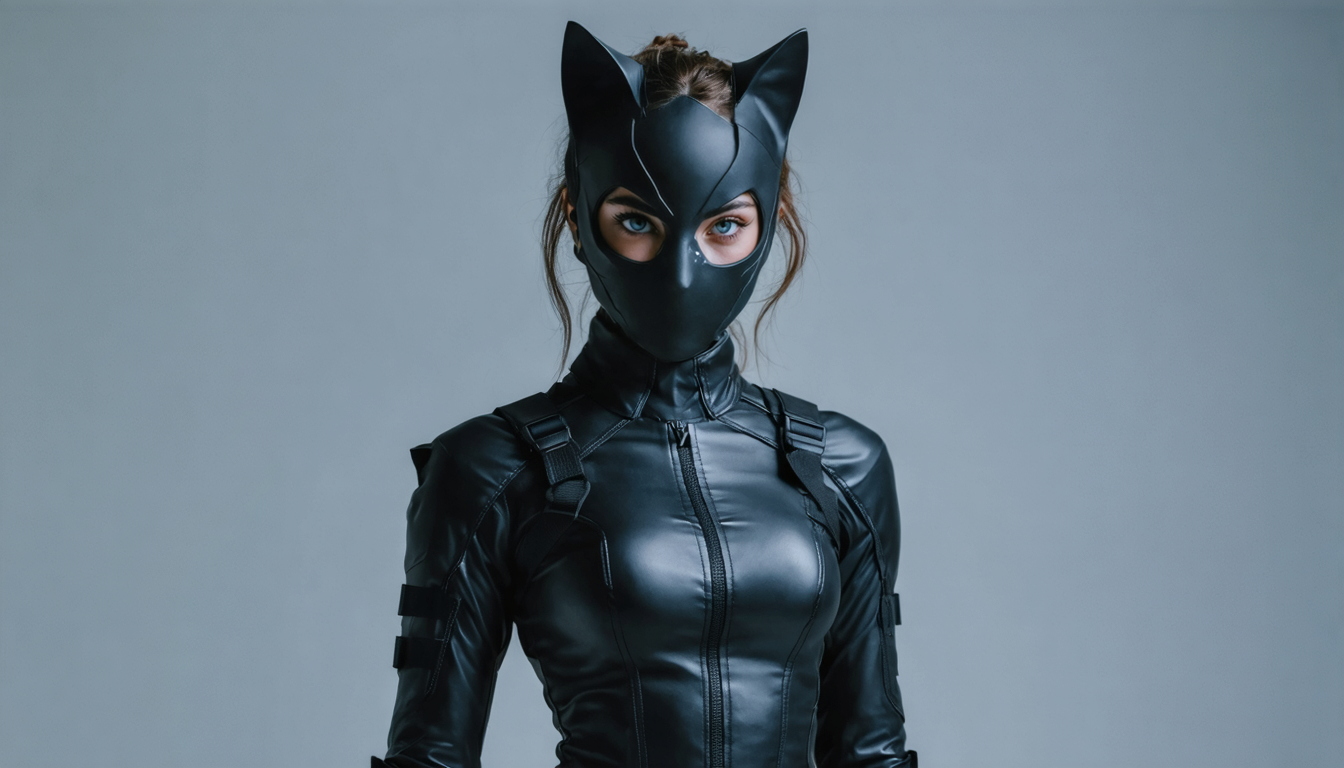
The rebirth of the character in Christopher Nolan’s The Dark Knight Rises in 2012 was incarnated by Anne Hathaway. This interpretation breaks away from the previous more flamboyant glamour to revisit Catwoman through a more realistic, strategic, and mature lens. Selina Kyle appears as a high-level burglar, capable of intelligently rivaling Batman, played by Christian Bale. Her performance was praised for balancing a complex personality, cold charisma, and finesse in acting, while incorporating a deep human dimension.
Hathaway’s costume stands out for its sobriety and functionality: instead of visible ears, the mask is transformed into goggles with retractable night vision, symbolizing a high-tech and intelligent approach. This minimalist yet highly effective vision reflects the sophistication of the character and her motivations. Hathaway thus manages to embody a believable Catwoman anchored in palpable reality, while preserving the enigmatic and ambiguous part that makes the role’s charm.
Her performance successfully revived the character, detaching it from clichés and caricatures, making her more accessible to contemporary viewers. The critical and commercial success of The Dark Knight Rises also underlined the importance of thoughtful and careful adaptations in the lasting success of an iconic film role.
The new generations and the Gotham series: Camren Bicondova and Lili Simmons
In the 2010s, television took hold of the Batman universe with the series Gotham, which offers a dive into the origin of Gotham City’s myths and its inhabitants. Camren Bicondova portrays a young Selina Kyle, revealing the first steps of a heroine in the making. Her interpretation is noted for its youthful energy, vulnerability, and mischievous side, reinforcing the character’s complexity and introducing more contemporary nuances.
The series, oscillating between noir crime drama and psychological drama, gives this portrayal a depth rarely seen on television. Camren Bicondova manages to convey Selina’s internal dilemma, torn between surviving in a hostile environment and a desire for integrity. This anchors the anti-heroine in a rich and credible narrative reality, granting her an important narrative dimension for the continuity of adaptations.
Near the end of the series, Lili Simmons briefly takes over the role in a time jump, portraying the adult version of Selina Kyle. This transition well illustrates the metamorphosis from a rebellious teenager to a woman master of her destiny, skillfully balanced between danger and seduction. The television succession thus testifies to the enduring richness of this role and its ability to reinvent itself over time and audiovisual formats.
Zoë Kravitz: an electric and contemporary portrayal in The Batman (2022)
In 2022, Zoë Kravitz gave a new iconic portrayal of Catwoman in Matt Reeves’ The Batman, alongside Robert Pattinson. Her performance was praised for its liveliness, modernity, and authenticity. The actress skillfully combines seduction and ferocity, pushing the character into new territories, notably by revealing Selina as a bisexual woman, which enriches the heroine’s dimension in an increasingly inclusive cinematic world.
Following a more realistic yet stylized aesthetic, Kravitz’s costume combines functionality and elegance, with hairstyle variations that highlight the character’s diversity and transformative ability. Her agility and intense physical abilities are showcased with striking action scenes, proving that this Catwoman is as formidable as she is intelligent.
Her performance, both electric and nuanced, not only won over critics but also a large fan base, sparking discussions as early as 2026 about a possible spin-off centered on her. Thus, Zoë Kravitz perpetuates the legend of the role while injecting Catwoman with a decidedly modern and engaged tone.
The different facets of the iconic role of Catwoman through the actresses
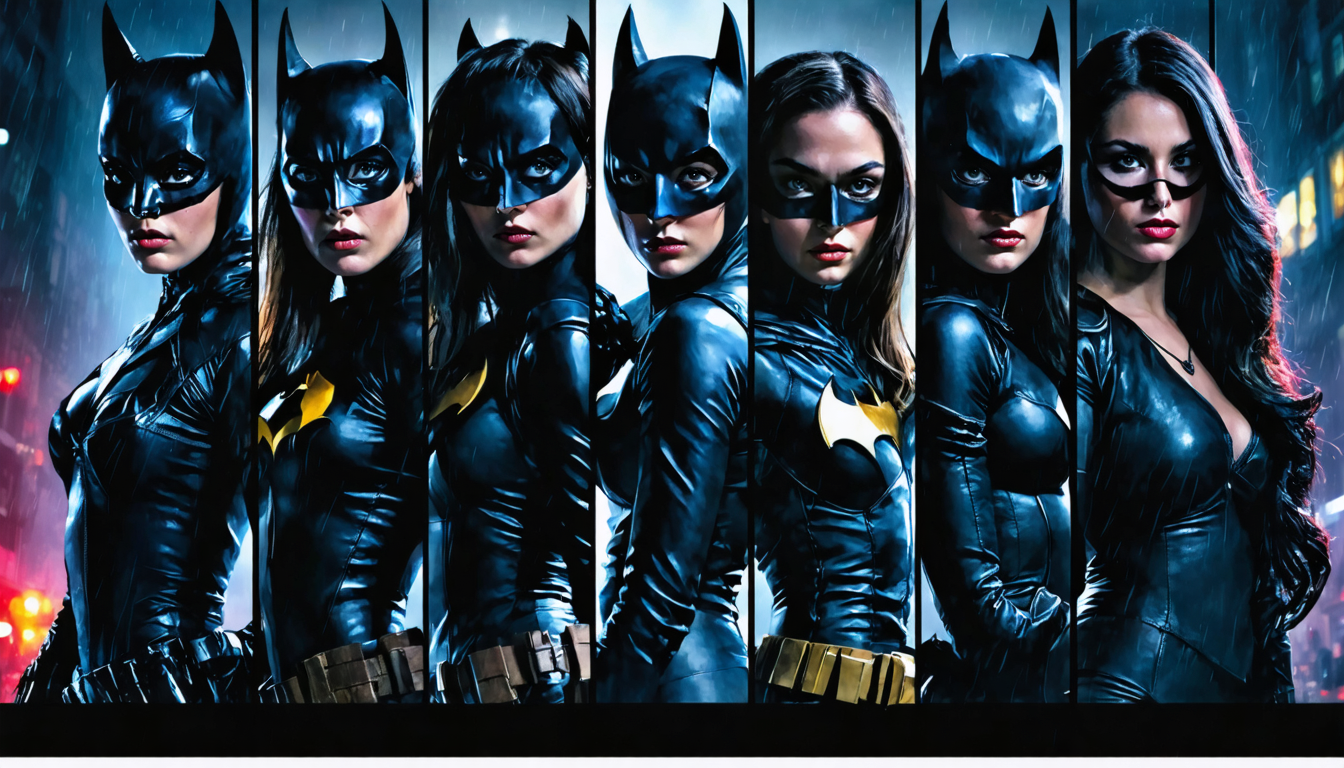
The character of Catwoman is a prism reflecting the multiple facets of femininity in superhero cinema. Each actress who has portrayed this role has brought a specific hue, contributing to enrich and complicate the mythology surrounding Selina Kyle. The portrayals range from the simple charming, mischievous burglar to the mature, troubled anti-heroine capable of strategic and emotional battles.
For example, during the 1960s, the actresses emphasized the character’s charming and seductive aspect. Julie Newmar and Eartha Kitt highlighted a theatrical, almost cabaret style, focusing on seduction and mischief. Michelle Pfeiffer, meanwhile, protected a darker and more sensitive side, deeply human, while Anne Hathaway opted for a realistic and modern profile, less demonstrative but more impactful.
More recently, Zoë Kravitz revisited the role from an inclusive and expressive angle, representing a plural woman, both vulnerable and fighting, reflecting current social evolution. These different approaches keep Catwoman alive in the viewers’ minds as a complex figure, never fixed in a simple archetype and evolving with her time.
- Charm and seduction: Catwoman in the 1960s, portrayed with playfulness and glamour.
- Psychological complexity: Michelle Pfeiffer in 1992, between vulnerability and strength.
- Strategic modernity: Anne Hathaway, combining ingenuity and realism.
- Inclusivity and diversity: Zoë Kravitz portraying a plural and engaged anti-heroine.
Table of actresses who have portrayed Catwoman in cinema and television
| Actress | Year | Production | Interpretation style |
|---|---|---|---|
| Julie Newmar | 1966-1967 | Batman Series | Mischievous and playful |
| Lee Meriwether | 1966 | Batman: The Movie | Elegant and feline |
| Eartha Kitt | 1967-1968 | Batman Series | Rebellious and sensual |
| Michelle Pfeiffer | 1992 | Batman Returns | Dark and tortured |
| Halle Berry | 2004 | Catwoman | Independent and athletic |
| Anne Hathaway | 2012 | The Dark Knight Rises | Strategic and mature |
| Camren Bicondova | 2014-2018 | Gotham (TV series) | Young and ambiguous |
| Zoë Kravitz | 2022 | The Batman | Electric and modern |