
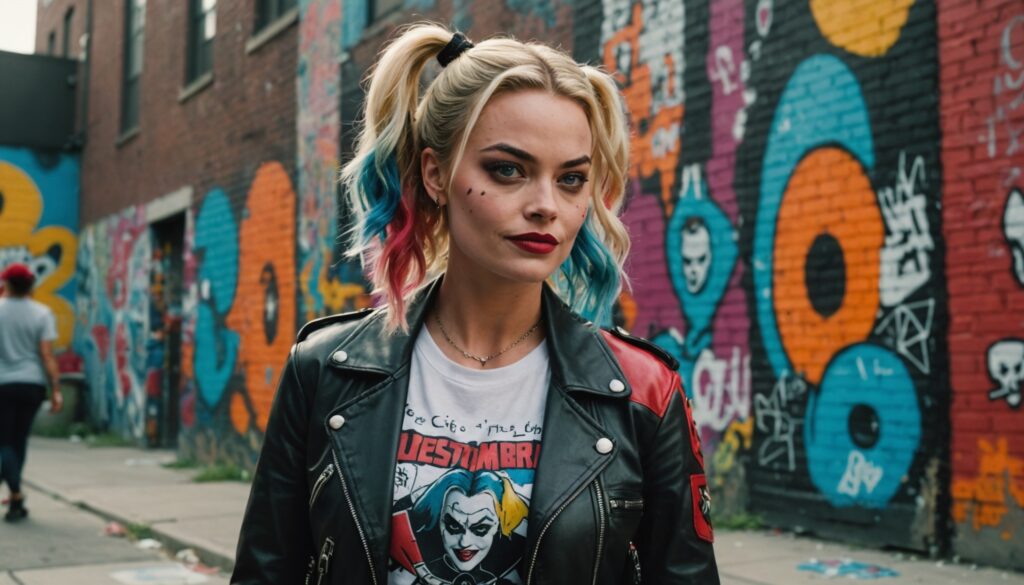
In the bustling universe of DC Comics, few female characters have captured the collective imagination like Harley Quinn. Born from a former psychiatrist turned iconic anti-heroine, she captivates with her unique blend of gentle madness, corrosive humor, and unpredictable danger. This emblematic figure has benefited from memorable portrayals, led by Margot Robbie, who has imprinted the role in several major films, as well as other actresses who have brought different dimensions to the character. Harley Quinn’s evolution over time, from films to video games, and her prospects in the current DC universe offer a fascinating dive into one of the most iconic figures of contemporary pop culture.
From her first appearance in Suicide Squad in 2016 to the new darker interpretation offered by Lady Gaga in Joker: Folie à Deux, the character has managed to reinvent herself without ever losing her chaotic essence. This phenomenon is not limited to screens, as Harley Quinn is also an indispensable presence in video games, where her wild attacks and unique style are perfectly rendered. At the dawn of a new chapter for the DC Universe, the future of this female icon remains shrouded in mystery, notably regarding the possible return of Margot Robbie as the famous former psychiatrist turned queen of chaos.
Margot Robbie: the true embodiment of Harley Quinn in cinema
Since 2016, Margot Robbie has been inseparable from the image of Harley Quinn. When she arrived in Suicide Squad, she didn’t just take on a secondary role; she transformed Harley into a powerful and complex female icon. Her performance, starting with a gentle madness capable of instantly switching to explosive violence, marked millions of viewers. This portrayal gives the character a multidimensionality mixing humor, vulnerability, and embraced chaos.
With Birds of Prey in 2020, Margot Robbie propelled Harley towards total emancipation. Freed from the toxic grip of Joker, she evolves into an independent heroine, ready to impose her own rules in a world dominated by brutality. This film develops a more feminist narrative, highlighting inner strength and solidarity, notably through her interactions with other heroines. Margot’s performance here offers a more nuanced facet, exploring the duality between her fragility and destructive rage.
Then in 2021, under the direction of James Gunn for The Suicide Squad, the actress pushed her interpretation even further. This new installment blends dark humor and excess, offering a spectacle where Harley’s madness is at the heart of the narrative. Her legendary bat, mischievous gaze, and unpredictable behavior are now synonymous with the character. Margot Robbie imposes a unique style, mixing corrosive charm and immediate danger, which literally redefined Harley Quinn on screen.
Margot Robbie thus embodies a Harley Quinn who goes beyond appearances to become a true female reference figure, oscillating between psychological complexity and maximum entertainment. Her performance has also inspired a large fan base worldwide, helping to make Harley an icon of contemporary cinema.
Lady Gaga and other actresses: a spectrum of reinterpretations of the role
While Margot Robbie has long reigned over the portrayal of Harley Quinn, other actresses have left their mark on this complex character in various works. The most recent is Lady Gaga, who offers a profoundly different version in Joker: Folie à Deux (2024). This incarnation delivers a darker tone, emphasizing the psychological and tragic dimensions of the character, moving away from the comedic and explosive trait popular in the classic DCU.
In this context, Lady Gaga transcends the anti-heroine to make her a more tortured, more intimate figure. This approach explores the psychodynamic relationships between Harley and Joker in a more realistic and dramatic atmosphere. Gaga’s performance is thus praised for its ability to inject new vulnerability into a character often seen solely through her delirious angle.
Beyond these two major portrayals, Harley’s evolution in animated series, voice acting, and other adaptations has seen actresses vary the tones. These performances contribute to enriching the legend surrounding this multifaceted character. Each new voice or face explores a different aspect, whether it be biting lightness, dark humor, or tragic moments, demonstrating the lasting influence of the character in popular culture.
This collective work of portrayals perfectly illustrates the richness of the character. It is interesting to note that Margot Robbie herself has expressed the wish that other actresses might one day take up the mantle, like male icons in comic universes. This desire opens new perspectives and underlines the evolving and timeless nature of Harley Quinn.
Main actresses who have portrayed Harley Quinn in cinema and television
| Actress | Work | Year | Style of portrayal |
|---|---|---|---|
| Margot Robbie | Suicide Squad, Birds of Prey, The Suicide Squad | 2016, 2020, 2021 | Gentle madness combined with explosive and comic energy |
| Lady Gaga | Joker: Folie à Deux | 2024 | Dramatic and dark interpretation, more psychological |
| Tara Strong (voice) | Animations and video games | Since 1990s | Humorous and cartoonish tone |
Harley Quinn in video games: a faithful and dynamic adaptation
Alongside the big screens, Harley Quinn enjoys a prosperous life in the world of video games. Since her first appearance in titles based on the DC Comics universe, she has stood out thanks to original gameplay that perfectly reflects her chaotic personality. Games like Injustice 2 allow players to embody a fast, unpredictable character capable of chaining surprising combos that make her formidable in combat.
In these interactive environments, Harley Quinn uses her entire iconic arsenal: between her bat, her hammer, and even her dogs unleashed on the opponent, creativity in her moves is on full display. Her catchphrase “Is it snack time?” which has become cult in some players’ matches, highlights her biting humor mixed with a cartoonish violence that makes her unique among fighters.
This presence in gaming helps to reinforce Harley’s popularity beyond cinema and comic books. Developers invest a lot in capturing her visual and behavioral identity, contributing to an ecosystem where the character is featured across multiple media, thereby encouraging a growing and engaging fan loyalty.
Moreover, video games offer an additional area to explore her complex personality, accessible directly through interactivity. Players experience her unpredictability, strength, and agility in often spectacular fights, thus living a unique adventure that complements her representation on the small screen.
Harley Quinn’s evolution through the DC universe: from chaos to complexity
Harley Quinn’s story, originating from a former psychiatrist, symbolizes a radical transformation against the backdrop of a toxic relationship with Joker. The character embodies a fascinating duality where madness is also a source of humanity and emancipation. Through successive works, one observes a remarkable evolution of her psychological profile.
Passing from a dangerous anti-heroine to a complex and sometimes even heroic protagonist, she questions notions of freedom and control in the DC universe. This depth is visible not only in recent films but also in animated series, such as Harley Quinn Rebirth, where her adventures in Coney Island with Poison Ivy reveal a more human facet, imbued with friendship and a search for identity.
This trajectory contributes to complicating Harley’s image beyond just an exuberant villain. She becomes both a symbol of marginality and a model of self-determination, which partly explains her irresistible appeal to a diverse audience. The hybridity of her personality, between instability and lucidity, opens a rich narrative field for writers and actresses who portray her on screen.
Fundamental character traits defining Harley Quinn
- Corrosive humor: a scathing weapon that destabilizes friends and foes.
- Mischievous gaze: revealing a sharp intelligence hidden beneath apparent madness.
- Iconic bat: a true visual symbol associated with the character.
- Giant mallet: an unforgettable physical persuasion tool.
- Unpredictability: main characteristic that feeds her legend.
These characteristics cross all incarnations and adaptations, ensuring coherence even through multiple readings of the character. This aesthetic and behavioral consistency helps anchor Harley Quinn in pop culture for several decades.
James Gunn’s role in the DC universe and Margot Robbie’s place
Since his arrival at the helm of the new DC Universe, James Gunn has played a key role in reshaping Harley Quinn’s fate. His offbeat humor and unrestrained vision of superheroes have allowed Margot Robbie to explore all facets of the character in The Suicide Squad. The critical and commercial success of this film has strengthened the public’s attachment to this version.
In 2026, despite the creative team’s desire to renew, the return of the Australian actress in the role remains a plausible but unconfirmed hypothesis. James Gunn maintains the fascination by keeping the mystery alive, simply stating that “everything will be revealed in due time.” This discretion feeds fans’ anticipation who hope for continuity or evolution of the character in future DC projects.
Projects like The Brave and the Bold, centered on Batman and his son Damian Wayne, or season 2 of Peacemaker could be ideal grounds for Harley’s return. The complexity of relations between these characters and Harley’s deeply chaotic nature create attractive narrative opportunities. Moreover, Margot Robbie’s growing popularity, noted by her resounding success in Barbie in 2023, adds a significant commercial dimension for DC.
The marriage between James Gunn’s artistic vision and Margot Robbie’s performance symbolizes today one of the most accomplished incarnations of the character. Together, they have redefined Harley Quinn’s place in the DC galaxy, making her essential within the contemporary superhero landscape.
Harley Quinn’s popularity: a cultural phenomenon with many faces
Beyond screens, the Harley Quinn phenomenon is embodied in a variety of media and cultural objects. Her popularity transcends cinema boundaries to settle in music, fashion, cosplay, and even advertising campaigns. Her bold style and decidedly subversive attitude have made her a true female icon of pop culture.
Fans often adopt her distinctive look, reproducing her two-tone hairstyle, makeup, and quirky outfits at cosplay events or conventions. This adoption symbolizes a form of identification and a collective tribute to a figure that celebrates both freedom and anarchy. Influential fashion brands have also seized her image, integrating Harley-inspired elements into collections driven by punk and rebellious spirit.
Moreover, Harley Quinn’s figure has sparked many debates about female representations in media. Her character, while being an anti-heroine, carries a strong narrative force that challenges classic clichés. This duality between vulnerability and power marks an evolution in how Hollywood and fans perceive heroines and villains in cinema.
This phenomenon also relies on spectacular events and bold promotional campaigns, where actresses portraying Harley, especially Margot Robbie, become passionate ambassadors of the character, reinforcing her visibility and cultural reach.
List of key factors in Harley Quinn’s popularity
- A striking and identifiable look: hairstyle, makeup, and unique accessories.
- A hybrid character: oscillating between humor, madness, and emotion.
- Presence across various media: cinema, television, video games, comics.
- Inspiring performances by Margot Robbie and other actresses.
- Use in marketing and fashion culture: symbol of rebellion.
Current and future challenges for the character in the DC Universe
As the DC Universe reinvents itself under the guidance of new creators, the challenges surrounding Harley Quinn are clear but complex. On one hand, there is the need to respect the character’s heritage and fidelity, notably established by Margot Robbie. On the other hand, the desire to explore new, darker, or more nuanced directions, like Lady Gaga’s portrayal, pushes DC to navigate between tradition and innovation.
In this context, Harley Quinn’s future lies in a delicate balance between narrative continuity and artistic renewal. The audience, always eager for novelties, expects storylines that deepen her psychology while preserving her anarchic energy. The development of series like Peacemaker and upcoming projects around Batman open rich narrative possibilities to integrate Harley cohesively and surprisingly.
From the actresses’ perspective, the franchise also must manage the desire to renew performers, some like Margot Robbie being open to leaving the door open to new incarnations. This transition could strengthen the character’s longevity in cinema, in a spirit similar to other iconic figures passed down from generation to generation.
It will also be necessary to balance the expectations of long-time fans with those of new generations, so Harley Quinn continues to shine as a must-see female icon in the global cultural landscape.