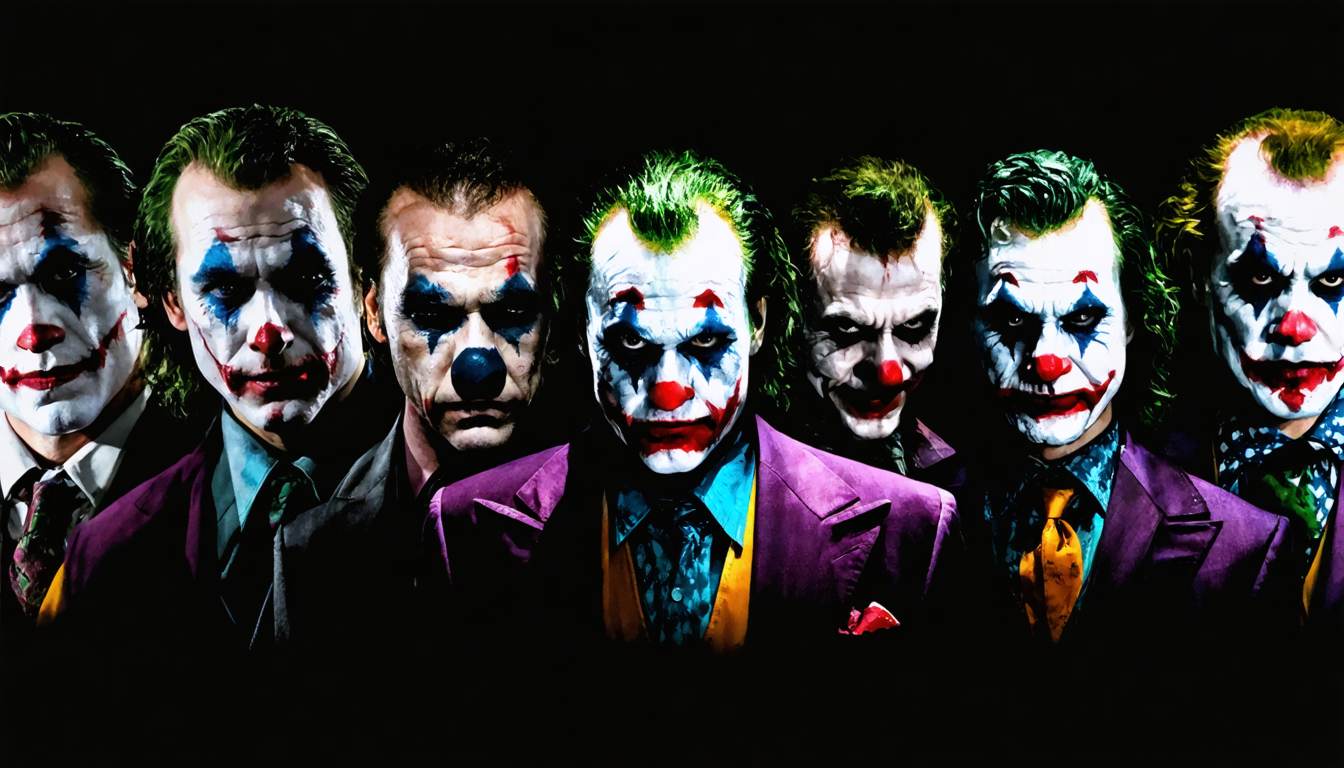
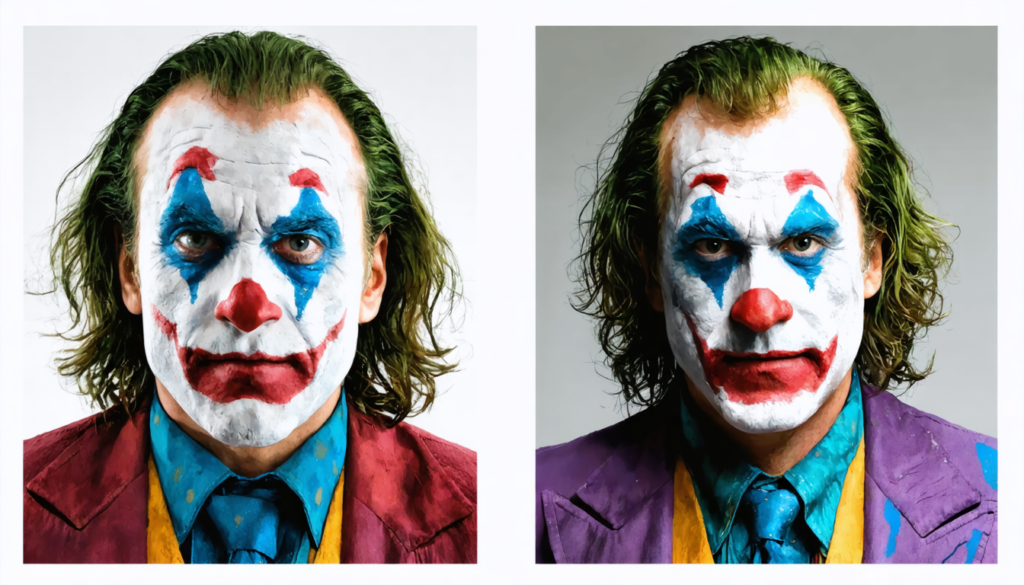
Since its creation in 1940 within the pages of DC Comics, the Joker has established himself as the flagship antagonist of the Batman universe, captivating the collective imagination and constantly reinventing himself over the decades. An icon of chaos and psychological complexity, this fascinating villain has spanned many eras in cinema, carried by a host of actors each of whom has deeply marked the screen. From the imposing Jack Nicholson who redefined the role in the 1980s, to Heath Ledger’s unforgettable performance in 2008, and up to the more recent, often controversial portrayal by Joaquin Phoenix, the character remains an immense challenge for actors and a source of admiration for cinephiles. These varied incarnations reflect not only the evolution of cinema but also our collective perception of evil and madness.
This journey into the dark soul of the Joker also reveals the character’s importance in global popular culture. The Joker is not limited to the big screen: he has also been perfectly animated thanks to the inimitable voice of Mark Hamill or revisited through brief appearances such as that of Barry Keoghan. This narrative and artistic richness attests to the timelessness of the character and the way each actor or artist has breathed new life into this sinister clown, alternately buffoon, agent of chaos, psychopath, or victim of his own demons. The exploration of the Joker in cinema is not just a simple list of performances, it is rooted in a cultural, artistic, and even symbolic history that continues to evolve in 2026.
The great incarnations of the Joker in cinema: a journey between madness and genius
The cinematic journey of the Joker is marked by performances from actors who each offered a different vision of the character, highlighting a complex palette ranging from comic to tragic. The first major theatrical appearance was that of Jack Nicholson in Tim Burton’s “Batman” in 1989. This version cleverly blended menace and eccentricity, presenting the Joker as a calculating criminal, both dangerous and charismatic. Nicholson brought a burlesque touch while instilling a profound darkness, laying the foundations of an incarnation both captivating and destabilizing. His Joker played a key role in Batman’s transformation, placing him face to face with his absolute antithesis.
The next, in 2008, was dominated by Heath Ledger’s memorable interpretation in Christopher Nolan’s “The Dark Knight.” This Joker is much more than a simple villain: he is an incarnation of pure anarchy, an agent of chaos who refuses any social or moral hierarchy. His performance, beyond being a dramatic tour de force, transcends the villain to deliver a contemporary symbol of fear and unpredictability. His scars, broken laugh, and unpredictable acts made this Joker one of the most disturbing figures in cinema, and his performance was honored with a posthumous Oscar, attesting to its lasting impact on audiences.
More recently, Joaquin Phoenix took over with a distinct approach in “Joker” (2019) and its sequel “Joker: Folie à Deux” (2024). His incarnation is more intimate, focused on the psychological degradation of a marginalized man who becomes the clown prince of crime. Far from being a simple villain, this version explores vulnerability, suffering, and social rejection. Phoenix truly humanized the Joker, bringing out his tragic and pathetic side. This dual performance, often controversial, presents a new facet of the character, far from usual clichés, and offers a critical perspective on mental health issues as well as contemporary society.
The television and animated legacy: the Joker’s first images on screen
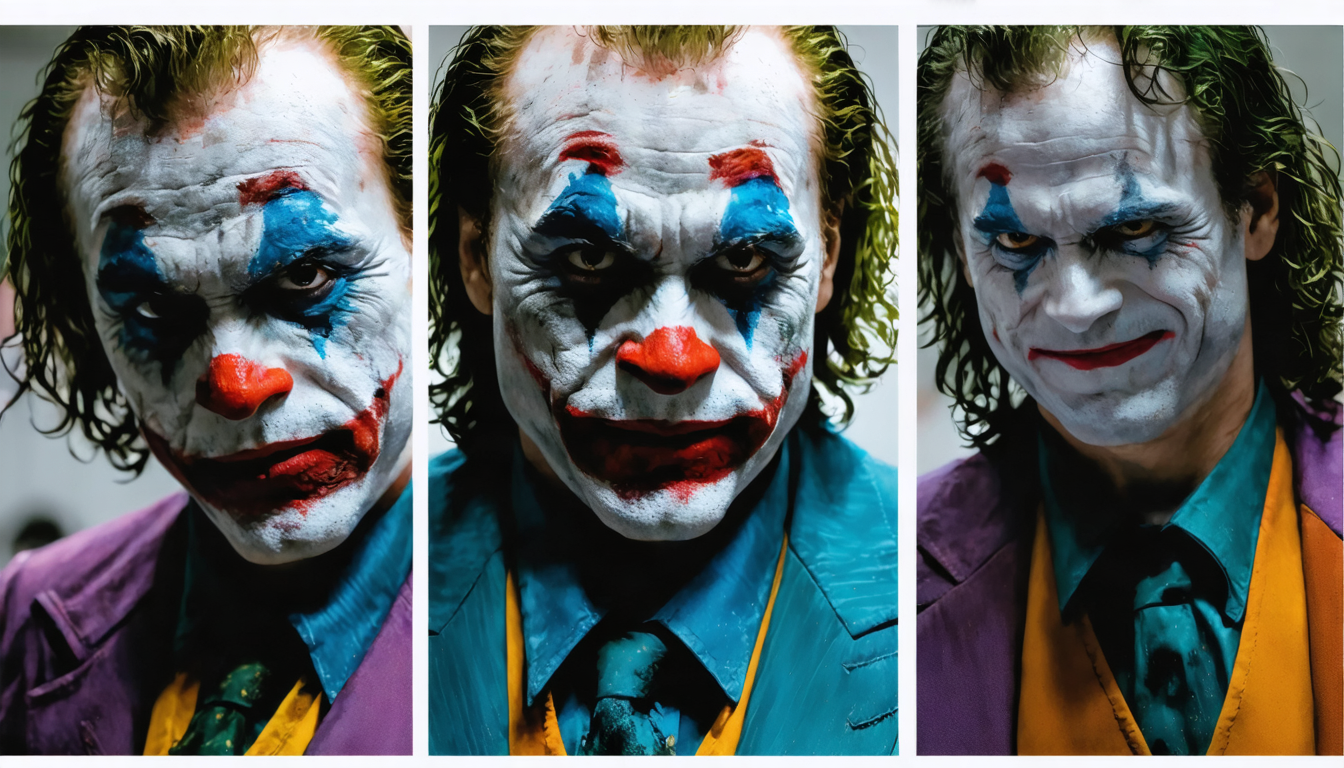
Before the spotlights of the big screen shone on the Joker, it was on television that the character made his first visual steps. In 1966, a highly distinctive version was born thanks to Cesar Romero, who played the Joker in the “Batman” TV series and the spin-off film. Here, the provocative clown was more of an extravagant buffoon than a psychopathic killer, with a colorful aesthetic and a burlesque tone reflecting the campy style of the series. Romero made people laugh while intriguing them, bringing a good-natured Joker with a characteristic laugh and an unforgettable presence. His face covered in white paint, topped with a green wig and makeup featuring an exaggerated smile, remains an iconic image of the character’s early screen appearance.
This televisual incarnation helped implant the Joker into popular culture in a playful way, laying the foundations for future adaptations. The Batman animated series, broadcast in the 1990s, allowed a major evolution with the prestigious voice of Mark Hamill, much appreciated by fans. By lending his voice to the Joker, Hamill succeeded in capturing the madness and subtlety of the character in a cartoonish style, but never devoid of menace. His vocal performance marked the junction between the comic and the dark, and continued in the Batman: Arkham video games, where the echo of this Joker remains powerful.
It should also be noted that this legacy inspired other animated interpretations, such as Zach Galifianakis in “Lego Batman: The Movie,” where the Joker is humanized, primarily seeking Batman’s attention, far from a simple villain driven by hatred. These non-cinema versions enrich the character’s mythology and demonstrate his flexibility in terms of tone and storytelling.
The physical and psychological evolution of actors in the Joker’s portrayal
The physical aspect of actors playing the Joker is crucial to bringing this complex and frightening persona to life. Each actor was required to transform their body, gestures, and even their voice to best embody this iconic DC Comics villain. Jack Nicholson, for example, imposed a formal silhouette with his colorful three-piece suit, choreographed gestures, and a nasally laugh that etched itself into collective memory.
Heath Ledger, for his part, opted for a chaotic and disheveled aesthetic: scars on the face, makeup that fades progressively, a hoarse and insane laugh, making the Joker a disturbing reflection of personal and social degradation. The physical performance was all the more impressive as it plunged into a profound psychological transformation. Ledger spent weeks preparing his role, sketching an almost frightening dance between madness and lucidity, which resonates even more today.
Joaquin Phoenix favored an initially human gait that gradually shifts into a caricature of a tragic clown. His interpretation requires subtle mastery of emotions, between a forced laugh and painful inner loneliness. The metamorphosis relies on delicately worked makeup, and work on music and gestures that translate his character’s descent into hell.
This aesthetic evolution is accompanied by a profound psychological change. The Joker is no longer a simple caricatured villain, but a character with multiple layers, oscillating between victim and executioner. It is these physical and mental transformations that allowed these actors to deliver performances of rare intensity.
Jared Leto and the controversial incarnations of the Joker in the extended universe
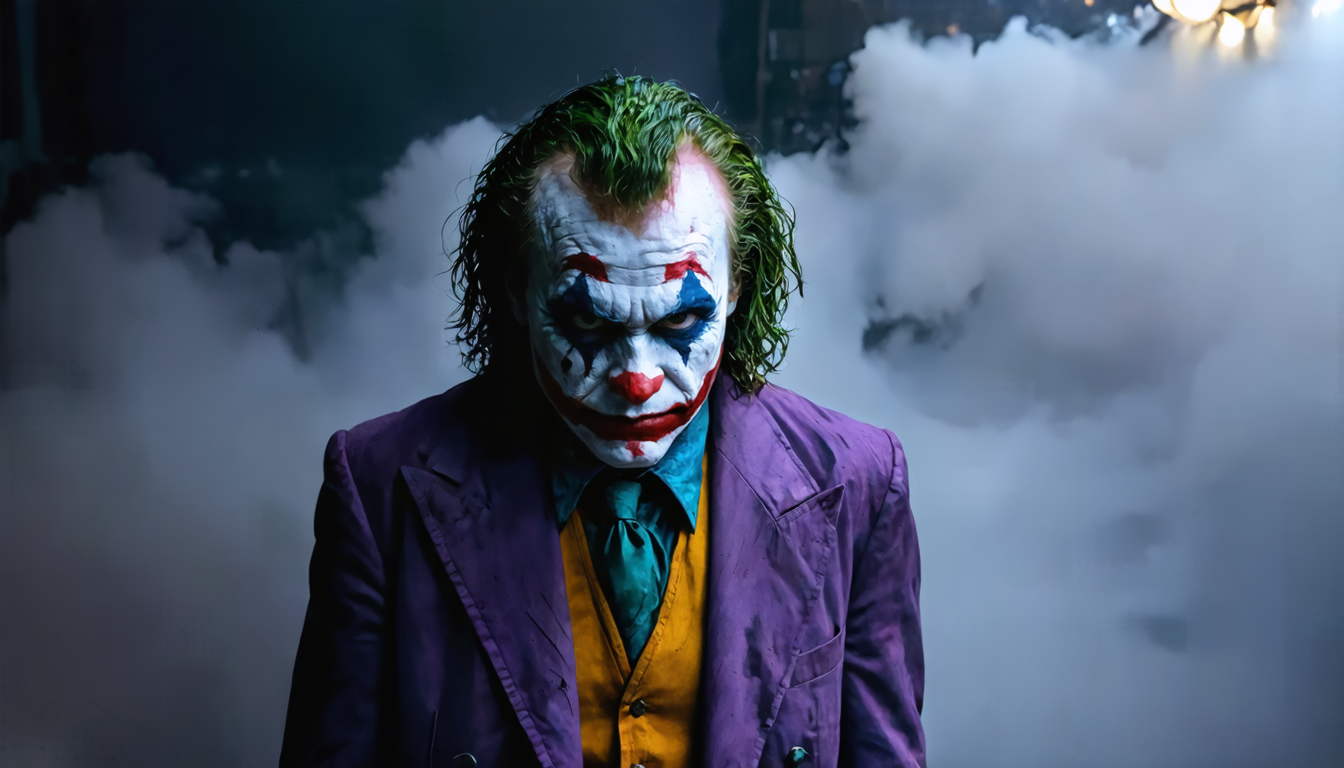
In 2016, Jared Leto brought a very distinctive version of the Joker in “Suicide Squad.” His interpretation was highly divisive, some seeing it as a bold break from more classic versions, others judging it too extravagant. Characterized by a punk style with visible tattoos, metal teeth, and behavior closer to a psychopathic gangster than an anarchist clown, this version tried to explore a more modern, violent, and unpredictable Joker.
Leto clearly stood out through an intense obsession with the role, reported by numerous witnesses on set. This Joker no longer settles for being a villain; he is a destabilizing force with intentions as cryptic as they are fleeting. His relationship with Harley Quinn also highlighted a more emotional, if strange, aspect of the character, which disrupted certain expectations. Upon release, the film sparked controversies and debates regarding the fidelity and relevance of this incarnation.
However, this risk-taking highlights the richness and malleability of the Joker, whose identity is never fixed. This version fueled reflection on what a villain can be in an extended universe and paved the way for different approaches to the character in spin-offs or graphic productions.
Barry Keoghan: the new generation of the Joker and its promises for the future
The recent arrival of Barry Keoghan as the Joker has piqued the curiosity of fans and critics alike. His brief appearance in “The Batman” (2022) directed by Matt Reeves ended in a carefully maintained mystery. Presented in Arkham prison, with a chilling laugh but a concealed silhouette, Keoghan exudes a disturbing aura. His Joker, portrayed with a deformity reminiscent of David Lynch’s “Elephant Man,” promises a version both troubling and innovative, moving away from usual clichés.
Matt Reeves confirms that this new approach will be developed in the sequel “The Batman: Part II” scheduled for 2025, which already generates significant enthusiasm. The Irish actor, already appreciated for his roles in dramatic works, finds a new way to express the essence of DC Comics’ most iconic villain, emphasizing fragility, danger, and the intrinsic enigma of the character.
This generation promises to further renew the image of the Joker in cinema, today more varied and protean than ever. This incarnation reinforces the idea that the Joker can reinvent himself and touch different facets that resonate with a contemporary audience hungry for depth and originality.
The role of voices in the Joker’s portrayal: Mark Hamill and his legendary dual voices
Beyond the big screen, the Joker’s voice has played a crucial role in building his mythology. Among all voice actors, Mark Hamill remains an essential reference. From the 1990s onward, he brought to life a more subtle and psychologically complex Joker in the Batman animated series and its sequels. His talent allowed him to bring unmatched expressiveness, blending hysterical laughter, sharp sarcasm, and latent threats.
Hamill also voiced the Joker in the Batman: Arkham video game series, delivering an intense and faithful performance consistent with the comics. This digital version enchanted players with its realism and dark atmosphere. His voice became the quintessence of the Joker, capable of shifting from a childlike mood to a terrifying threat in seconds, embodying the very soul of the character beyond images.
The famous vocal performances don’t stop there. Actors like Zach Galifianakis in “Lego Batman” offered a lighter and more sensitive vision, while other artists portrayed a more troubled or even delirious Joker. The work on the voice also reveals how versatile the character can be while remaining identifiable, suggesting that the Joker is an archetype ready to be explored from all angles.
The symbolism and origins of the Joker: a villain rooted in the history of playing cards
The appearance and concept of the Joker are deeply rooted in an ancient historical tradition linked to playing cards. Indeed, the character originally created by Bob Kane, Bill Finger, and Jerry Robinson in 1940 draws directly from the Joker card found in American and European card games. This card, used since the 1860s in the Euchre game in Pennsylvania, represents the “fool” and gave rise to the notion of a character both unpredictable and subversive.
The term “joker” probably comes from the Latin “joccus,” meaning joke or jest, which went through the ages to become “joke” in English. In France, this character was introduced into playing cards in the early 20th century, often illustrated by historical figures such as the Fool of Charles VI. This symbolic link between madness, play, and subversion sheds light on the very nature of the villain that the Joker embodies in the Batman universe.
On an aesthetic level, the Joker draws his references from theatrical and clown icons, with his green hair, wide smile, and frightening white makeup. This image has gradually become an archetype of chaos and alienation. The gesture of leaving a Joker card at his crime scenes in the comics has become an indelible signature, which further underlines his role as a provocateur and master of disorder.
| Performer | Work | Year | Particularity |
|---|---|---|---|
| Cesar Romero | Batman (series and film) | 1966 | Burlesque and colorful version |
| Jack Nicholson | Batman | 1989 | Agent of organized chaos |
| Heath Ledger | The Dark Knight | 2008 | Unpredictable anarchist |
| Jared Leto | Suicide Squad | 2016 | Tattooed and delirious version |
| Joaquin Phoenix | Joker / Folie à Deux | 2019 / 2024 | First solo film |
| Barry Keoghan | The Batman | 2022 | Mysterious appearance |
The Joker in cinema in 2026: towards new incarnations and contemporary challenges
In 2026, the Joker remains a character in constant evolution. After the highly anticipated release of the sequel to “The Batman” starring Barry Keoghan, expectations are high regarding upcoming incarnations, whether cinematic, television, or even video game-based. This iconic villain continues to fascinate through his ability to reflect social anxieties and human paradoxes, which ensures his artistic relevance over time.
The challenges for future actors will be to bring new nuances while honoring the character’s power defined by past performances. The growing influence of streaming platforms and the blending of genres also open unprecedented paths for the Joker’s development, potentially breaking free from the traditional frameworks of superhero cinema. Viewers expect original staging, deep scripts, and a renewed exploration of themes such as madness, marginalization, and human duality.
With an increasingly vast and complex DC Comics universe, the Joker is no longer limited to a classic antagonist role. The character can also reveal himself as a tragic hero, a reflection of societal excesses, or a symbol of bittersweet rebellion. The cinema of 2026 seems ready to meet these challenges, combining spectacle, psychology, and artistic boldness. It will be fascinating to follow how this icon of evil and chaos continues to evolve, especially in the hands of actors ready to fully immerse themselves in this tormented incarnation.