
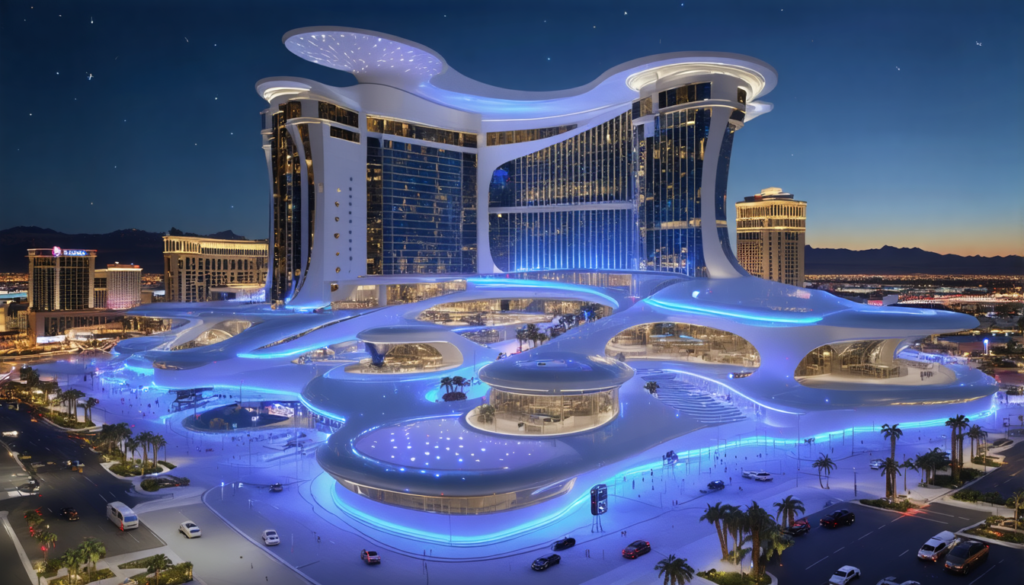
The announcement of the Atari hotel in Las Vegas had sparked a genuine wave of enthusiasm among video game enthusiasts and those curious about the innovative hotel scene. Imagining a place combining accommodation, a retro universe, and modern gaming in the iconic entertainment city seemed like a promising idea. Unfortunately, this major ambition faced a far more complex reality, leading to the project’s abandonment in Vegas despite several years of hopes and discussions. The idea, which aimed to bring together electronic competition fans, tourists, and players in the video game market, never managed to overcome certain crucial stages, thus revealing the major difficulties that can accompany the development of such an ambitious project.
Over time, this initiative, announced in 2020, suffered notably from financial problems, an unstable economic context, and a lack of solid investment strategies. The complexity of project management in a sector as fluctuating as video games, coupled with the specific demands of a thematic venue, pushed the project leaders to revise their ambitions downward, or even to consider other locations. This observation opens up a deep reflection on the many parameters that shape the commercial success or failure of such a concept, particularly in a city like Las Vegas where competition is fierce and financial stakes are colossal.
A major project that aimed to revolutionize hospitality in Las Vegas
The Atari hotel project in Las Vegas was far from being a simple classic hotel establishment. It was a bold vision combining the classic world of video games with new forms of digital entertainment. With an initial plan including about 400 rooms, it promised to attract a global clientele seeking an immersive experience. The idea included setting up interactive spaces dedicated to games, zones specially designed for e-sports competitions, and futuristic facilities where visitors and enthusiasts could immerse themselves in the legendary atmosphere of the Atari brand.
The choice of Las Vegas was no coincidence: as the world capital of entertainment, the city offered an ideal playground for such innovation. The project was meant to stand out as a differentiating element on the famous Strip, proposing an innovative concept mixing accommodation, gaming, and electronic events. This ambition naturally required optimal project management, integrating various disciplines ranging from architecture to event programming.
However, several factors gradually slowed development. Although the announcement sparked curiosity and certain enthusiasm, the many updates promised to investors and the general public became rare, leaving a worrying uncertainty over the concrete realization. The lack of substantial communication also contributed to weakening the support of local partners and investors, essential elements for a project of this magnitude.

Financial problems and the difficulty of securing strategic land in Vegas
At the heart of the difficulties encountered lies a crucial issue: financing. Building a themed hotel in the heart of Las Vegas, near casinos and major attractions, requires enormous investments. Indeed, to succeed in a project combining high-end accommodation and gaming equipment, the costs related to purchasing or renting suitable land prove particularly high. Yet, the Atari Vegas project never managed to finalize a firm agreement regarding the acquisition of the necessary land, estimated at about five acres, or nearly two hectares.
This stalled negotiation constituted a major obstacle, testifying to the difficulties faced by the project management teams. Without control over the site, it was impossible to move forward concretely with construction or even detailed planning of infrastructures. Added to this was an economic environment marked by a crisis that made investors much more cautious. The hotel sector, extremely sensitive to economic fluctuations, still suffers the repercussions of difficult periods, with increased prudence around projects deemed risky.
This situation fed a vicious circle: the lack of solid financial resources caused an inability to secure a location, which in turn undermined the confidence of investors and local partners. All this combined to put the project on pause, then definitively abandon it in this emblematic city.
| Key Factors | Impact on the Atari Vegas project |
|---|---|
| Land negotiation | Blockage without final agreement, no defined location |
| Economic context | Crisis making investors cautious |
| Required investments | Insufficient funds to carry out construction |
| Company strategy | Difficulty convincing and retaining partners |
Financial and strategic stakes in a competitive market
Beyond the technical difficulties, the project encountered complex business management. The company strategy should have included a robust, transparent, and adaptable financial plan depending on contingencies, but the development management never reached this level of efficiency. A latent commercial failure, partly due to lack of solid foundations, ended up sealing the fate of the Atari Vegas project.
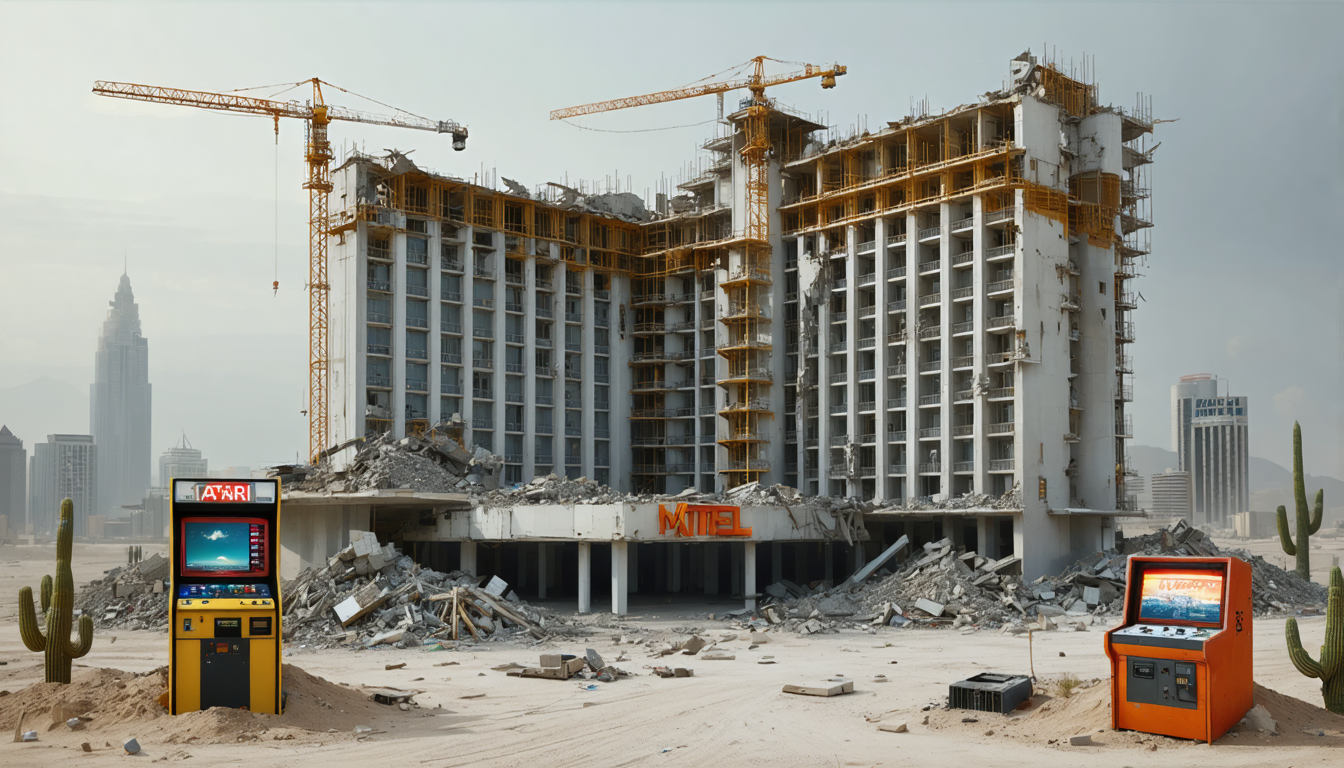
The global economic crisis, intensified since 2020 and still felt in 2026, has largely impacted the tourism and hospitality sectors, often the first to experience slowdowns when economic confidence declines. Institutional and private investors have become much more cautious about audacious projects requiring significant capital, such as the Atari hotel in Las Vegas.
This caution delayed the mobilization of essential resources for the project’s realization. The timing proved unfavorable: while Atari wanted to quickly launch its unique concept, the economic context caused a gradual withdrawal of financial support. This withdrawal precipitated the abandonment of the project in the world capital of entertainment, which nonetheless remains renowned for hosting the most innovative and riskiest projects.
Investors redirected their capital towards less risky or more traditional projects, preferring to minimize risks in an uncertain economic context. This phenomenon clearly illustrates the importance of economic conditions in the development of real estate and commercial projects linked to cultural and entertainment industries.
Direct and indirect impacts on the video game market
The video game market, which has grown strongly over the past decade, has managed to attract an increasingly large and diverse audience. However, the transition between digital worlds and physical experiences requires precise value chain management. Hospitality projects like Atari’s interfere directly with this dynamic. The fall of such a project can have a domino effect, slowing the overall enthusiasm surrounding new gaming experience formats.
This situation reminds us how fundamental the integration of a coherent business strategy is, capable of anticipating market evolutions, to avoid this type of commercial failure. It is necessary to adapt investments, project management, and planning according to economic and technological realities to successfully combine virtual and physical worlds effectively.
Why the Atari Vegas project never managed to go beyond the conceptual phase
Despite a seductive idea, the Atari hotel project in Vegas never managed to pass the design barrier for several cumulative and interdependent reasons. The lack of land guarantees with the failed negotiations for the land was a breaking point from the very first stages. Without a solid base, no concrete development could emerge.
Project management lacked coherence in synchronizing multiple actors — architects, investors, Atari brand representatives, and local partners. This dispersion caused significant delays and a communication deficit both internally and externally, contributing to the gradual dilution of the ambition.
Finally, the absence of a rigorous financial plan adapted to an economic crisis context prevented attracting and securing a sustainable financial commitment. The project thus suffered a commercial failure that some experts also link to a business strategy that did not evolve in the face of encountered constraints.
Lessons learned for the future development of Atari themed hotels
These difficulties have not completely killed the idea of an Atari hotel. Indeed, other projects outside Vegas, notably in Phoenix, currently seem better aligned. This location demonstrates a more moderate and pragmatic development strategy, adapting size and concept to market realities. Focusing on a smaller structure and less expensive spaces could allow a safer and more gradual launch.
The first Atari hotel considered is now planned around 2028, clearly illustrating the necessity of long and rigorous planning. This delay also shows that developers have learned important lessons about project management, the need to secure all development aspects before announcing big ambitions, and the importance of a financial strategy adapted to market contingencies.
The place of themed hotels in the post-pandemic era and their challenge in the face of the economic crisis
The case of the Atari Vegas hotel more broadly illustrates the challenges faced by themed hotels at a time when post-pandemic economic recovery is not stabilized. Investors remain cautious about the risks of commercial failure. Although innovative concepts attract crowds, their development requires a subtle balance between creativity, rigorous management, and economic adaptability.
The video game market, constantly growing, remains a source of inspiration but also a highly volatile sector due to rapid technological evolutions and changing consumer preferences. Creating a themed hotel exclusively dedicated to this universe demands not only significant investments but also excellent project management skills and the ability to anticipate market evolutions.
Abandoned projects like that of Atari show that without a comprehensive strategy where each step is validated—from land acquisition to fund securing, through design and communication—ambitions can quickly be constrained by the harsh reality of the markets. This case will likely remain an important reference for future developments of themed hotels, especially in the fast-growing gaming and e-sport sector.
Essential elements to master to successfully complete a themed hotel project today
- A robust and adaptive financial strategy: essential to overcome economic contingencies.
- Coordinated project management: to ensure synchronization of teams and partners.
- A clear market positioning: taking into account local requirements and global trends.
- Transparent and regular communication: to maintain investor and public interest.
- Strategic flexibility: allowing project adjustments in response to economic or technological changes.

Lessons learned from the failure of the Atari Vegas hotel for the themed hotel sector
Looking more closely, abandoned projects like that of the Atari Vegas hotel offer a wealth of lessons for the themed hotel sector. The concept of merging cultural universes or popular media with the hospitality industry can generate strong appeal, but only if the business strategy is perfectly built and executed.
A commercial failure of this scale highlights the crucial importance of financial management, but also the capacity to establish a solid relationship with local partners and to understand market specifics well. Especially for Las Vegas, competition is such that only projects backed by substantial investment power and truly innovative concepts can hope for lasting success.
This experience demonstrates that a project can in no case rely solely on a simple announcement effect or a seductive brand image. The entire development must be framed by a coherent strategy, based on validated stages and proactive risk management. This applies all the more to projects that intersect with dynamic and volatile sectors like the video game market.
| Key Lessons | Applications for the future |
|---|---|
| Importance of land validation | Negotiations completed before public communication |
| Need for a solid financial plan | Guaranteed fund mobilization before launch |
| Integrated project management | Strict coordination between all actors |
| Adaptation to market constraints | Enhanced flexibility and anticipation |
Alternatives and future prospects for the Atari brand in hospitality
The withdrawal from Vegas does not mark the end of Atari’s ambitions in the hospitality sector. The company seems to be turning toward more modest and better-adapted projects, notably the hotel planned in Phoenix. This site bets on a smaller size and more realistic programming, which could serve as a laboratory to test the concept under more favorable economic conditions.
In the longer term, the opening planned for 2028 offers a new possibility for success. This underlines the importance of a patient approach, built around optimized project management and realistic financial strategy. Atari undoubtedly wants to take advantage of the growth in the video game market and immersive experiences by combining videoludic heritage and hospitality innovations.
However, future success will necessarily depend on the group’s ability to integrate past lessons, manage risks effectively, and build solid partnerships, while staying attentive to the rapid changes in the global video game and tourism markets.