
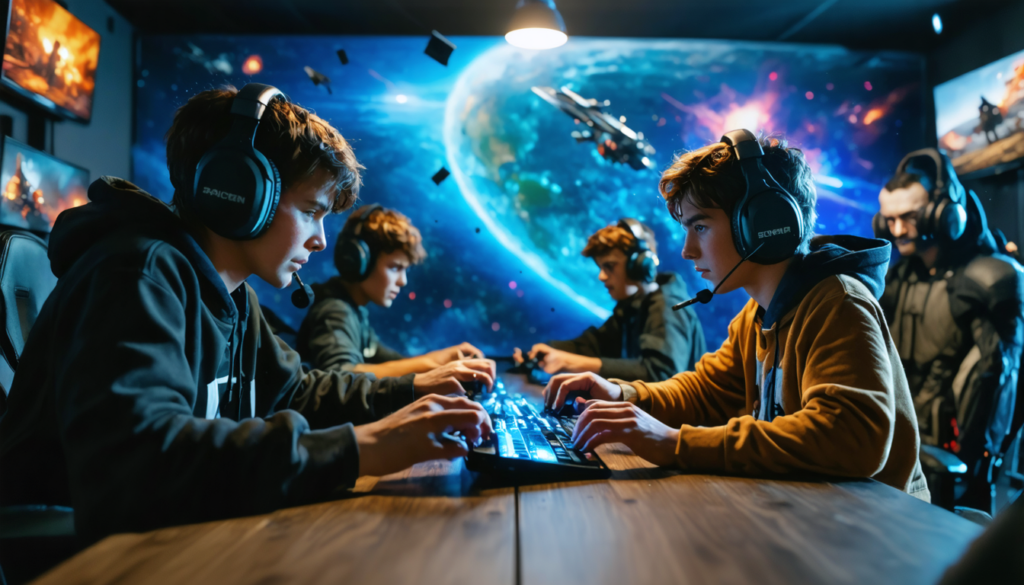
In 2026, the face of gaming has been profoundly transformed. Far from the simple PC games of the past, online gaming now reaches every corner of the digital world, blending fierce competition, immersive universes, and accessibility beyond all odds. As the gamer profiles have diversified and platforms multiplied, certain titles clearly stand out among the millions of multiplayer and gaming streaming enthusiasts. Between massive popular titles, spectacular e-sport competitions, and unique mobile experiences, the video game landscape is richer than ever. This situation captivates both players and observers, eager to understand which mechanics appeal, which universes unite, and how these gaming communities will evolve.
To grasp this revolution, one must analyze the dynamics of gaming platforms, loyalty to persistent universes, and the rise of practices such as mobile gaming or the discreet yet impressive growth of online casino games. Each segment competes in a fragmented ecosystem, offering experiences tailored to very different but nonetheless complementary digital behaviors. This observation illustrates an evolution where online gaming is no longer limited to a single style or genre but establishes itself as a global cultural and social phenomenon, in which innovation and interaction challenges have never been stronger.
The essential pillars of online gaming in 2026: FPS, MMO, and Battle Royale
Gaming in 2026 relies on several categories of online games that have managed to sustain a loyal audience while adapting to the demands of modern players. Among these categories, competitive FPS games hold a central place. Titles like Counter-Strike 2, Call of Duty Warzone, or Valorant continue to attract millions of players thanks to quick accessibility and dynamic matches, reinforced by regular updates that keep experiences fresh. Competition lies at the heart of these games, where skill, ranking, and personal progression create a positive addiction effect. E-sport around these titles remains a key driver, amplified by the popularity of streaming platforms like Twitch and YouTube Gaming, turning every match into a global spectacle.
MMOs, on the other hand, play a different card: that of loyalty and depth. They offer persistent worlds in which players immerse themselves over the long term, building digital routines and developing strong attachments to communities. Although no longer the sole notable source of MMOs, World of Warcraft remains emblematic, while other digital universes innovate to maintain interest. These virtual spaces become true living places, offering an alternative to the frenzy of FPS and battle royale games through a dense and evolving experience.
Battle royale games embody the spectacular and accessible dimension of online gaming. Their simple and intense mechanics appeal to a broad audience, from casual players to seasoned competitors, laying the foundation of many multiplayer successes in 2026. Titles like Fortnite remain undisputed masters, thanks to constant updates, live events, and very dynamic community engagement.

The rise of mobile gaming: a revolution in volume and accessibility
Mobile gaming now dominates by number of active users. Games such as Genshin Impact, PUBG Mobile, or Clash Royale perfectly illustrate this trend. Their success relies on ease of access – the smartphone having become the essential digital tool – and on the possibility of engaging in short sessions suited to a very mobile modern lifestyle. These micro-sessions allow for a balance between entertainment and daily constraints, thus attracting a huge and diverse audience.
Technological development on mobile continuously improves graphics, mechanics, and gameplay fluidity. High-end visual rendering and enhanced connectivity remove former technical barriers, granting an entire generation of players privileged access to experiences previously reserved for consoles and PCs. The massive adoption of cloud gaming on mobile intensifies this trend, providing instant access to a diverse library without the need for powerful equipment.
Online casino platforms have also perfectly grasped this mobile-first dynamic. They offer interfaces adapted for easy play on small screens, thus reinforcing their presence in the online gaming universe. This sector is characterized by fast and intuitive formats, like Disco Win, which attract a broad audience seeking both adrenaline and simplicity.
| Game | Category | Platforms | Average monthly player base (millions) |
|---|---|---|---|
| Fortnite | Battle Royale | PC, Consoles, Mobile | 35 |
| Valorant | Competitive FPS | PC | 15 |
| Genshin Impact | Mobile / RPG | PC, Mobile, Consoles | 25 |
| World of Warcraft | MMO | PC | 8 |
| Disco Win | Online Casino | Web, Mobile | 10 |
Live platforms and gaming streaming: a new dimension for online games
Gaming streaming is now inseparable from the success of online titles. In 2026, watching or participating in a live gaming session is as natural as playing oneself. Platforms like Twitch, YouTube Gaming, and new entrants with strong social capital offer gaming communities a window into e-sport competitions, speedruns, but also moments of shared conviviality.
Developers rely on this dynamic to create live events that unite players and amplify the visibility of popular titles. For example, Fortnite regularly organizes virtual concerts and unique collaborations that attract millions of simultaneous viewers. This phenomenon transforms gaming into an interactive show, where the spectator’s experience counts as much as the player’s.
Streaming also directly influences game popularity, creating a virtuous circle: the more active the community, the more invested the players, bringing a constant flow of improvements and innovations in gameplay. In 2026, the link between gaming streaming and commercial success is stronger than ever, boosting creativity and competitiveness in the sector.
Community loyalty in MMOs and persistent worlds: lasting engagement
MMOs remain one of the strongholds of long-term online gaming. This longevity is notably due to their ability to create a strong sense of belonging among players. These persistent worlds offer much more than simple entertainment: they become places where solid alliances are built, shared stories told, and deep social interactions occur.
MMO developers bet on complex progression mechanics, regular events, and frequent updates to nurture this attachment. For example, the latest major expansion added to World of Warcraft successfully rallied the community by renewing the universe and introducing new gameplay mechanics, sparking renewed interest.
This long-term loyalty contrasts with the frantic pace of fast formats and mobile games. MMOs offer an immersive experience, where each player commits over the long run. Social interaction is paramount, strengthening the role of guilds and communities as fascinating driving forces in the gaming landscape.
Online casino games: the unexpected player in the 2026 gaming landscape
While traditional gaming often focuses on skill and progression mechanics, online casino games hold a particular place thanks to their accessibility and growing popularity. Platforms like Disco Win combine modern slot machines and live tables, offering robust and immersive experiences.
These games target a distinct, often broader audience, who favor quick sessions easy to understand. Unlike MMOs or FPS, the stake here lies more in immediate thrills and adrenaline than in advanced technical mastery. This attests to the diversity of online games: a multiple universe where every player finds their place.
The success of these platforms also comes from their streamlined ergonomics, mobile accessibility, and the authenticity recreated via live dealers and adapted live formats. This segment, although discreet, asserts itself as a major component of the overall digital ecosystem.

Analysis of trends and diversification of player profiles in 2026
The online gaming landscape in 2026 is not homogeneous but fragmented into several well-differentiated segments that coexist and evolve according to strong trends. More than just a pastime, gaming becomes a mosaic of varied experiences, corresponding to very different schedules and behaviors.
The coexistence of ultra-competitive FPS, deep MMOs, large-scale mobile gaming, and online casino games testifies to the sector’s adaptability to a global and now multi-faceted audience. Players can thus switch from an intense Valorant session to a relaxed mobile game or a quick round on a casino platform, depending on their available time and current desires.
This diversification also influences how gaming communities are built: they now function as ecosystems where different practices, tools, and content converge. This encourages greater openness and unique cultural richness, deeply distancing the field from simple entertainment to make it a true interactive social experience.
Numerical data illustrating the success of online games in 2026
It is interesting to look at the numbers that demonstrate the sector’s vitality. For example, major platforms for battle royale and FPS show monthly peaks beyond 30 million active users. Mobile gaming regularly exceeds 50 million players in total, with titles like Genshin Impact or PUBG Mobile leading the way. Despite a more modest audience, MMOs retain several million loyal and engaged players. Finally, online casino platforms reach figures that rival those of some popular multiplayer games thanks to their regular attendance.
These data clearly show that online gaming extends to new horizons of usage and interactions, combining competition, socialization, and instant entertainment. This continuous growth also rests on technological innovation, the rise of high-speed connections, and the democratization of equipment, foreshadowing a future as rich as it is dynamic for gaming.
Forward-looking vision: innovations and future of online games in a fragmented universe
Online games in 2026 illustrate a clear trend towards diversification and hybridization of experiences. Technological evolution, notably in cloud gaming, artificial intelligences integrated into gameplay, or augmented reality, promises to open new paths for popular titles. We are moving towards a universe where every player will not only be able to choose their style but also create and share personalized content, further strengthening the gaming community feeling.
In this context, multiplayer platforms must continue innovating to remain attractive, offer ever smoother and more interactive experiences, and preserve the delicate balance between competition and conviviality. E-sport will likely globalize further, relying on international audiences and more inclusive formats. Finally, the convergence between video games, social networks, and streaming content will become a strategic lever essential for capturing attention and retaining players.
In summary, online gaming has become a multiple world, with increasingly blurred boundaries between entertainment, competition, and social interaction. It constantly adapts to the expectations of an ever more demanding and varied gaming community, promising new years of discoveries and success for titles able to combine innovation and engagement.