
For over four decades, the character Mario has established himself as an iconic figure in video gaming, crossing generations and adapting to technological evolutions while remaining true to his roots. Born under the name Jumpman in the early 1980s, this now indispensable mustached hero underwent a major transformation that helped shape an important part of global gaming culture. This evolution is not just a simple character story but a genuine saga reflecting Nintendo’s innovations, the ingenuity of its creators, and the ongoing enthusiasm of players through time.
In 1981, in a burgeoning but still fledgling video game world, a mischievous carpenter found himself plunged into a wild adventure against an enraged gorilla. Jumpman, his original name, laid the foundations of a nascent video game mythology, setting the stage for an extraordinary destiny. The transition from Jumpman to Mario, soon after formalized, gave birth to a true cultural icon, a symbol of perseverance and creativity on which the Japanese giant built an unparalleled empire.
Video game history has rarely seen such a rich and emblematic journey. From Donkey Kong to Super Mario Bros., including successes like Mario Kart and Super Smash Bros., the character has diversified his adventures and reached an ever-growing audience. This remarkable longevity is explained by a unique ability to evolve without ever losing its essence, embodying both the nostalgia of early games and the modernity of the most recent 3D experiences. In 2025, Mario remains a central figure, both in the video game world and in popular culture, proving that some icons, when well maintained, easily transcend eras.
The Emergence of Jumpman: The Genesis of a Cult Character in 1981
At the heart of the 1980s, the video game world was expanding but still young and without real universal figures. It was in this context that Shigeru Miyamoto, then a young creator at Nintendo, brought Jumpman to life, an inexperienced but promising hero. This character first appeared in 1981 in the game “Donkey Kong,” a revolutionary arcade game for its gameplay and narrative universe.
Jumpman, this brightly colored carpenter, had the mission to save Pauline, a young woman kidnapped by a giant gorilla. The player must guide this character through a construction site full of obstacles, climbing scaffolding and avoiding rolling barrels, all in a simple yet effective style. This scenario, although basic at first glance, already offers a rich experience full of adrenaline and challenge, laying the foundations of gameplay that would influence countless titles thereafter.
This character owes his temporary name of Jumpman to his jumping ability, a crucial gameplay element that distinguishes him from previous heroes often stuck in linear movements. This flexibility brings new dynamism to video games that captivated players at the time and laid the first stones of a coherent universe. Through the example of Jumpman, one perceives the importance Nintendo placed on story and character—elements they would perfect over time.
The importance of Jumpman in video game history goes beyond his simple role as protagonist. He is a symbol of an era when creativity and technique combined to transform a family pastime into a flourishing industry. The striking success of Donkey Kong allowed Nintendo to gain credibility and recognition, opening the way to a revolution that would transform the video gaming landscape. This first step laid the foundations of a saga that the whole world now knows under the name Mario.
From Jumpman to Mario: The Birth of an Identity in 1982-1983
The evolution from Jumpman to Mario was a major turning point. In 1982, the character changed identity in “Donkey Kong Junior.” Unlike the first episode where he was the heroic savior, Mario then became an antagonist, capturing the gorilla the player must free. This role reversal already illustrates the growing complexity of the character and his universe.
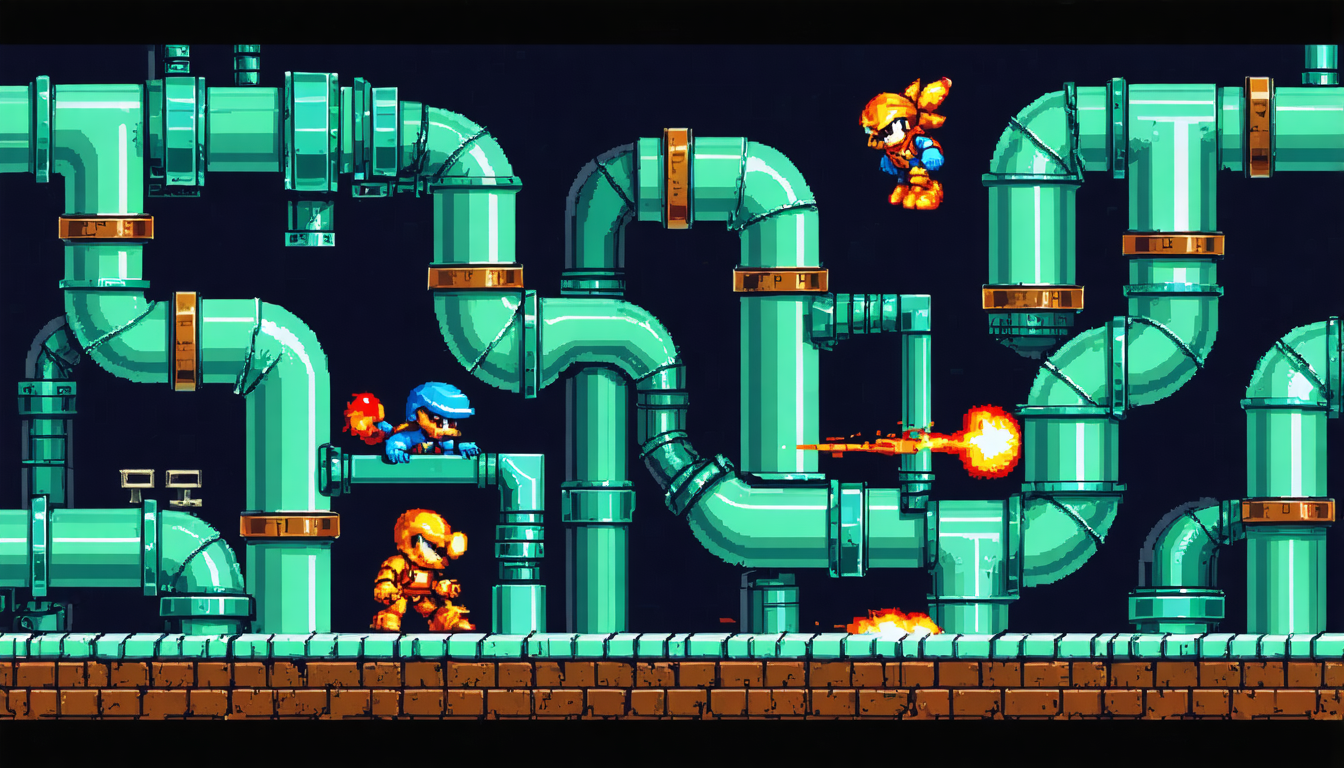
It was in 1983, with the release of “Mario Bros” on arcade machines, that Mario truly took off. The universe expanded and the dynamics evolved: Mario became a plumber accompanied by his brother Luigi. They found themselves plunged into the underground pipes of New York, facing together a colorful and varied bestiary. Choosing Mario as a plumber was no accident—it fitted perfectly into the setting of pipes and sewers, giving coherent meaning to the game environment and renewing the character’s image.
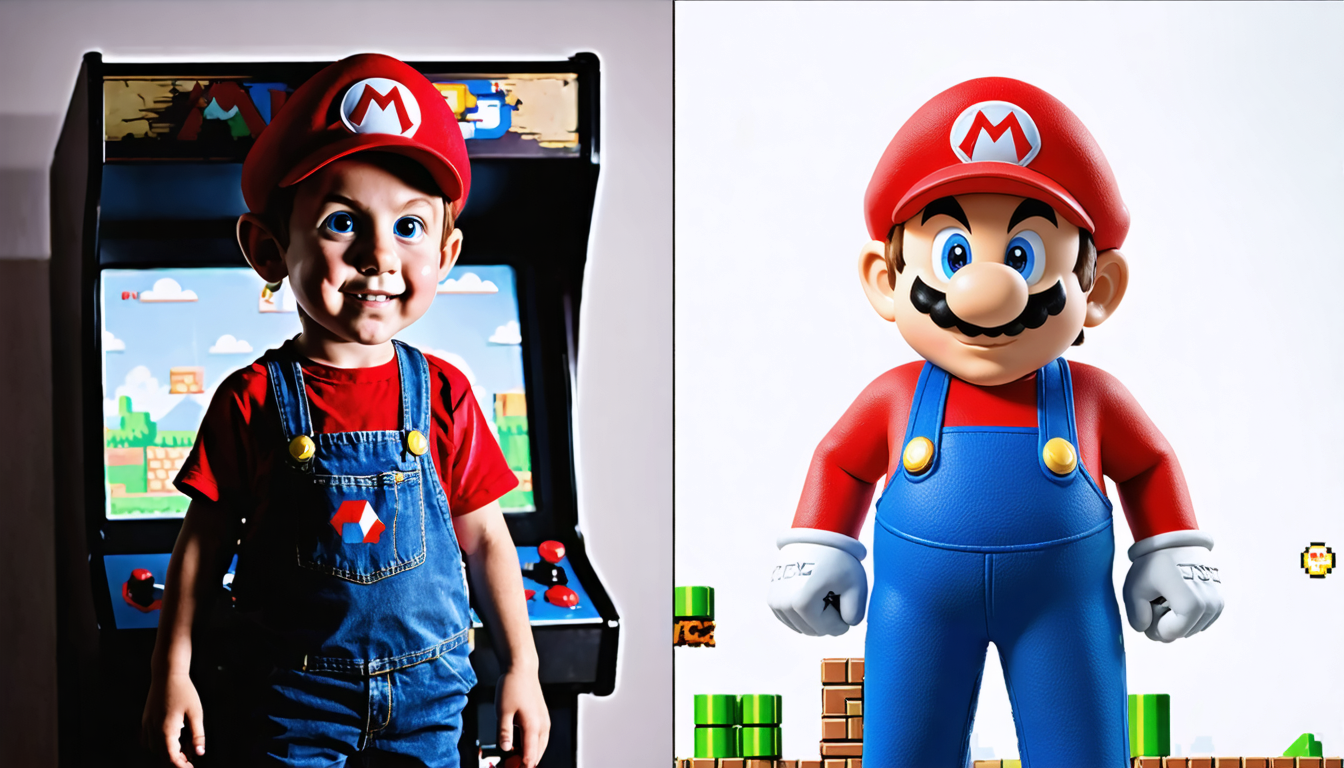
This period also marked the gradual construction of Mario’s visual identity: distinctive mustache, red cap, and blue overalls became his iconic features. These simple yet memorable elements allow immediate recognition, reinforcing his status as an icon. The Mario-Luigi duo also laid the foundation for a franchise with two complementary figures that would endure over decades.
Gameplay-wise, “Mario Bros” did not yet completely revolutionize the genre but introduced cooperative and competitive mechanics that would charm players. This ludic richness laid the groundwork for the true boom that would erupt a few years later. The integration of these novelties shows Nintendo’s particular attention to creating an experience both accessible and deeply entertaining.
| Year | Game Name | Mario/Jumpman Role | Key Evolution |
|---|---|---|---|
| 1981 | Donkey Kong | Hero named Jumpman | Character introduction and jumping gameplay |
| 1982 | Donkey Kong Junior | Anti-hero named Mario | Role reversal with Donkey Kong |
| 1983 | Mario Bros | Plumber hero with Luigi | Introduction of brother Luigi and pipe universe |

Super Mario Bros (1985): The Triumph That Redefined Video Games
The launch of “Super Mario Bros” on the NES console in 1985 marked a true turning point in video game history. This emblematic title carried by Nintendo propelled Mario to the status of a globally recognized hero, firmly anchoring his universe in popular culture. The transition from arcade to home console enabled a deeper immersion, with large, colorful, and complex levels.
“Super Mario Bros” unveils an now legendary storyline: Mario must cross the Mushroom Kingdom to save Princess Peach, facing Bowser, his sworn enemy. This simple yet effective narrative illustrates platforming mechanics and ingenious puzzles that captivate players. The diversity of the environments—from sunlit plains to eerie castles—contributes to this rich gameplay that revolutionized the genre.
The impact of this game goes beyond its gameplay; it changed the perception of video games as a whole. Thanks to its colorful graphics, catchy music, and accessible playability, “Super Mario Bros” attracted a much wider audience, ranging from children to adults. The influence of this resounding success also extended to console marketing, contributing to Nintendo’s recovery and the rebirth of the post-1983 video game market.
In 2025, “Super Mario Bros” remains an unrivaled reference, often studied and cited as an example of perfect design. The game has spawned a whole series of sequels and spin-offs that have exploited and extended this rich and endearing universe, turning Mario into a true video game legend.
The Diversification of Mario’s Adventures: A Winning Strategy for the Franchise
Mario has not been confined to traditional platforms. From the late 1980s and throughout the following decades, the character ventured into a multitude of video game genres. This diversification shows Nintendo’s desire to continuously renew its universe while retaining its audience.
Direct sequels in the “Super Mario” saga explore 3D environments with “Super Mario 64” on Nintendo 64, then titles like “Super Mario Galaxy” and “Super Mario Odyssey,” which constantly push the boundaries of gameplay and storytelling in platform games. These games offer unprecedented freedom of exploration, blending adventure, puzzle-solving, and action in open and brilliantly designed worlds.
At the same time, Mario excels in genres that seemed distant originally. The mustached hero appears in kart racing games (“Mario Kart”), sports like golf or tennis, or collections of mini-games aimed at the whole family (“Mario Party”). This strategy attracts different player profiles, from online competitors to casual gamers, reinforcing Mario’s footprint in all aspects of gaming culture.
Mario even appears in fighting games, notably the series “Super Smash Bros,” which brings together Nintendo’s famous characters in intense battles. This multiplicity of roles highlights Mario’s exceptional adaptability and the relevance of a character that players can identify with in various forms, strengthening his longevity in a constantly evolving market.
- Successful exploration of 3D with “Super Mario 64” (1996) and its successors.
- Success of multiplayer games: Mario Kart and Mario Party.
- Incorporation into sports universes, creating varied playful experiences.
- Presence in iconic fighting titles like “Super Smash Bros.”
- Continuation of storytelling and depth in titles like “Super Mario Odyssey.”
Beyond Video Games: Mario, a Popular Culture Character
It would be reductive to limit Mario’s impact to the realm of game consoles alone. Since the 1980s, Nintendo has leveraged the character’s popularity to extend his influence well beyond video games, strengthening Mario’s grip on global popular culture.
Animated series like “The Super Mario Bros. Super Show” in 1989 helped cement the character’s recognition among younger viewers, mixing humor and adventures in an accessible format. Later, Mario experienced several film adaptations, including the 1993 live-action movie which, despite its mixed reception, remains an important milestone highlighting the character’s fame at the time.
The 2023 animated film directed by Aaron Horvath and Michael Jelenic gave new life to the franchise. This feature surpassed the billion-dollar mark at the box office, an unprecedented achievement for a film of that year. Fans found numerous nods to the games, a celebration of the Mario legacy, and a new way for Nintendo to connect with an ever-engaged audience.
These various media incursions show that Mario is not just a video game character, but a multifaceted cultural icon, able to adapt to consumption trends and current audience expectations. This cross-media presence contributes to his longevity and unique status in entertainment history.
Key Figures Reflecting Mario’s Global Impact in 2025
In 2025, data confirms Mario’s major role in the history and present of video gaming. With over 450 million copies sold worldwide, the Mario franchise is the most prolific ever created, a record hard to beat. This quantified success shows not only consistent game quality but also a particularly effective marketing and renewal strategy by Nintendo.
This commercial dominance is accompanied by massive media impact, with merchandise, partnerships, and events dedicated to celebrating the Mario universe. Tournaments, concerts, and festivals are frequent, gathering a multigenerational and passionate community. Mario’s figure is also often cited in academic analyses, exploring his influence on game design and gaming culture.
| Statistic | 2025 Data | Context |
|---|---|---|
| Global Mario Game Sales | 450+ million | Nintendo’s best-selling franchise |
| Sales Records for “Super Mario Bros.” | 40+ million | Emblematic NES game still appreciated |
| Mario-Related Films | 2 main | Major adaptations in 1993 and 2023 |
| Years of Existence | over 40 years | Durability and popularity across generations |
Technical and Artistic Innovations That Shaped the Mario Universe
Over the years, the Mario universe has enriched itself through both technical and creative innovations. Nintendo has always taken pride in marrying technological advancement with artistic quality, greatly contributing to players’ immersive experience.
From the 8-bit graphics of the early days to the complex 3D renderings of “Super Mario Odyssey,” the visual evolution is accompanied by an iconic soundtrack, notably composed by Koji Kondo, whose compositions are as recognizable as the character himself. These melodies rhythm the adventures and reinforce the ambiance of the explored worlds, creating a strong emotional connection with players.
Technical advances in level design also allow for varied and accessible challenges, with ergonomics carefully thought out to support all player profiles. The addition of interactive elements, puzzles, and open worlds revolutionized the genre, establishing Mario as an essential reference.
Finally, the design of secondary characters, enemies, and environments contributes to the coherence and richness of the Mario universe. Each element is carefully crafted to ensure global harmony while offering diversity and surprise to players.
- Shift from 2D to 3D graphics with constant technological innovations.
- Iconic music reinforcing the franchise’s identity.
- Levels designed with balanced accessibility and complexity.
- Consistent and varied design of characters and environments.
- Progressive exploration of open worlds and innovative gameplay.
Mario’s Legacy: An Icon Inspiring Gaming Culture and Beyond
Beyond his playful functions, Mario has become a timeless symbol deeply marking gaming and popular culture. His journey perfectly illustrates the transformation of a video game character into a global cultural icon, capable of uniting multiple generations around a shared universe.
Fan communities sustain the legend: cosplay, fan art, tournaments, and creative content continue to flourish. On streaming platforms, Mario gameplay attracts millions of viewers, showing intact interest and renewed passion for the character. This vitality is also fed by collaborations between Nintendo and other cultural and economic actors that promote Mario’s visibility across various fields.
Moreover, Mario influences design and storytelling in video games, serving as a model for many creators. His journey is often studied as a case study on building a strong brand, a coherent universe, and a successful user experience. The innovations and player-centered approach adopted by Nintendo through Mario continue to inspire developers worldwide.
Ultimately, Mario is much more than a pixel hero. He embodies an essential part of video game history and a major cultural benchmark evolving with his time while preserving his unique charm and ability to enchant. Through his multiple reincarnations, he remains a bridge between the past, present, and future of gaming culture.