
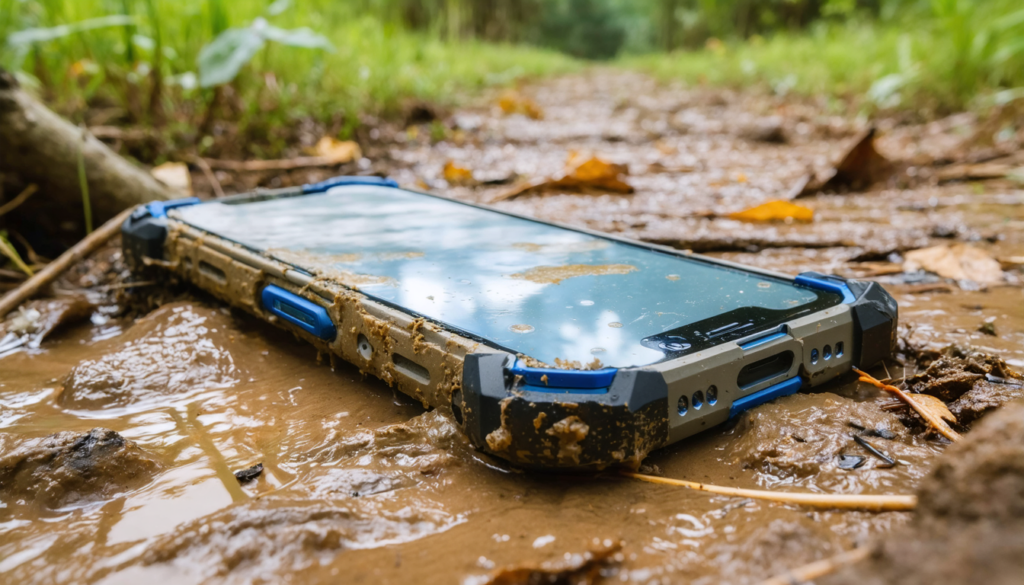
When the weather becomes unpredictable during a hike, it is crucial to be able to rely on reliable equipment, especially your smartphone. Too often, daring adventurers overlook the effects of rain, mud, and cold on their electronic devices, which can turn a promising getaway into a technological nightmare. Choosing an ultra-resistant smartphone suited for weather resistance then becomes an indispensable ally to maintain connectivity, safety, and the capture of memorable moments, even when under a downpour.
The experience of our seasoned travelers shows that it is not so much the rain itself that causes failures, but the combination of water, dust, and temperature fluctuations that weakens the devices. Thus, smartphone durability relies on a well-thought-out design that offers much more than simple surface waterproofing. This practical guide is intended for all rainy hiking enthusiasts searching for a waterproof and robust phone, capable of withstanding shocks, immersion, and extreme conditions without faltering.
Throughout the sections, we will break down the essential elements to consider: from understanding IP ratings, to physical features such as tempered glass and reinforced mechanical protections, to tactile ergonomics in the rain and the reliability of offline GPS functions. Each aspect is illustrated with concrete examples to guide your smartphone choice with precision and pragmatism, in line with your outdoor gear and usage requirements.
Understanding the importance of IP ratings for an ultra-resistant smartphone in rainy hiking
In the world of smartphones designed to withstand weather, the notion of IP rating is paramount. It is an international standard quantifying the resistance of a device to dust and water penetration, through a combination of numbers. Understanding these codes is a key step to making an informed choice.
In rainy hiking, you do not only face a brief drizzle but often prolonged exposure to humidity, standing water, or even heavy downpours and muddy splashes. An ultra-resistant smartphone with an IP67 rating guarantees temporary immersion in water up to 1 meter for 30 minutes, covering a large part of common incidents. However, more demanding users will opt for a smartphone with IP68, which supports prolonged immersions, or even IP69K, which resists high-pressure water jets, a particularly interesting feature if your hike exposes you to tough conditions such as cleaning with a water jet or crossing rough streams.
It is fundamental to analyze exact limits, as IP certification does not mean total invincibility. The quality of the seal, the robustness of the flaps for USB ports and SIM cards, as well as managing internal condensation are variables that greatly influence long-term reliability. For example, a waterproof smartphone but with a poorly protected charging port could see its performance reduced after several exposures to heavy rain.
Finally, the solidity of a smartphone is not limited to water protection; dust, sand, and other fine particles that are omnipresent in outdoor environments are equally threatening. The protection rating against dust ensures that the phone remains operational even when caked in mud or covered with dust. Adequate resistance prevents premature wear of components and guarantees optimal smartphone durability during your adventures.
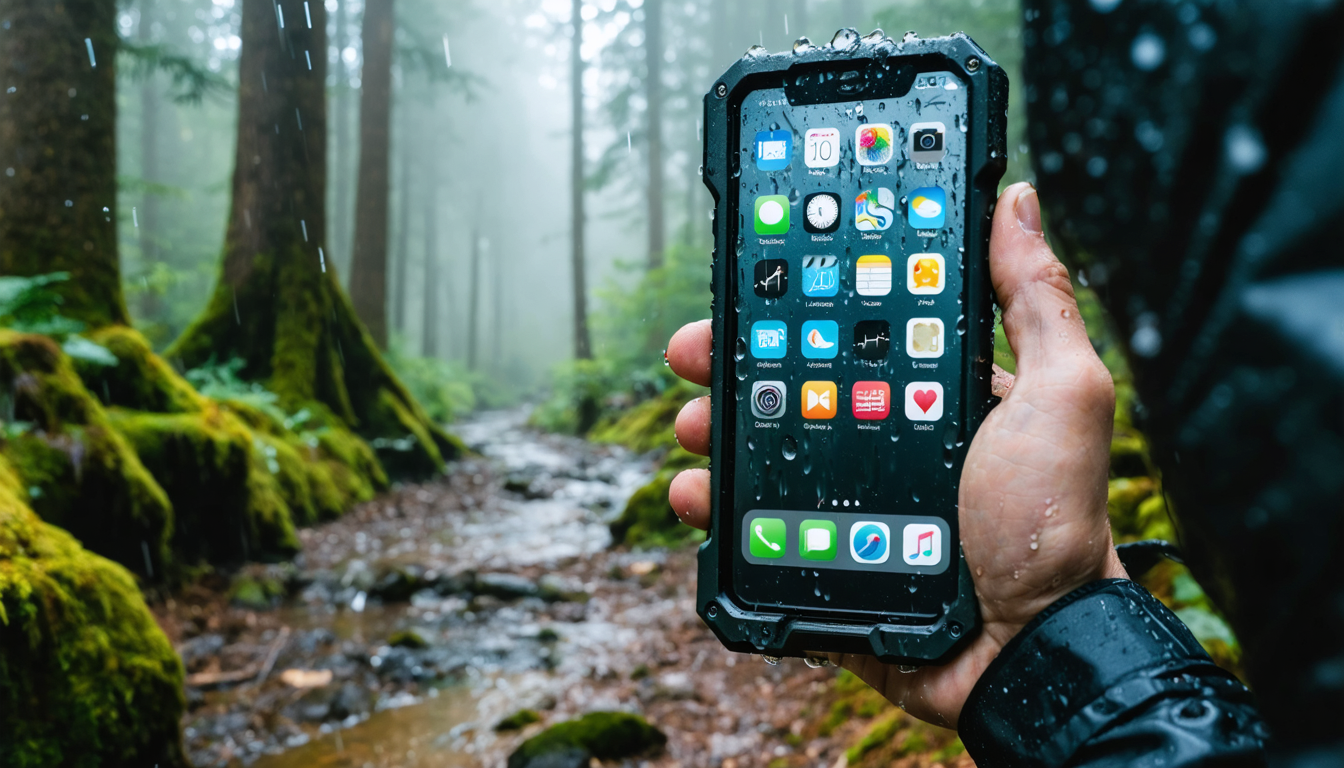
The real impacts of rain on smartphone durability in an outdoor environment
Rain during a hike is not limited to wetting the surface of your smartphone. When you walk on trails where mud, dust, and sweat accumulate, the environment becomes much more hostile. This abrasive mixture infiltrates the smallest corners of the phone, putting waterproofing and seals to a tough test.
A device declared a waterproof phone must therefore be designed as a truly hermetic case. Water can seep through flaps, buttons, or speaker surrounds, promoting internal corrosion and causing malfunctions. In cold and damp conditions, condensation formed inside the smartphone further aggravates this risk, leading to invisible short circuits that sometimes appear later.
Moreover, handling the phone in rainy conditions is never optimal. Wet or gloved hands can drop the device, causing falls onto rocky surfaces, adding physical wear to the water threat. This repetition of small impacts weakens just as much as large shocks. Corners, often weak points, must be reinforced to absorb these types of impacts and prevent the screen from cracking.
An ultra-resistant smartphone must also maintain its readability despite the rain. Fogging, raindrops, and diffuse light complicate screen reading; a good model will therefore offer an advanced solution to preserve touch responsiveness with finger or glove and ensure clear display even in humid environments. Some brands offer usage modes adapted to these conditions, guaranteeing effective ergonomics.
Thus, buying a robust smartphone is not just about relying on a list of technical features but about considering the reality on the ground: the outdoor gear accompanying your adventure and your usage habits affect the actual phone performance amid rain and mud.
Key materials for an ultra-resistant smartphone: glass, frame, and corner protection
At the heart of smartphone durability, the nature and construction of materials determine resistance to wear and daily accidents in the mountains or forest. Three areas attract attention: the glass screen, the frame around the phone, and the corners which most often suffer direct shocks.
On classic smartphones, the tempered glass screen offers standard protection but remains sensitive to cracks and breakage. In contrast, ultra-resistant models often integrate a reinforced layer, like Gorilla Glass Victus 2, capable of withstanding friction and multiple drops on hard rock. These glasses are designed to disperse impact energy and minimize shards.
Around the screen, the frame acts as a shield. It absorbs shocks and protects the smartphone’s integrity by preventing forces from concentrating directly on a fragile surface. Frames made of specific metal alloys or reinforced polycarbonate combine lightness and resilience, effectively preventing deformation and breakage.
Finally, the corners are the first line of defense during a fall. They are often oversized, incorporating rubber reinforcements or vibration-absorbing materials, which help disperse impacts. This aspect is critical to avoid irreversible damage.
It is also crucial to check the junction between the glass and the frame: a transition without sharp edges greatly reduces the risk of cracks during a fall. Smartphones dedicated to rainy hiking must thus offer a meticulous finish to these joints, ensuring both effectiveness and comfort of use.
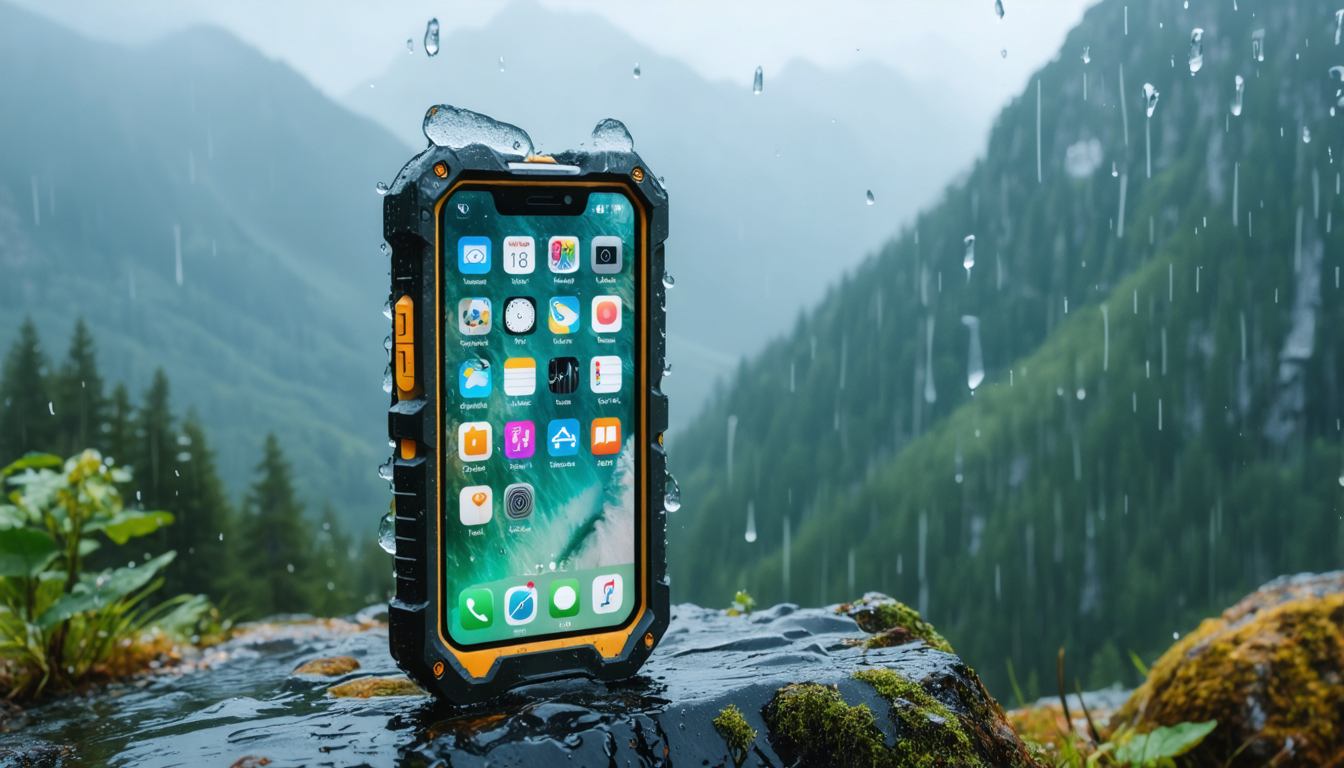
Comparative table of materials for ultra-resistant smartphones
| Component | Material Type | Advantages | Disadvantages |
|---|---|---|---|
| Screen | Gorilla Glass Victus 2 | High resistance to scratches and shocks, good readability | High cost, not completely unbreakable |
| Frame | Reinforced metal alloy / Polycarbonate | Robustness, good shock absorption, lightweight | May increase overall weight |
| Corners | Reinforced rubber / Integrated shock absorbers | Maximum protection against impacts, force dispersion | Sometimes bulky design, loss of aesthetics |
Optimizing the ergonomics of a waterproof phone for effective use in the rain
An ultra-resistant smartphone must first be a functional tool and not simply a solid object. Under a rainy sky, grip, touch screen responsiveness, and ease of access to features determine the success of a hike.
In humid weather, fingers slip or are often gloved, making non-adapted screens imprecise. Some touch technologies integrate “glove” modes allowing touch sensitivity to be retained even with thick materials. Testing this feature before any purchase is advised.
Screen readability in diffuse light and under raindrops is essential. The best AMOLED or LCD technology can lose effectiveness if an anti-reflective and hydrophobic coating is not present. Practically, you must be able to read a map or notification without intense struggle.
Ergonomics also concern unlocking. Facial or fingerprint recognition that works despite rain or gloves avoids risky manipulations that could cause the phone to be dropped. In case of difficulty, a simple alternative unlocking method remains essential.
Finally, physical buttons, often more reliable than touch controls in these conditions, must be accessible and waterproof, with strong tactile feedback for intuitive use.
Ensuring battery autonomy and reliability during rainy hiking with a durable smartphone
An often overlooked aspect when selecting a robust smartphone is its smartphone durability related to the battery and energy management. Rain and cold directly impact the ability to maintain a sufficient charge.
At low temperatures, lithium-ion batteries see their performance decrease, reducing their effective autonomy. A waterproof phone with software optimization to manage these losses offers a clear advantage in the field.
Fast charging, compatible with waterproof external batteries, allows regaining energy quickly between stages. It is essential never to attempt charging a phone that is still wet or under rain, to avoid short circuits and damage.
Charging ports are a major vulnerability. The most reliable smartphones are equipped with hermetic flaps that are easy to close properly, reducing failures. Using waterproof charging cables and protecting hiking accessories enhances this safety.
In preparation for your trek, a good routine includes always starting with the battery above 80% and saving energy via an “economy” or “airplane” mode optimized for hiking, reducing consumption on non-essential functions.
Practical list to preserve the battery of your ultra-resistant smartphone during rainy hiking
- Always charge after the smartphone is completely dry.
- Avoid exposing the device to rapid temperature changes during drying.
- Use suitable and waterproof charging accessories.
- Disable unnecessary apps and notifications to save battery.
- Prefer airplane or energy-saving mode in areas without network.
- Keep an external battery in a waterproof and easily accessible pouch.
Rain obscures natural landmarks and makes trail reading more difficult, which places the ultra-resistant smartphone at the heart of safety during rainy hiking. However, losing network remains a major threat.
To compensate for this, it is essential to use applications capable of working offline; always pre-download maps of the regions traveled before departure. GPS functions integrated into most rugged phones display reliable location even without connection, but accuracy varies by sensors.
A fully waterproof smartphone integrates quick GPS stabilization as well as access to reliable GPX tracks, essential in the wilderness. Additional sensors such as digital compass or altimeter facilitate orientation. However, these must be regularly calibrated to ensure optimal use.
The audibility of the phone in case of emergency call is also critical. Robust models are generally designed so that sound output remains clear despite the noises of rain and wind, a vital factor for communication in difficult conditions.
Essential practices and accessories to maximize your smartphone’s protection during a rainy hike
Having an ultra-resistant smartphone is not enough if the way you use and maintain it does not respect certain basic rules. Daily prevention is translated into a set of adapted practices and accessories forming an indispensable complement to the device’s intrinsic robustness.
A lightweight waterproof pouch constitutes the first barrier against mud and water, even if the phone is designed to withstand rain. It significantly reduces exposure and prolongs smartphone durability without weighing down your outdoor gear.
Storing in a clean, inner pocket of the bag prevents infiltration of sand grains and dust, which over time deteriorate waterproofing and cause wear on seals. Using a microfiber cloth to regularly wipe the phone during the day also optimizes tactile responsiveness and visual effectiveness.
Finally, avoid certain common bad habits: never charge a wet smartphone, do not blow into the ports, only plug in in a secure and dry environment. After each rainy outing, rinsing with clean water to remove mud or dust, followed by prolonged drying in a ventilated place ensures maintenance of performance in the long run.
Ultimate checklist before any rainy hike with your ultra-resistant smartphone
- Battery charged above 80% and energy-saving settings activated
- Offline maps downloaded and verified
- Torchlight easily accessible in one click
- Dry microfiber stored in an easily accessible pocket
- USB cable and external battery in a waterproof case
- Unnecessary notifications disabled to preserve battery
- Airplane mode or energy-saving mode activated in isolated areas