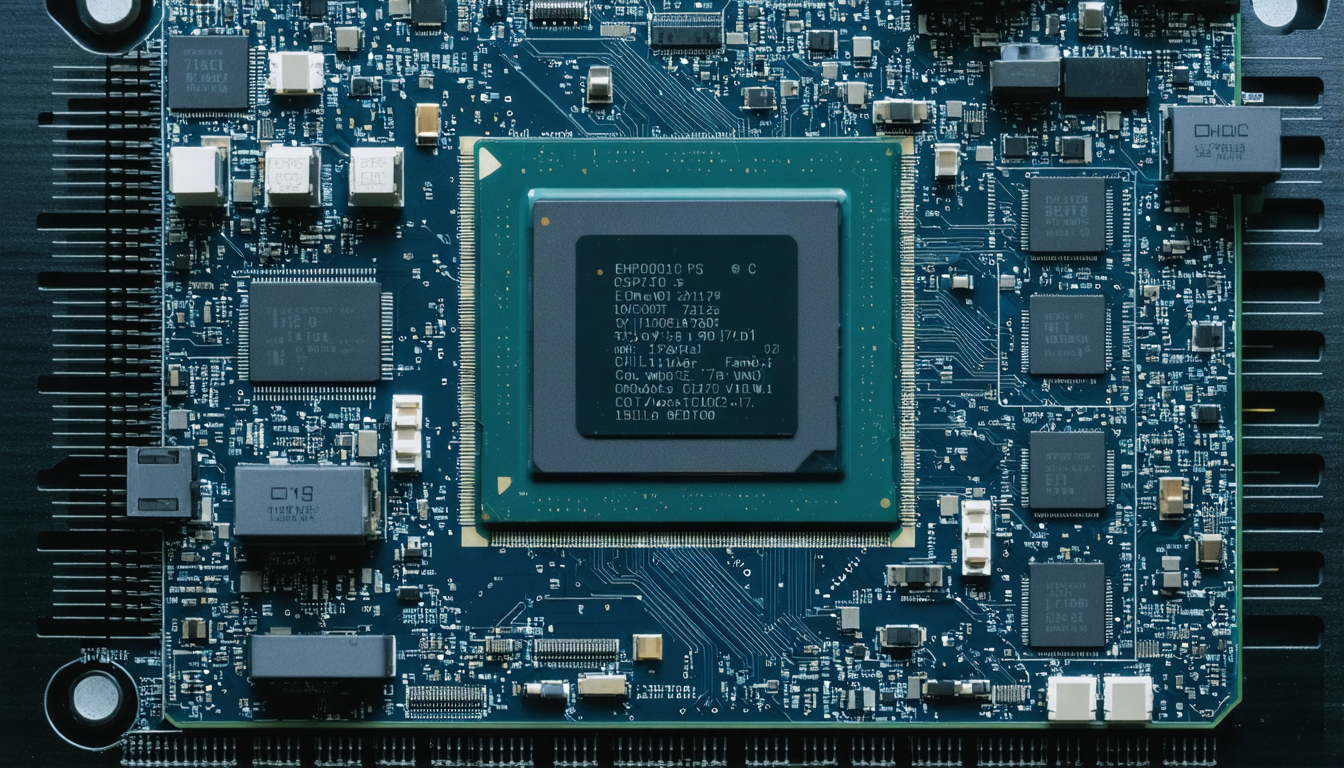
In the complex world of modern computing, understanding the role and importance of the graphics chipset is essential for anyone looking to optimize their digital experience, whether for gaming, creation, or simply everyday use. In 2025, with the constant evolution of hardware architectures and computational power requirements, this component plays a crucial role in managing the graphics processor or GPU and coordinating between video memory, peripherals, and the central processor. This detailed breakdown will immerse you in the intricacies of the graphics chipset, revealing its operation, interactions, and the essential criteria to consider for making an informed choice.
The Graphics Chipset: A Fundamental Role in Computer Architecture
The graphics chipset is much more than a simple electronic component. It acts as a conductor coordinating the exchanges between the graphics processor (GPU), the main processor (CPU), video memory, and peripherals. At its core, it ensures the smooth and fast transport of data, which directly translates into better overall performance of the computer.
To fully understand its function, it is important to differentiate it from the graphics card itself. While the graphics card is a module that performs 3D rendering and visual calculations, the graphics chipset is integrated into the motherboard, often within the main circuit, serving as a logistical, structural, and communicative platform.
This coordination makes the difference between having a powerful GPU and fully benefiting from its capacities. If a GPU’s maximum clock speed is high, but the chipset does not allow good data flow or efficient video memory management, the system will suffer from bottlenecks negatively impacting the smoothness of displayed images.
Indeed, the graphics chipset influences component compatibility. For example, some architectures do not support the latest RAM standards or certain cutting-edge graphics card interfaces, thus limiting upgradability and accessible power. It is therefore essential to know the specifics of your chipset to ensure an optimal and durable balance in computer assembly.
Essential Components of the Graphics Chipset: Northbridge and Southbridge
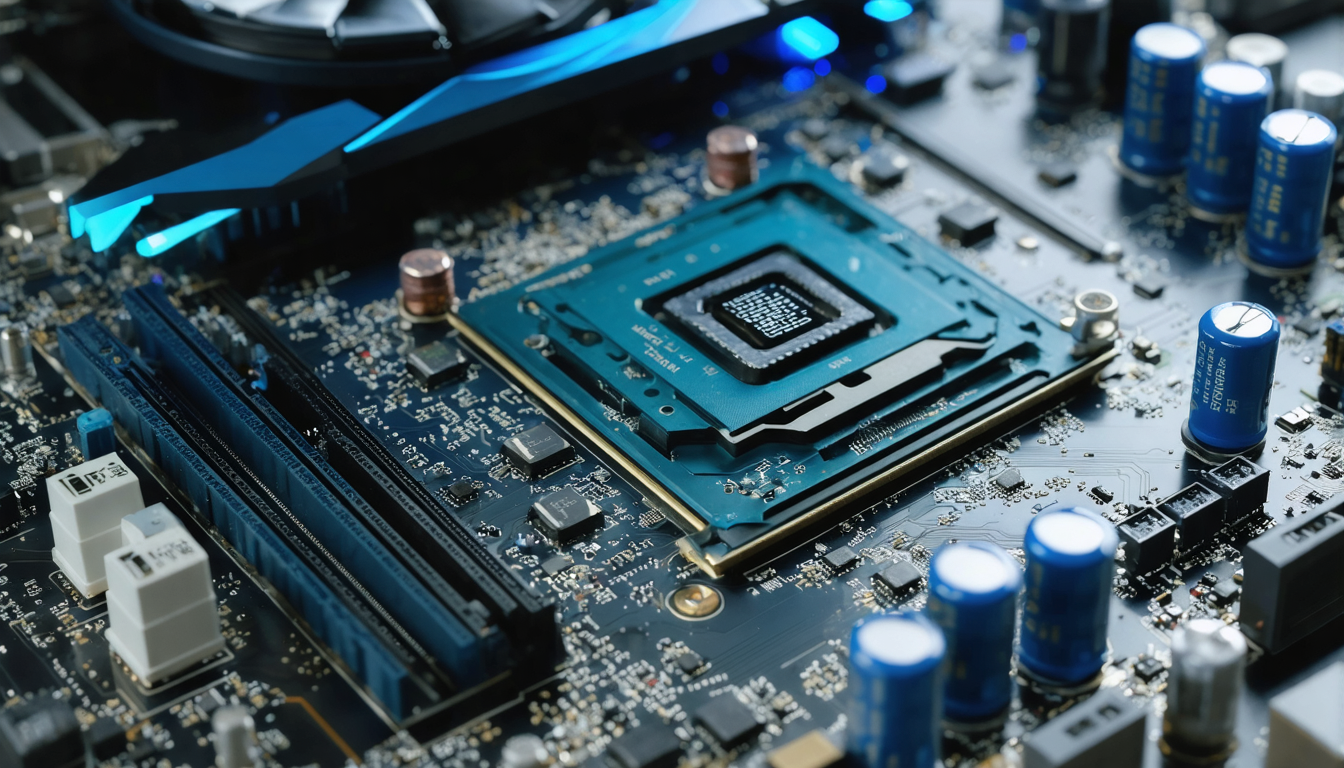
The traditional graphics chipset is divided into two key parts whose complementary roles allow efficient management of the various data flows within the computer: the Northbridge and the Southbridge.
The Northbridge is the central component that manages communication between the processor, RAM, and the GPU. It bears the heavy responsibility of graphics performance, ensuring that the clock speed and bandwidth between these elements are optimized. This component is often the target of innovations to accelerate data processing, notably in the integration of recent architectures like PCI Express 5.0 or support for DDR5 memory.
Meanwhile, the Southbridge manages less demanding but essential peripherals to the system’s proper functioning: USB ports, SATA controllers for hard drives, keyboard and mouse interfaces, as well as thermal dissipation system control. Its lack of direct visibility in graphic computation should not mask its importance in energy balance and overall operational stability.
The complementary role of these two technological bridges is crucial. While a gaming PC benefits from a powerful Northbridge to ensure smooth rendering, the Southbridge ensures stable peripheral connections and prevents interruptions that could disrupt the user experience.
Modern Evolution of Chipsets: Fusion and Integrations
Over the last decade, the Northbridge/Southbridge distinction has tended to fade, with miniaturization advances integrating these functions into the same component or directly within the CPU. Modern chipsets now combine multiple features while continuing to manage clock speeds and video memory to maintain high graphic performance.
How Does the Graphics Chipset Influence Video Game Performance?
For gamers, the graphics chipset is a key element determining the quality of gameplay and real-time graphics. At every session, this component works behind the scenes to limit latency and smooth out 3D rendering.
A chipset capable of efficiently managing the speed of the graphics processor and the amount of video memory guarantees that textures and heavy computations in AAA games are displayed without lag or artifacts.
This is why modern gaming chipsets integrate advanced features, such as multi-GPU support, intelligent management of network traffic priorities to reduce ping, and precise control of thermal dissipation to avoid overheating, which could cause clock speed throttling.
To illustrate the importance of this component, let’s take the example of a setup equipped with an old graphics chipset paired with a state-of-the-art GPU. Although this GPU has excellent theoretical characteristics, the limitation imposed by the chipset can lead to less stable in-game performance than expected, or even incompatibilities in certain recent titles running under DirectX 12 or Vulkan.
Conversely, a graphics chipset designed to optimize these interactions with the GPU not only improves FPS (frames per second) but also smooths loading times and stabilizes the experience, even with complex effects like ray tracing.
Video Memory and Clock Speed: Keys to Graphic Responsiveness
The graphics chipset plays an essential role in managing video memory (VRAM) and the GPU’s clock speed. These two factors directly influence the speed and quality of visual rendering.
Video memory is dedicated to the rapid storage of textures, images, and data necessary for 3D rendering. The amount and access speed to this memory are often limited by the chipset’s capabilities: it defines the maximum addressable and the available bandwidth.
Clock speed, on the other hand, determines how fast the GPU processes data. An efficient chipset will control this frequency, adjusting speeds based on needs to optimize energy consumption and limit heat production without compromising performance.
For example, in workstations oriented toward graphic creation or 8K video editing, a complex chipset ensures that video memory is never saturated, thereby avoiding slowdowns. Conversely, a less efficient chipset is likely to cause locking of graphic resources during peak demand.
| Feature | Impact on Experience | Consequence of an Inadequate Chipset |
|---|---|---|
| Maximum supported video memory | Ability to handle high-resolution textures and multiple windows or screens | Texture limitation, graphic downgrade, latency spikes |
| GPU clock speed management | Performance and energy consumption optimization | Possible overheating, performance drop during load peaks |
| Support of PCI Express and other buses | Data transmission fluidity between components and GPU | Bottleneck causing frame rate drop |
Ensuring Compatibility Between Graphics Chipset, Motherboard, and GPU: A Crucial Challenge
Another fundamental and often underestimated aspect is the compatibility linking the graphics chipset, the motherboard, and the dedicated graphics processor. In 2025, this relationship remains a key criterion during PC building or upgrading, notably to avoid hardware incompatibilities that can occur despite the physical presence of components.
The chipset precisely defines the types of processors and GPUs supported, memory standards, as well as input-output interfaces. For example, a recent chipset will support PCIe 5.0, while an older chipset will be limited to PCIe 3.0, which directly influences the communication speed with the graphics card.
Additionally, it controls system resource management such as thermal dissipation required by a powerful graphics card. Some chipsets lack the connectors or advanced functions necessary to manage, for example, integrated liquid cooling or a recent hybrid dissipation solution.
- Check the list of compatible processors published by the motherboard manufacturer.
- Verify the BIOS version to ensure support for recent GPUs.
- Analyze supported standards, including PCIe, DDR RAM, and power supply interfaces.
- Balance thermal capacity to prevent component overheating.
Adhering to these criteria ensures optimal integration and maximizes hardware lifespan, avoiding unnecessary expenses caused by a poor choice or incompatibility.
Essential Criteria for Choosing a Graphics Chipset Suited to Your Needs
Choosing a graphics chipset is not done lightly. In 2025, options are so numerous that several factors must be considered for an enlightened and sustainable selection.
Here is a list of fundamental criteria:
- Main use: Gaming, office work, graphic design, or editing, each field demands different specifications.
- Budget: The most advanced chipsets with enhanced graphics processor management are often more expensive.
- Compatibility: Make sure it is compatible with your motherboard and GPU.
- Additional features: Multi-GPU support, overclocking, advanced thermal management, optimized network connectivity.
- Upgradability: Ability to integrate more powerful components in the future without changing the motherboard.
- Energy consumption: An energy-efficient chipset preserves your PC’s lifespan and reduces the electricity bill.
For example, a professional streamer will favor a chipset supporting multiple GPUs and real-time image compression technologies, while a typical user will have little to gain from a very high-end chipset.
The Impact of Thermal Dissipation on Graphics Chipset Performance
Thermal dissipation management is an aspect that must never be neglected, as it has a dual impact: ensuring the stability of the graphics chipset and preserving hardware longevity.
A graphics chipset operating at high clock speeds naturally generates heat. If this heat is not effectively evacuated, the component can enter throttling mode, automatically reducing its frequency to limit damage risks.
Manufacturers have improved cooling mechanisms since the advent of more complex architectures in 2020, but PC configuration also plays a role. A well-ventilated case, appropriate heat sinks, and the use of liquid or heat pipe cooling systems optimize these conditions.
Moreover, some chipsets integrate thermal sensors and adapt the GPU clock speed in real time to find a balance between performance and safety. This feature prevents system crashes and ensures constant comfort during long gaming sessions or intensive 3D rendering.
Future Perspectives: Expected Innovations for Graphics Chipsets in 2025 and Beyond
On the dawn of 2025, graphics chipsets continue to evolve, responding to growing needs from visual technologies, artificial intelligence, and immersive environments like virtual and augmented reality.
Manufacturers are investing heavily in improving architectures to:
- Strengthen simultaneous management of multiple GPUs to multiply computing power.
- Improve support for artificial intelligence algorithms integrated directly into the chipset to optimize 3D rendering and image processing.
- Perfect thermal dissipation with intelligent adaptive cooling systems.
- Integrate even faster memory controllers, fully exploiting the latest DDR6 standards and future developments.
- Encourage universal compatibility to facilitate updates without requiring complete motherboard replacement.
These advances will soon allow rethinking how graphic data is processed, increasing graphic smoothness and visual quality while controlling energy consumption. The future is thus promising for all performance and innovation enthusiasts.