

The world of geek and nerd culture has profoundly transformed our perception of technology, science, and pop culture enthusiasts. At a time when video games dominate digital leisure and technological innovations redefine our lives, understanding the difference between a geek and a nerd is essential to better grasp these often confused identities. This pair of terms, long misunderstood and sometimes mocked, has established itself as a true social pride for millions of enthusiasts worldwide. In 2025, their influence spans all areas, from movie nights to scientific conferences, including the most publicized gaming tournaments. This detailed exploration invites you to dive into these parallel universes which, although close, are distinguished by fascinating nuances.
To fully understand the specificities that differentiate the geek from the nerd, it is essential to trace the origin of these terms, dissect their character traits, behaviors, and passions, while observing how their meanings have evolved over time. Furthermore, in echo to this description, we will highlight their respective roles in today’s society and how they influence digital and intellectual subcultures. This analysis aims to be an invitation to celebrate the richness of these identities and to recognize the uniqueness of those who embody them, respecting their particularities and complementarities.
The fascinating origins of the terms Geek and Nerd in modern culture
The history of the words geek and nerd is richer and more surprising than one might think. The term geek, often associated today with the world of technology and pop culture, originated in a context far removed from its current use. Originally, this word was used to designate American circus performers of the 1800s, specializing in strange or offbeat acts. These performers, called “geeks,” often performed bizarre acts that could appear confusing to the general public. The shift to the modern meaning of the term occurred with the rise of technological and alternative cultures, where it described a hyper-enthusiastic person, sometimes obsessive, around varied themes such as science fiction, video games, gadgets, or comics.
In parallel, the word nerd finds its origin in children’s literature, thanks to Dr. Seuss in the 1950s. In his book, he used this neologism to describe a character somewhat socially awkward and intellectually brilliant, often immersed in his studies to the detriment of social interactions. Gradually, this term crystallized as the designation for a person with a sharp intellect, absorbed by demanding fields such as mathematics or sciences, but sometimes lacking ease in human relations. Unlike the geek, the nerd is often perceived as more introverted and academic.
Over the decades, social and media evolution has overturned the initial negative connotations of these words to make them complimentary qualifiers. In 2025, it is now common to hear “geek” or “nerd” pronounced with admiration. This transition reflects increased recognition of the value of technical, intellectual, and cultural skills, as well as the creativity and obsessive passion that animate these communities. This change fits in an era where technology occupies a predominant place and where in-depth knowledge is a key resource.
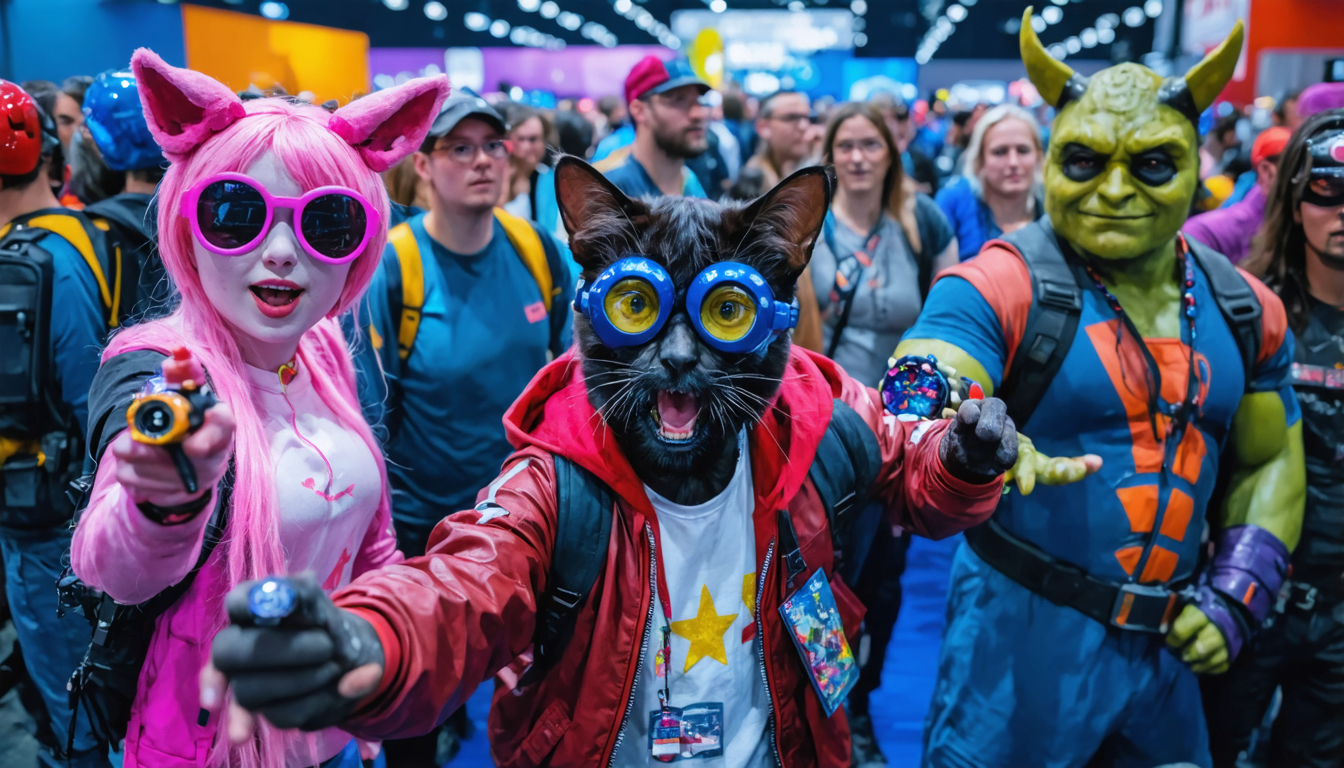
This reinterpretation of the terms has allowed millions of people worldwide to proudly identify as geeks or nerds, participating in dynamic and constantly evolving subcultures. These communities organize events, create multimedia content, and collaborate on technological or scientific innovation. For example, conventions such as Comic-Con or university hackathons illustrate the vitality of these universes mixing playful passion and intellectual rigor.

The detailed portrait of the contemporary geek: passion and sociability at the heart of geek culture
The modern geek is an emblematic figure of the digital and cultural world. Far from the stereotypical image of a loner locked in his room, the geek is mainly recognized for his deep love of technology, video games, cinema, TV series, comics, and more broadly pop culture. This passion often makes them very sociable, as they love sharing their discoveries, launching passionate debates, or investing in online and offline communities.
To understand the dynamics of geeks, it is useful to examine the activities that punctuate their daily life:
- Technological expertise: Geeks willingly collect the latest gadgets, optimize their personal computers for the best possible performance, or get involved in discovering new technologies such as virtual reality or artificial intelligence.
- Celebration of pop culture: Whether debating Marvel movies, analyzing cult series episodes in detail, or collecting figurines, geeks maintain an emotional and practical relationship with their favorite universes.
- Social participation: Contrary to some clichés, the geek is often extroverted in specialized environments, ready to animate forums, organize cosplay events, or invest in e-sports tournaments, thereby creating a powerful and dynamic social network.
These characteristics mean that the geek is generally perceived as an enthusiastic and communicative person. For example, a video game fan can easily discuss for hours the comparative merits of various platforms (PC, consoles), strategies to progress in an RPG, or the latest innovations in computer hardware. This specific sociability contributes to a strong community identity expressed notably during specific cultural gatherings.
Geeks are not limited to these clichés. The feminization of the term — although complicated in its form — gave birth to “Geekette,” a term used since the early 1990s to designate women passionate about these same fields. Rosie Cross, through her cyberfeminist magazine, promoted the idea that geek culture could be a field of expression for all identities. In 2025, female presence in geek culture is better represented and encouraged, contributing to diversifying visions of what it means to be a geek.
In summary, today’s geek is a technical and cultural enthusiast whose sociability is expressed through the transmission of knowledge, sharing passions, and collectively building alternative universes. This figure embodies a form of communicative enthusiasm that nurtures contemporary subcultures.
Decoding the nerd profile: the passionate and introverted intellectual
In contrast to the geek, the nerd is rather perceived as a scholar and intellectual focused on specialized scientific or technical fields. The main characteristic of the nerd is this obsession with knowledge and in-depth understanding of academic, mathematical, computer science, or even philosophical subjects. Although often less socially visible, the nerd possesses an unprecedented form of power through his detailed expertise.
The typical nerd behavior manifests through several salient traits:
- Intense intellectual research: Nerds generally spend hours studying complex subjects, ranging from advanced computer system programming to analyzing astrophysical phenomena.
- Preference for intimacy: Unlike the geek, the nerd is more introverted and socially reserved. Human interactions can quickly exhaust him; he often favors small circles and deep exchanges about his passions.
- Cognitive satisfaction: The nerd finds pleasure in solving complex problems, mastering abstract concepts, and seeking innovative solutions, sometimes to the point of seeming obsessive or even marginal.
A revealing anecdote illustrates this mindset well: a nerd might decide to decipher a complex math equation alone just to push his limits, while a geek might prefer spending time debating in a community about the Star Wars universe. This is not a value judgment but a contrast in how they invest their passion.
The nerd, often portrayed in media as an introverted figure and sometimes socially awkward, has nevertheless become a key player in Silicon Valley and current technological innovations. In 2025, many successes in artificial intelligence, technological watch, or data science are the result of the hard work of nerds who have managed to value their technical and scientific know-how.
This figure commands deep respect in all academic and professional spheres. It is proof that rigorous cognitive mastery, even if sometimes perceived as unusual, is a fundamental driver of technological and industrial evolution. Moreover, nerd culture is gradually changing its image by integrating more social openness, with communities encouraging collaboration and sharing.
Comparing geek and nerd: understanding the fundamental differences in detail
To paint a clear picture of the distinctions between geek and nerd, a comparative look is essential. Each profile has distinctive specificities expressed through the nature of their passions, their interactions, and their approaches to the world. Here is a schematic comparison to better grasp these nuances:
| Aspect | Geek | Nerd |
|---|---|---|
| Main passion | Technology, video games, pop culture | Sciences, mathematics, advanced computer science |
| Social behavior | Extroverted, likes to share | Introverted, reserved |
| Interests | Movies, series, gadgets, comics | Algorithms, equations, advanced programming |
| Natural habitat | Conventions, specialty stores, discussion forums | Universities, laboratories, research groups |
| Superpower | Know every detail and Easter eggs of a work | Solve complex problems with relentless logic |
This reading grid clearly illustrates a fundamental difference: the geek is more oriented towards sharing collective passions and expressing enthusiasm in social circles, while the nerd favors an introspective and in-depth approach, focused on personal expertise. However, it would be misleading to consider this opposition as rigid. In practice, it is common for the same individual to embody traits of both profiles, shifting from an extroverted attitude to intellectual concentration depending on the context.
In 2025, this permeability between geek and nerd is accentuated by the rise of technologies requiring both creativity, general culture, and scientific rigor. For example, a video game developer can be both a geek for his passion for imaginary universes and a nerd for his mastery of algorithms or graphics engines. This hybridization enriches subcultures and opens bridges between traditionally compartmentalized universes.
It is important to remember that not so long ago, the qualifiers “geek” and “nerd” carried negative connotations, stigmatizing asociality, awkwardness, or marginality. People thus designated were often socially excluded or victims of mockery. This image has radically changed as society itself has transformed, notably thanks to the normalization of technology and the rise of cultural industries linked to video games, science fiction movies, and scientific innovations.
In 2025, being a geek or nerd has become synonymous with a form of social prestige, symbolizing passion, expertise, and often the cutting edge in promising fields. The success of emblematic figures from these communities — whether founders of tech giants or influential YouTube content creators — contributes to this valorization.
This evolution is also supported by popular culture, which has appropriated these figures, regularly presenting them in a heroic or inspiring light:
- The emergence of dedicated TV series: Series like “The Big Bang Theory” have humanized and popularized nerds and geeks, showing their lives beyond clichés.
- The democratization of video games: Moving from marginal leisure to a major industry, video games offer geeks a wide and respected platform.
- Key role in innovation: The development of artificial intelligences, cybersecurity, or space technology shows how strategic nerd skills are.
It is therefore no longer rare today for companies to specifically seek geeks for their creativity and nerds for their technical mastery. This complementarity snowballs, further strengthening the recognition and social valorization of these communities.

Geek, nerd, and gamer: a triad with sometimes blurred boundaries
Although often associated, the terms geek, nerd, and gamer do not refer exactly to the same profiles, even if they share a passion for interactive and technological universes. In 2025, this distinction becomes even more important with the emergence of new subcultures.
The gamer is above all a player, whether on console, PC, or mobile, whose main activity centers on the practice of video gaming. Conversely, the geek can encompass a much wider range of interests, from comics to robotics, while the nerd leans towards the acquisition and application of specialized knowledge.
To clarify, here is a list of specific characteristics for each:
- Gamer: Passionate about video games, competitive, often seeks to improve skills and results.
- Geek: Enthusiast of digital, pop, and technological cultures, very communicative and social.
- Nerd: Invested in deep and academic understanding, often reserved, seeking intellectual mastery.
This differentiation allows everyone to better identify themselves but also to understand how these worlds coexist and intersect. For example, a gamer can be a geek if he follows streamers, collects merchandise, or participates in specialized fairs. A nerd can be a gamer if he applies his scientific rigor to optimize strategies.
These interactions produce a thriving dynamic that animates social platforms and dedicated events. The richness of these subcultures also nurtures a major economic ecosystem, notably around the video game industries, tech gadgets, and specialized cultural content.
Geek and nerd communities: drivers of innovation and cultural influence
The geek and nerd subcultures are not just isolated fan clubs; they are now positioned as major spaces of innovation, creativity, and cultural diffusion. In 2025, they play a vital role in both the technological and cultural fields, shaping trends and influencing social practices.
Events, gatherings, and community spaces are essential to nourish this dynamic. Conventions like Comic-Con or Paris Games Week bring together thousands of enthusiasts, fostering direct exchanges between amateurs, professionals, and innovators. These events go far beyond the playful aspect to become platforms for expertise and innovation.
Online communities also play an equally crucial role. Platforms like Discord, Reddit, or Twitch allow geeks and nerds to connect instantly, exchange tips, showcase their creations, or debate the latest technological advances. This continuous interactivity stimulates collective creativity and skill development.
Moreover, many major innovations, notably in artificial intelligence, cybersecurity, or robotic solutions, have emerged from groups of enthusiasts from these subcultures. The ability to bring together talent, enthusiasm, and expertise in various forms makes these communities particularly productive and influential, especially in today’s digital landscape.
Going beyond clichés and celebrating the diversity of enthusiasts in a changing world
Despite many evolutions, some preconceived ideas persist around geeks and nerds. These clichés can still imprison these enthusiasts in reductive stereotypes, such as an image of social isolation, unhealthy obsession, or even relational awkwardness. Yet, reality is much more nuanced and rich.
First of all, diversity within these communities is growing. Today, they include varied profiles, from all cultural and social backgrounds, and different genders. Today’s geeks and nerds are as much young students, active professionals, as content creators or entrepreneurs. This diversity stimulates the plurality of ideas and the multiplication of innovative projects.
Moreover, numerous initiatives aimed at promoting inclusion, especially by encouraging the participation of women, minorities, and people with disabilities, help widen the range of possibilities and make these environments more open and welcoming. Intercultural dialogues also enrich collective creativity.
Finally, going beyond stereotypes allows fully embracing the potential richness of geek and nerd passions. These identities, far from being cages, are springboards towards personal and professional fulfillment. By cultivating their talents, enthusiasts contribute to cultural diversity, scientific progress, and the richness of human experiences in this rapidly changing world.