
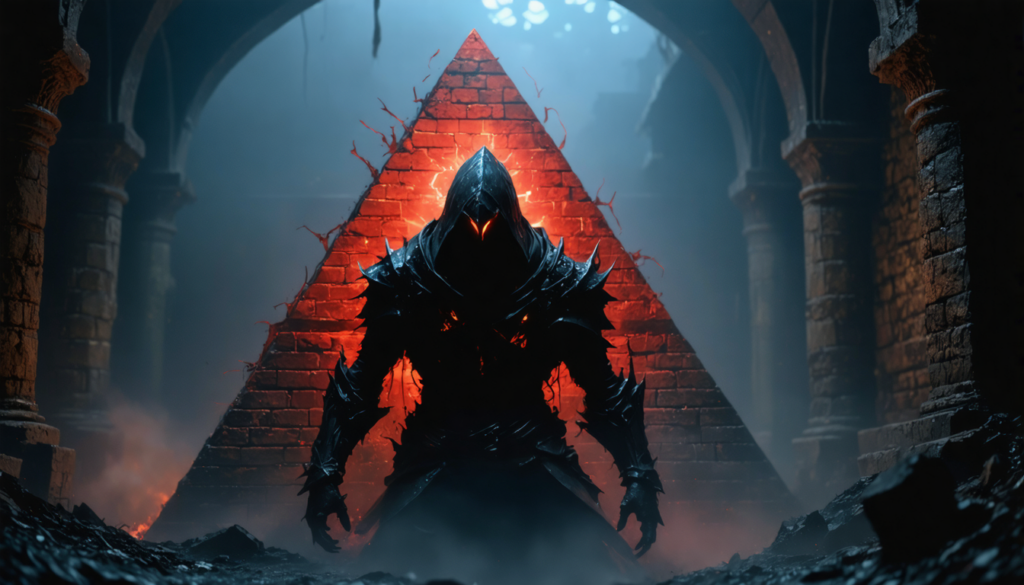
In the dense and enigmatic universe of Silent Hill, few figures have left as strong an impression as Pyramid Head. First appearing in Silent Hill 2 in 2001, this massive silhouette topped with a reddish triangular mask has become the undisputed emblem of psychological horror in video games. Far from being just a terrifying creature, Pyramid Head embodies a unique narrative depth, exploring dark and complex emotions related to guilt, pain, and redemption. Even today, this mysterious character fascinates as much through its singular design as through its hidden identity and the many questions it raises about the nature of evil and the human psyche.
In this article, we will delve into the heart of Silent Hill’s mythology to decipher the multiple facets of Pyramid Head. From its psychological and symbolic origin to its role within the main story, through its transmedia appearances to strategic advice for fighting it in the game, this deep dive will reveal why Pyramid Head remains an icon of horror gaming in 2026. Whether you are a seasoned player or a curious follower of dark tales, prepare to meet the most unsettling face of Silent Hill.
The roots of Pyramid Head: Origin and meaning in Silent Hill 2
Pyramid Head is not a creature born by chance, but a deeply personal incarnation of the protagonist James Sunderland. The character is the result of a narrative construction that explores James’s guilt and remorse after a tragic event: the murder of his wife Mary, who suffered from an incurable illness. Unlike the anonymous monsters often encountered in horror games, Pyramid Head materializes his inner torments and acts as a catalyst for his psychological suffering.
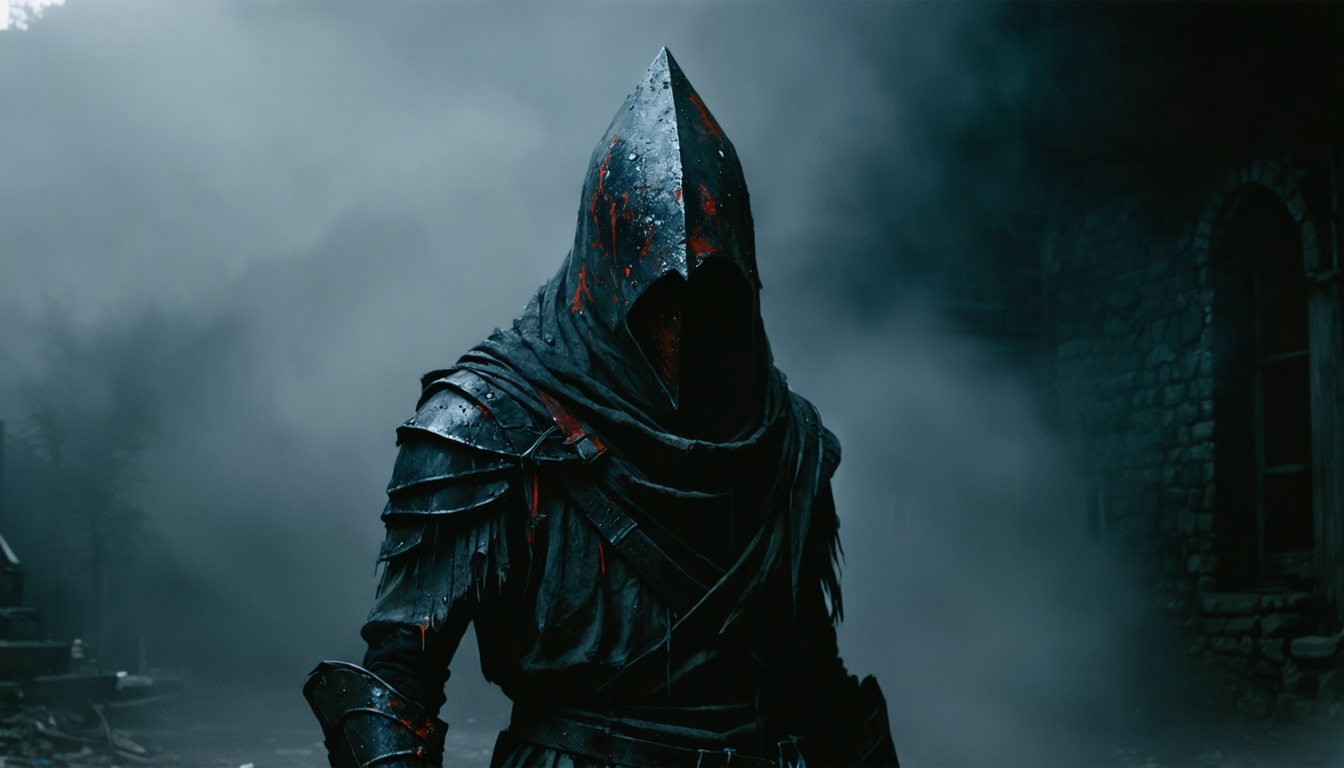
The very design of Pyramid Head is rich in symbols, embodying psychological torture both visually and emotionally. The pyramidal mask, which completely hides his face, recalls sharp and angular structures, inspired by a German tank nicknamed King Tiger during World War II. This historical reference contributes to enhancing the sense of weight, danger, and brutal authority that this character exudes. His coat and blood-stained apron evoke an executioner or torturer, reinforcing the idea of an implacable agent tasked with imposing a form of cruel and objective justice.
The colossal weapons that Pyramid Head drags behind him, notably the Great Knife, symbolize an overwhelming burden, a load that sings the impossibility of fleeing or escaping the consequences of one’s actions. This character is therefore not just an enemy to defeat mechanically, but a painful and ever-present reflection of the guilt gnawing at the game’s hero.
Moreover, Pyramid Head does not act simply to kill; he operates as a tortured guide, forcing James to confront the truth he tries to avoid. Through repeated acts of violence, notably against Maria — an altered and idealized projection of Mary — Pyramid Head shatters his illusions and forces him to face his personal demons. This role of psychological executioner places Pyramid Head in a far more complex position than that of a mere survival horror antagonist.
The symbolism of the two Pyramid Heads at the end of the game: duality and redemption
One of the most striking moments of Silent Hill 2 is the final confrontation with not one, but two Pyramid Heads. This duality symbolizes multiple layers of guilt and dark emotions, representing two distinct but linked aspects of James Sunderland’s psychic state. The first incarnation, linked to Mary, is materialized by a rusty egg, while the second, associated with Maria, corresponds to a scarlet egg. These symbols evoke dormant emotions, ready to hatch, and the protagonist’s unresolved hauntings.
This double Pyramid Head reflects the fracturing of James’s psyche into two complementary but opposing poles, each embodying different grievances and regrets. This portrayal illuminates the complexity of the final scene, where the creatures, aware of their own existence and function, end their suffering by impaling themselves with their spears. This collective suicide acts as an act of purification and liberation for James, indicating that his process of redemption is coming to an end.
The symbolism of the suicide of the two Pyramid Heads is also a powerful metaphor on how confronting the darkest aspects of oneself finally leads to a form of inner peace. Without the presence of these symbolic figures, the story would lose all its psychological and emotional scope, turning this passage into a mere mechanical fight when it is in fact a profound narrative catharsis.
| Incarnation | Symbolism | Associated Object |
|---|---|---|
| First Pyramid Head | Guilt toward Mary | Rusty egg |
| Second Pyramid Head | Guilt toward Maria | Scarlet egg |
An example of this narrative complexity, the scene invites the player to rethink the role of enemies in Silent Hill, who are never more than extensions of the tormented psyche of the main characters. It is a rare lesson in the video game universe, where fear often acts simply as a gameplay driver rather than a vector of deep human emotions.
Winning techniques to face Pyramid Head in Silent Hill 2
Facing Pyramid Head in Silent Hill 2 is often perceived as a true technical challenge coupled with an intense psychological ordeal. The player cannot consider defeating it as a traditional boss, especially during the first encounters. The most effective strategy consists of avoiding direct confrontation by using the environment to dodge and protect oneself. For example, in the apartment at the beginning of the game, showing patience and observation is essential since Pyramid Head cannot be killed at that moment. The key is to survive until a bell rings, signaling his disappearance.
Later confrontations, notably the final fight against the two Pyramid Heads, require a more offensive approach, which remains tactical nonetheless:
- Focus your shots on one enemy at a time, to optimize damage dealt without spreading your resources thin.
- Preferably use powerful weapons such as the shotgun or the hunting rifle to maximize each shot.
- Keep constantly moving to escape the reach of their gigantic spears, which can deal heavy damage in a single strike.
- Use the environment to create safe distances, using natural obstacles to slow their advances.
- Do not neglect your first aid kits, this fight being the moment when their use can save the game.
An anecdote often shared among fans is that understanding how to manage saving and resource management in other games also requires a good deal of patience and strategy to beat Pyramid Head. Beyond technique, it is truly understanding the deep meaning of the fight that turns the confrontation into a memorable experience.
These tips don’t guarantee an easy fight, but rather a symbolic victory over the guilt haunting James and, by extension, over the deep fears that any player may experience in a world of psychological horror.
The evolution of Pyramid Head in transmedia adaptations and popular culture
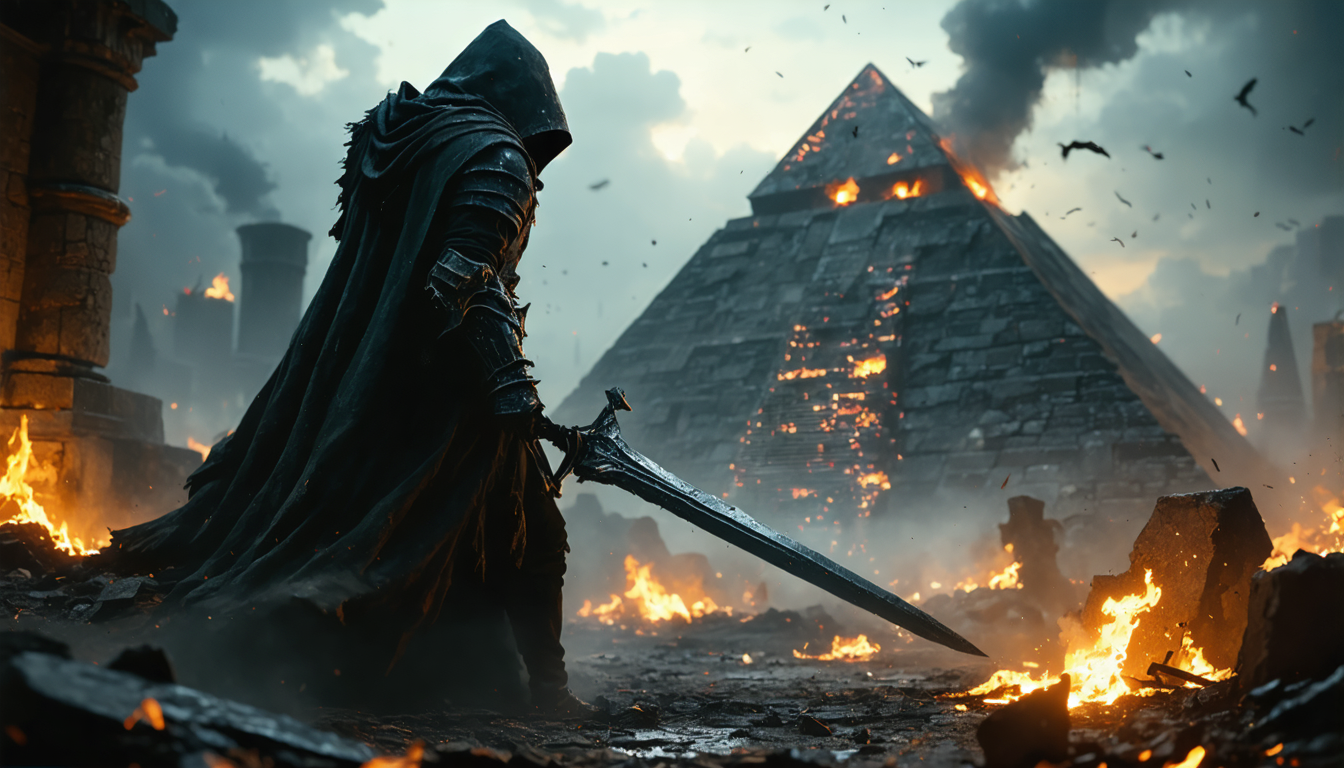
Despite a purely narrative origin linked to the psyche of James Sunderland, Pyramid Head has over the years acquired a status beyond the strict scope of Silent Hill 2. The character quickly became an icon of horror video games, appearing in several Silent Hill installments under modified or renamed forms, such as the Bogeyman in Silent Hill Homecoming. This spread has also extended to games like Dead by Daylight, where Pyramid Head is playable under the name The Executioner, introducing the figure into a different terrifying multiplayer atmosphere.
This expansion beyond the original story has sometimes been a source of debate among fans and creators. Masahiro Ito, the designer, has expressed his disagreement regarding these reuses, as they distort the character’s initial psychological meaning. In the spirit of Silent Hill, each monster is a unique projection of a specific character’s psyche, making the repeated presence of Pyramid Head problematic from a narrative viewpoint.
The films, notably those directed by Christophe Gans, also featured Pyramid Head but by altering his role: in Silent Hill (2006), he is the brutal executioner, whereas in Silent Hill Revelation (2012), he assumes a protective role. These variations have enriched his legend while sometimes blurring the lines regarding his true identity.
It should be noted that the Silent Hill universe continues to renew itself, with the upcoming release of Return to Silent Hill, scheduled for 2026 in France. This new film promises a return to the roots, notably paying tribute to Akira Yamaoka’s musical work and a faithful interpretation of the saga’s symbols and mysteries, with Pyramid Head remaining a crucial pillar.
Symbolism of the triangular mask: an in-depth analysis
The triangular mask of Pyramid Head is more than just a visual object intended to frighten. It is a tangible metaphor for hidden identity and concealment. This helmet covers the entire head, completely dehumanizing the creature and transforming fear into a faceless abyss sensation. This aesthetic choice refers to the idea that guilt and fear are blind forces, sometimes indescribable, that can crush you at any moment.
Beyond the shape, the sharp edges of the helmet resonate like a torture instrument, both for Pyramid Head himself and those he confronts. The inspiration drawn from the King Tiger tank of World War II symbolizes the brutal and relentless power of war, paralleling the inner war waged by James Sunderland. This design thus expresses imagery heavy with historical and psychological symbolism, mixing individual suffering and the weight of past collective events.
The total absence of a face amplifies a feeling of primordial terror: the play on anonymity intensifies the fear of the unknown and of what might be hidden. This terror also becomes a personification of the player’s and James’s own dark emotions, making Pyramid Head a perfect projection of an inner evil that anyone can feel or dread.
A cultural symbol beyond the video game
In the contemporary video game and cultural landscape, Pyramid Head has transcended his initial role to become a broader symbol of psychological horror. His silhouette, recognizable among all, is often used as a powerful visual shortcut in derivative works, cosplays, fan arts, or even parodies. This mysterious character establishes a bridge between the ancestral fear of darkness and modern forms of expressing this fear in digital media.
This role as an icon relies on a subtle balance between organic horror, the human psyche, and interactive storytelling, highlighting what makes the strength of Silent Hill: a universe where monsters represent our most intimate fears and darkest emotions. Pyramid Head, through his triangular mask and actions, becomes a universal embodiment of the torment that gnaws at the human soul.
In 2026, as video games continue to evolve toward increasingly immersive and narrative experiences, the figure of Pyramid Head reminds us of the importance of intelligent horror, perhaps less spectacular but always deeply disturbing. This is especially true in an era where complex emotions and psychological dilemmas are increasingly integrated into gameplay mechanics, pushing players toward often troubling introspection.
Dark emotions through the figure of Pyramid Head in psychological horror
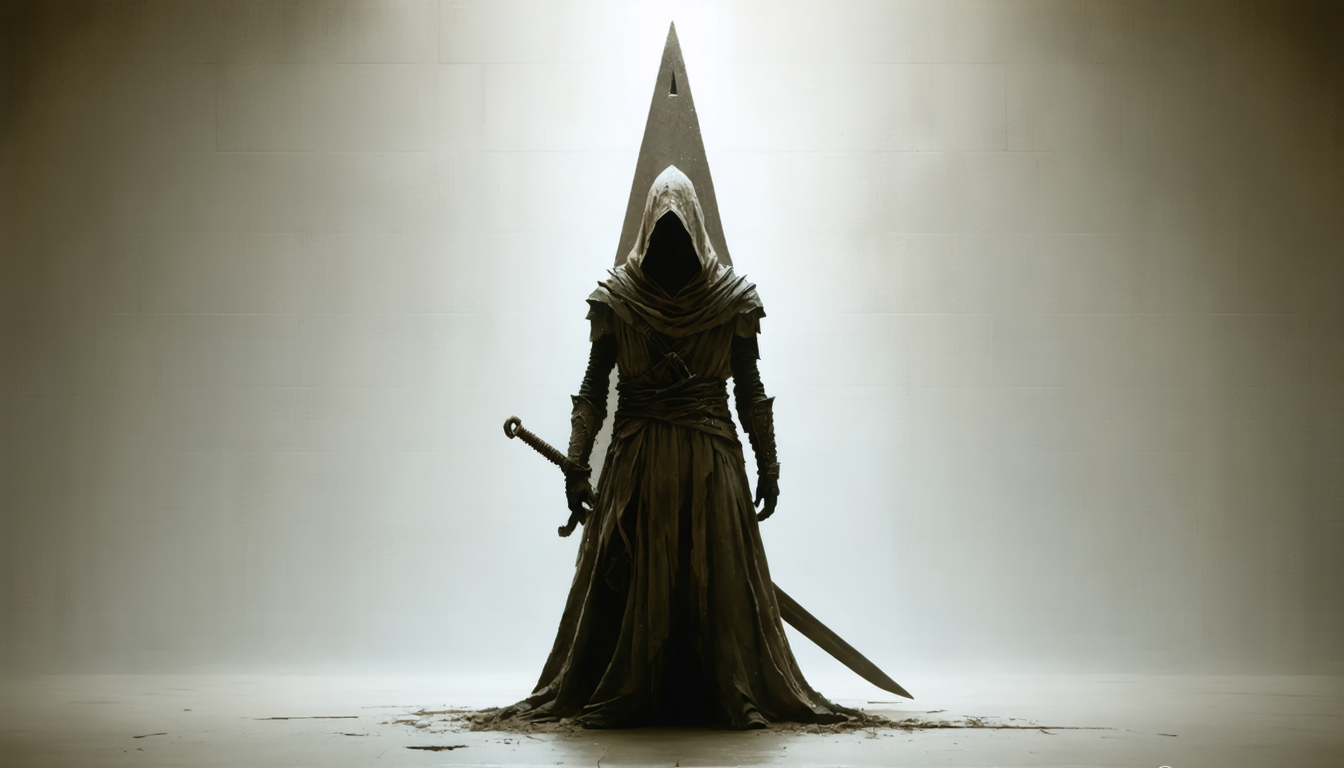
Psychological horror often conveys dark and intense emotions, and Pyramid Head is a perfect vector of this dimension. This mysterious character not only arouses a physical fear related to direct threats but also stimulates an inner unease, a more diffuse terror linked to identity, guilt, and personal judgment.
The persistence of Pyramid Head in the minds of players comes precisely from this dual nature of the character: he is both a tangible threat and a metaphor for mental suffering. This duality enriches the story and intensifies fear by multiplying levels of interpretation. Each attack, each appearance, echoes a deep unease that we can all understand, even unconsciously.
This emotional complexity is reinforced by the typical visual and sound staging of Silent Hill, where the thick fog, Akira Yamaoka’s discordant sounds, and the oppressive atmosphere contribute to a total immersion in a universe where every monster is an extension of the inner torments of the player and James.
The place of Pyramid Head in the immersive storytelling of Silent Hill
The role of Pyramid Head goes beyond that of a simple traditional antagonist. He is a powerful narrative manifestation that guides James Sunderland’s psychological evolution. Through his repeated interventions and behavior, he enforces a progression toward the revelation and acceptance of the truth. In this sense, Pyramid Head is both a character and a narrative tool, a key element in building a dense and immersive psychological horror atmosphere.
This fine integration into the story is one of the reasons why Silent Hill 2 remains a major reference in horror video games. The player does not fight an external monster but a reflection of personal anger, guilt, and despair. This structure reinforces emotional resonance and story depth, offering a unique gaming experience.
Furthermore, this narrative approach has profoundly influenced the mechanics of contemporary horror games in 2026. Many titles now incorporate antagonists who are not just physical obstacles but act as psychological extensions of the character or player. Pyramid Head is a founding model in this approach, combining aesthetics, symbolism, and storytelling.