
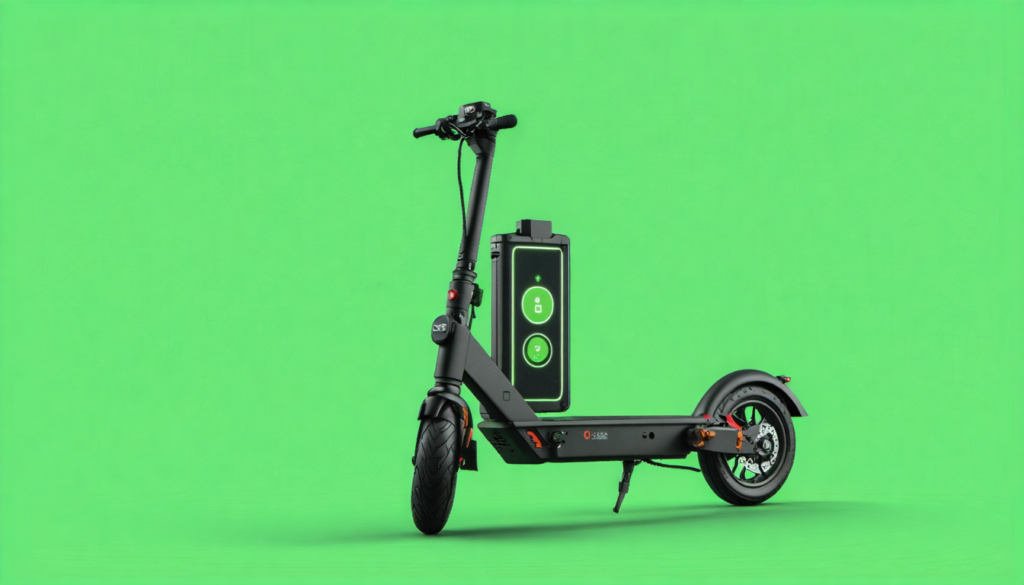
In the dynamic movement of contemporary urban mobility, the electric scooter establishes itself as an indispensable companion for daily journeys. However, there are times when one finds themselves in a tricky situation: the battery is dead, and the charger cannot be found. A breakdown that can quickly ruin a day, especially when you rely entirely on this device for your travels. Faced with this challenge, a practical guide proves essential to mastering the different ways to ensure power supply without the official charger. In 2026, technical innovations have expanded the range of possibilities, but caution remains necessary.
This abundant overview of tips and advice is aimed at both beginners and experienced users. It reveals emergency solutions to revive your battery, essential safety precautions, as well as alternative methods for efficient charging. From the simplicity of the USB cable to the technicality of the universal adapter, each method will be analyzed in depth to offer you maximum autonomy of action without compromising the lifespan of your battery. Because charging your electric scooter without its original charger is quite an art to master.
If urban mobility now relies on electric energy, it also requires a certain know-how in troubleshooting. This comprehensive guide accompanies you step by step, so that the absence or loss of the charger is never again synonymous with immobilization. The goal: to understand how to exploit all resources at your disposal without risking damaging the battery or the internal electrical system.
Emergency solutions to recharge your electric scooter without a charger
Finding yourself with a discharged electric scooter and no charger can quickly become a headache. However, some simple troubleshooting methods can allow you to avoid unpleasant situations and get back on the road without excessive delay. These emergency solutions are often accessible and do not require advanced technical expertise.
Using a suitable universal charger
The universal charger, a true Swiss army knife in the field of portable electronics, is a valuable alternative. Available in many specialized stores, these chargers allow manual setting of voltage and output current to match the specific needs of your scooter battery. The key is to carefully check electrical compatibility. Indeed, improperly set voltage can seriously damage the lithium-ion battery that equips most 2026 models.
Suppose your battery consists of 10 cells in series, each cell requiring about 4.20 volts when charging; the total voltage to set would be 42V. The current should be set to about 20% of the battery capacity. For example, for a 10Ah battery, a charging current of 2A would be ideal. This approach requires particular attention, as an error can cause overcharging or inappropriate discharging, with risks of overheating or premature degradation.
Charging via USB cable or external battery
For several years, certain models of electric scooters have integrated a USB input allowing emergency charging via a standard USB cable. This option, slower than a dedicated charger, nevertheless provides valuable convenience during emergencies. Connecting your scooter to an external battery (power bank) with the appropriate output can ensure a gradual but safe recharge, provided that confirmed and compatible equipment is used.
These methods are especially relevant when the battery is only slightly discharged or for an energy boost to extend a trip. For example, a power bank capable of delivering 18W could ideally provide a supplementary charge within 4 to 6 hours. However, it is necessary to ensure that the voltage and current are adapted to avoid any short circuit or electrical damage.
DIY: car jumper cables
For the boldest and most handy users, a less conventional method consists of using car jumper cables. This process is akin to thermal and electrical troubleshooting, very useful when the battery is completely discharged. By connecting the car battery directly to that of the scooter via the appropriate cables, you can inject the necessary energy to restart the system.
However, this type of intervention requires strict adherence to polarity and constant monitoring to avoid risks of sparks or overvoltages. This operation is strongly discouraged for beginners and must be carried out in a secure environment, with appropriate protections and, if possible, under the supervision of a specialist.
- Universal charger: versatile, requires good knowledge of electrical specifications.
- USB cable: practical for slow supplementary charging.
- External battery: ideal for mobile and lightweight troubleshooting.
- Car jumper cable: last resort solution, risky without precautions.
In summary, these alternative charging tips can save you during a dead battery far from home, while maintaining equipment safety.
How to use a universal power adapter for charging
The universal power adapter has become an essential accessory for all those who want to manage the charging of their electric scooter without the original charger themselves. Its advantage lies in its modularity and precision, allowing easy adjustment of voltage and current to the exact characteristics of the battery.
Steps for safe charging with a universal adapter
The first step is to remove the battery from the scooter, a relatively simple operation on the majority of recent models. This extraction is comparable to removing a game cartridge from a console: delicate but achievable with minimal precautions.
Next, you need to adjust the adapter. Each lithium-ion cell requires a maximum voltage of about 4.20 volts at full charge. For a battery containing N cells, the output voltage must be multiplied by this number. For example, a battery with 10 cells will need 42 volts.
Adjusting the current is also essential: it should represent around 20% of the battery’s capacity. This ensures secure and optimized charging without stressing the battery, thereby preserving its energy capacity over the long term.
The final connection requires scrupulous attention to polarity, connecting the battery’s positive terminal to the adapter’s positive output, and likewise for the negative. Any reversal could cause irreversible damage.
For example, a Xiaomi Mi Electric Scooter battery typically equipped with a 7.8Ah and 36V battery will require a charging current of about 1.5A to 7.8A according to specifications, with the voltage set to approximately 42V. This precise setting is the guarantee of a successful and safe alternative charging.
| Method | Estimated charging time | Difficulty level |
|---|---|---|
| Universal charger | 3-5 hours | Easy |
| USB cable | 6-8 hours | Very easy |
| External battery | 4-6 hours | Easy |
| Universal adapter | 3-5 hours | Medium |
If the universal adapter requires some skill, the results are very satisfactory in terms of alternative charging. This method combines speed and safety, as long as the procedure is followed to the letter.
Essential precautions for reliable and safe power supply without a charger
Alternative charging of your electric scooter without its original charger is not something to improvise. It must respect several fundamental rules to avoid any risk of electrical incidents, overheating, or damage to the battery. Adhering to these precautions prolongs the lifespan of your equipment and ensures your safety.
Verification of electrical compatibility
The first reflex is always to check that the voltage and current delivered by the power source correspond to those recommended by the battery manufacturer. Incompatibility can lead to dangerous overcharging and rapid deterioration of lithium-ion accumulators that equip most current electric scooters.
For this, careful reading of the battery’s technical specifications is essential. This information often appears on the label or in the documentation provided with the scooter. Clearly noting the nominal voltage, ampere-hour capacity, and recommended current is a good habit.
Maintaining the charging environment
It is imperative to perform the operation in a dry, ventilated place, protected from moisture sources. The presence of water could cause a short circuit with serious consequences. Moreover, sufficient lighting allows visual monitoring of the battery and connections to quickly detect any issues.
The battery’s temperature is another indicator not to be neglected. Under voltage, excessive heat rise signals a malfunction or incompatibility. In this case, it is advisable to immediately stop charging.
Regular inspection of cables and connectors
Before any connection, check that cables show no cuts, damaged insulation, or oxidation of contacts. Any defect could cause accidental discharge or electrical drift. Regular maintenance of these components is an integral part of responsible use of your electric scooter.
Never leave the battery unattended during alternative charging
Finally, vigilance is required. At the slightest suspicious sign of heating, battery swelling, or burning odor, stop all operations. Alternative charging should only be temporary and never replace the use of a certified charger. Always try to cultivate good habits and anticipate situations to limit risks.
Preserving the battery to optimize its longevity and performance
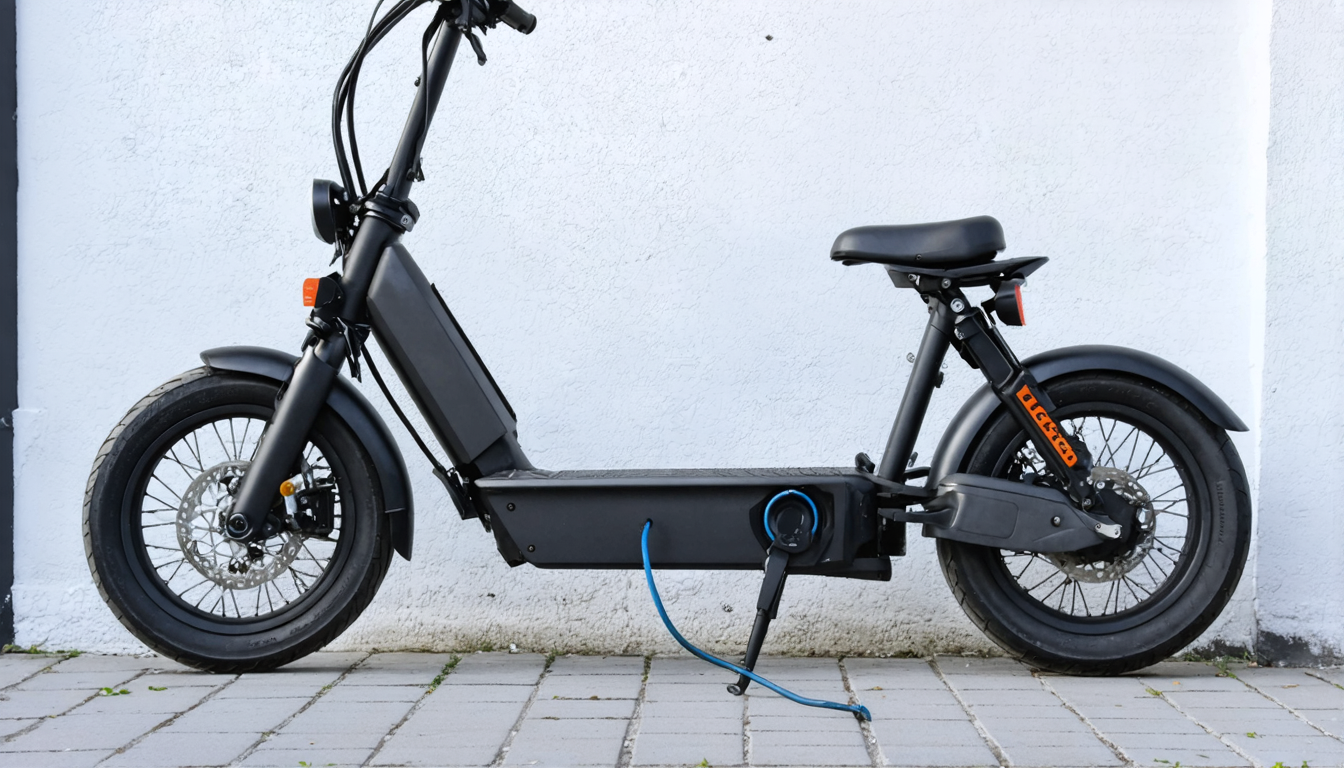
At the very heart of alternative charging lies battery preservation, a vital component of the electric scooter. Lithium-ion batteries require special care to maintain their capacity and efficiency over the long term, in 2026 as before.
Avoid deep full discharge
Specialists emphasize that completely emptying the battery before charging is extremely harmful. It is equivalent to exhausting an engine without the required maintenance. A full discharge can cause a rapid drop in effective capacity as well as internal cell deterioration.
It is therefore preferable to recharge the battery before it falls below the critical 20% threshold. This good daily practice also improves your electric scooter’s responsiveness during acceleration and power increase more steadily.
Optimized storage for prolonged absence
When you plan not to use your scooter for several weeks, for example during a trip, the battery should be stored with a charge around 50%. This partial charge prevents premature aging, like a deep sleep for a game console.
A cool location (about 15 to 20°C), dry and protected from direct sunlight is ideal. This configuration minimizes harmful internal chemical reactions that occur at high temperatures or in humid environments.
Regular inspections and replacement in case of wear
Frequent visual checks allow detecting possible swelling, leaks, or other anomalies. If any of these symptoms appear, consulting a professional is imperative. Often, a defective battery can still be replaced without changing the entire scooter, representing both an economic and ecological gain.
Practical tips for daily charging
Additionally, it is recommended to:
- Always charge the battery on a non-flammable surface.
- Use certified chargers whenever possible.
- Do not leave the battery on prolonged charge beyond the recommended time.
- Avoid violent shocks that could damage the internal structure of the cells.
By applying these rules, you maximize your battery’s lifespan while ensuring optimal performance, even without the original charger.
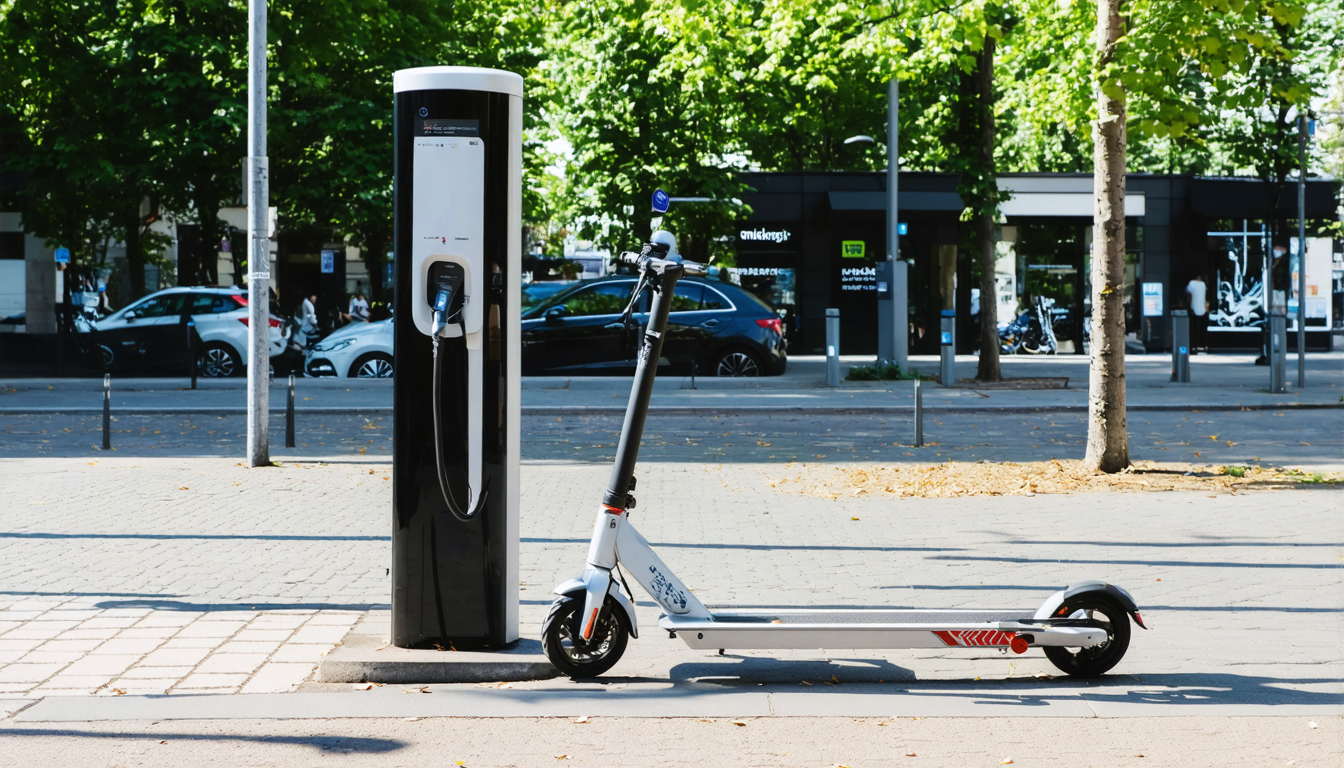
Public charging stations: an increasingly accessible alternative in urban mobility
In 2026, the rise of urban infrastructures has led to an extensive network of public charging stations adapted to small electric vehicles like scooters. This new generation device enables overcoming the temporary or definitive absence of a personal charger.
Many French and European cities invest in these infrastructures to encourage soft mobility and reduce carbon emissions. By entering an urban area equipped with these stations, it is now possible to connect your scooter directly to a secure and controlled power supply.
These stations often offer an intuitive interface, with communication protocols that automatically detect the compatibility of your battery. A mobile app can display availability information and manage your charging session, thus avoiding any loss of time.
Moreover, this growing network offers several advantages:
- 24/7 easy access in the heart of cities.
- Fast charging optimized for lithium-ion batteries.
- Enhanced safety thanks to anti-overcharge and anti-short-circuit technologies.
- Ecological commitment with renewable energy integrated in some stations.
For regular users, the charging card becomes a strategic tool that perfectly complements a classic chargerless power system. A way to plan your trips serenely while reducing your energy footprint.
List of essential actions for successful and safe troubleshooting of your electric scooter
- Always check the technical specifications of your battery before any alternative charging attempt.
- Use only compatible accessories such as universal chargers or USB cables compliant with standards.
- Perform charging in a dry and ventilated environment, without leaving the battery unattended.
- Monitor the battery temperature and stop the process if overheating occurs.
- Regularly inspect cables and connectors to detect any defect or wear.
- Avoid complete discharge and prefer early charging to preserve longevity.
- Store the battery at half charge in a cool place during long periods of non-use.
- Consult a professional if in doubt or upon the appearance of anomalies.
- Take advantage of public charging stations as a reliable and safe alternative.
Future challenges and perspectives of alternative charging for electric scooters
The quest for autonomy and freedom in urban mobility encourages industrial players and communities to continuously develop more innovative solutions to recharge an electric scooter without a traditional charger. Technological advances outline a future where energy will move with the user.
Among promising avenues, we notice:
- Wireless charging systems integrated into urban furniture, allowing scooters to recharge automatically when parked.
- Modularity of removable batteries facilitating their instant replacement in dedicated stations, thus simplifying long-distance trips.
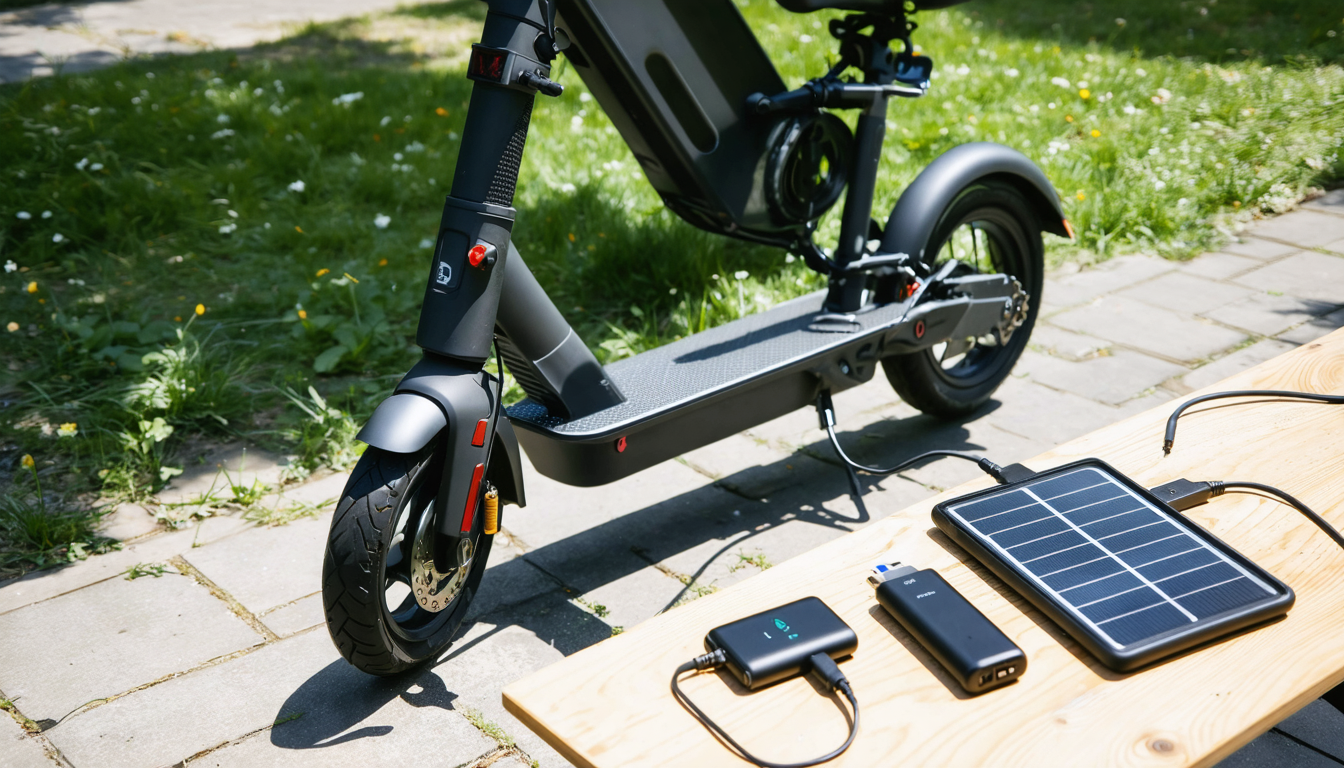
- Integration of portable solar panels for partial recharging on the go, particularly appreciated during outdoor activities.
- Smart applications that optimize energy consumption management and anticipate moments when charging becomes necessary.
These innovations are part of a global dynamic aiming to make the electric scooter increasingly autonomous, practical, and environmentally friendly. This promising movement shows that even faced with a momentary difficulty such as the absence of a charger, the future holds many reliable alternatives to keep your mobility running at full speed.