
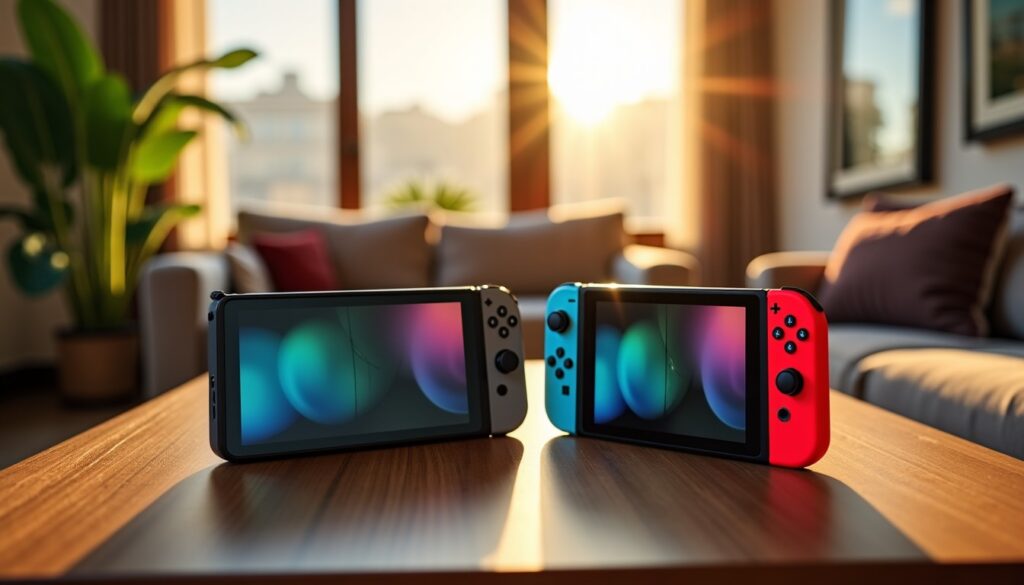
The Nintendo Switch has revolutionized the world of video games since its launch in 2017, offering an innovative hybrid experience between home console and portable device. However, with the imminent arrival of the Switch 2 scheduled for June 2025, the gaming community wonders: should they switch to this new model? More powerful, more ergonomic, and packed with new features, the Switch 2 is carving its own path following in the footsteps of its big sister while promising a revolution in Nintendo’s gaming landscape. This detailed comparison focuses on the major differences between these two essential consoles, from their design to their performance, including graphics quality and user ergonomics.
In 2026, as Nintendo continues to dominate the hybrid console market, it is essential to understand why the Switch 2 captures so much attention. By combining improved power and modernized connectivity, this new generation offers increased flexibility, especially for traveling players and fans of demanding games. This technical face-off between the original Switch and the Switch 2 covers all the essential aspects: game compatibility, battery life, controller evolution, and above all, what makes the difference in daily gaming experience. Reflecting current technological trends, this comparison helps each player choose the console best suited to their expectations.
Design of the Nintendo Switch vs the Switch 2: a subtle but impactful metamorphosis
The aesthetics of the Switch 2 mark a turning point in Nintendo’s visual identity. Gone is the playful and colorful look of the console; the newcomer adopts a darker, more sophisticated finish that evokes a premium style. While the original Switch features a 6.2-inch screen (7 inches for its OLED version), the Switch 2 showcases a stunning 7.9-inch screen. This impressive increase in screen size results in a deeper immersion in video games, particularly in portable mode, where resolution jumps from 720p to Full HD 1080p, for sharper and richer graphics.
Another game-changing element is the rear stand. Known for its fragility on the original Switch, this small accessory becomes on the Switch 2 a wide, fully adjustable U-shaped stand that stabilizes the console at any desired angle. Robustness is key here, avoiding frustrations related to broken stands during dual gaming sessions on a coffee table. The contours themselves are refined, notably due to thinner bezels, which give the whole device more elegance and modernity.
We also note improved comfort with larger, more pleasant buttons to handle, especially for long gaming sessions. This ergonomic change meets the demands of players seeking more smoothness and practicality in daily use. The weight and dimensions, although slightly higher, remain controlled to preserve the feeling of a light and portable console, dear to Nintendo’s philosophy.
For those who love customization, the new darker shades offer a look less like a “toy” and more mature, favoring a more discreet integration in the living room or office. These combined aspects redefine the perception of the Switch 2 as a technological object, more than just a gaming accessory. A little nostalgic wink: first impressions of this new design recall hours spent on Zelda or Mario Kart on the original Switch, with the promise of an even more immersive experience thanks to a larger screen.
Technical performance: the increased power of the Switch 2 compared to the original Switch
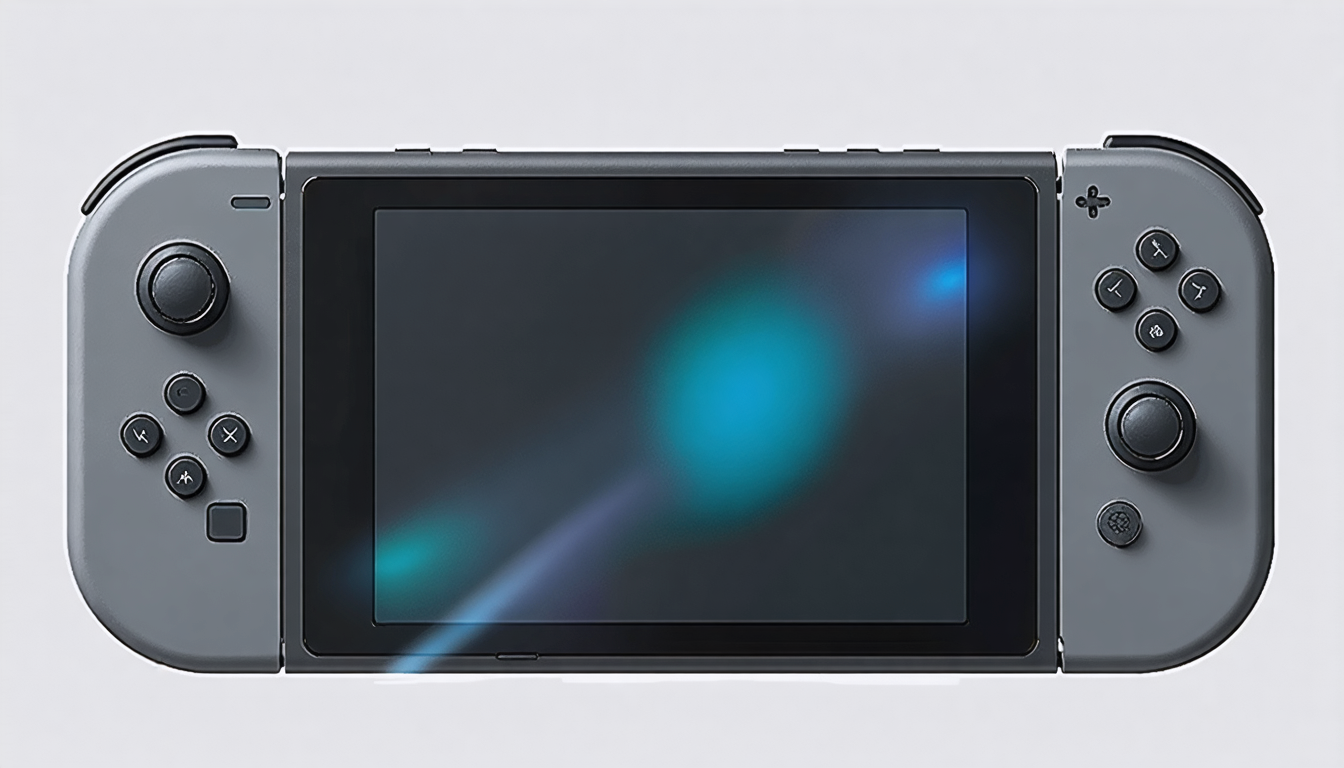
When it comes to performance, the difference between the original Switch and the Switch 2 is clear and fully justifies the investment for demanding gamers. The new console carries an architecture comparable to the PlayStation 4 Pro, which means a huge leap in computing power. This upgrade promises games with enhanced graphics, better detail management, textures, and lighting effects that make the worlds more vibrant.
The internal memory also explodes, going from the modest 32 GB of the first Switch to a comfortable 256 GB on the Switch 2. This increased space allows for storing more games and content without resorting to an SD card, thus easing player management. No need to constantly juggle favorite titles; just keep a large catalog accessible at hand.
On the display side, the Switch 2 offers Full HD resolution in portable mode (1920×1080 pixels) and HDR10 support, ensuring more vibrant and contrasted images. Compatible games can even reach 120 frames per second, promising exceptional smoothness. In docked mode, on a television screen, the console can reach 4K, notably thanks to upscaling technology, offering optimal visual quality for those who prioritize the big-screen experience.
An integrated microphone also appears, meeting repeated requests from players wanting more features for online multiplayer games or chats. Audio quality is also improved, with special care given to 3D sound, which allows unprecedented sound immersion, enriching the spatial perception of gaming environments.
| Feature | Original Nintendo Switch | Nintendo Switch 2 |
|---|---|---|
| Screen size (portable) | 6.2 inches (7 inches OLED) | 7.9 inches |
| Portable screen resolution | 720p | 1080p (Full HD), HDR10 |
| Internal storage | 32 GB | 256 GB |
| Max frame rate (portable) | 60fps | Up to 120fps |
| Docked mode | Full HD 1080p | Up to 4K with upscaling |
| Integrated microphone | No | Yes |
| Audio quality | Standard stereo | 3D sound |
In summary, the Switch 2 represents a natural evolution, adapted to current technical standards, and prepared for future ambitious titles from Nintendo and third-party developers. Those wishing to enjoy the latest innovations in graphics and immersive experience will find in this new console a powerful ally nearing the future of video games.
Joy-Con evolution: towards a new control experience thanks to the Switch 2
Since the launch of the first Switch, the Joy-Con controllers have often been a topic of discussion. Their attachment system, via rails, caused some disappointments, notably due to recurring “drift” issues. With the Switch 2, Nintendo has carefully redesigned this essential peripheral by opting for magnetic attachment. This innovation brings immediate gains in ease of use and durability. No more fragile rails; the controllers magnetically attach efficiently for a fast and secure installation.
But these are not the only changes. On the right side of the Joy-Con, a new button is added beneath the Home button, while the SL and SR buttons are enlarged for more comfort when used in detached mode. This redesigned ergonomics aims to make gaming sessions more intuitive, both for casual players and seasoned competitors.
An intriguing novelty lies in the integration of an optical sensor on the edge of the Joy-Con, allowing use in mouse mode. This feature could transform some gaming experiences, providing more precision especially in strategy titles or adventure games requiring smooth on-screen navigation.
However, some technological elements disappear. The LED lighting around the Home button has been removed, as well as the infrared sensor on the right Joy-Con used in certain titles like Nintendo Labo. This absence could limit compatibility with some accessories, posing an important question for players attached to these peripherals.
In terms of connectivity, the Switch 2 benefits from two USB-C ports, compared to only one on the original Switch. This innovation facilitates charging and connection to other peripherals, especially for professionals and streamers looking to optimize their setup. The dock has also been redesigned with a rounder, decidedly modern look, offering better stability on furniture.
- Magnetic Joy-Con attachment for increased durability
- Addition of a button below Home on the right Joy-Con
- Larger SL and SR buttons for better comfort
- Optical sensor for mouse mode usage
- Removal of Home LED and infrared sensor
- Double USB-C ports instead of one
- New dock design, more stable and elegant
These evolutions result in better overall ergonomics, even if user feedback will be needed to confirm the effectiveness of the innovations. Players wishing to combine professional and leisure use will find in these changes something to enrich their daily experience.
Full backward compatibility: the strong point of the Switch 2 compared to the Switch
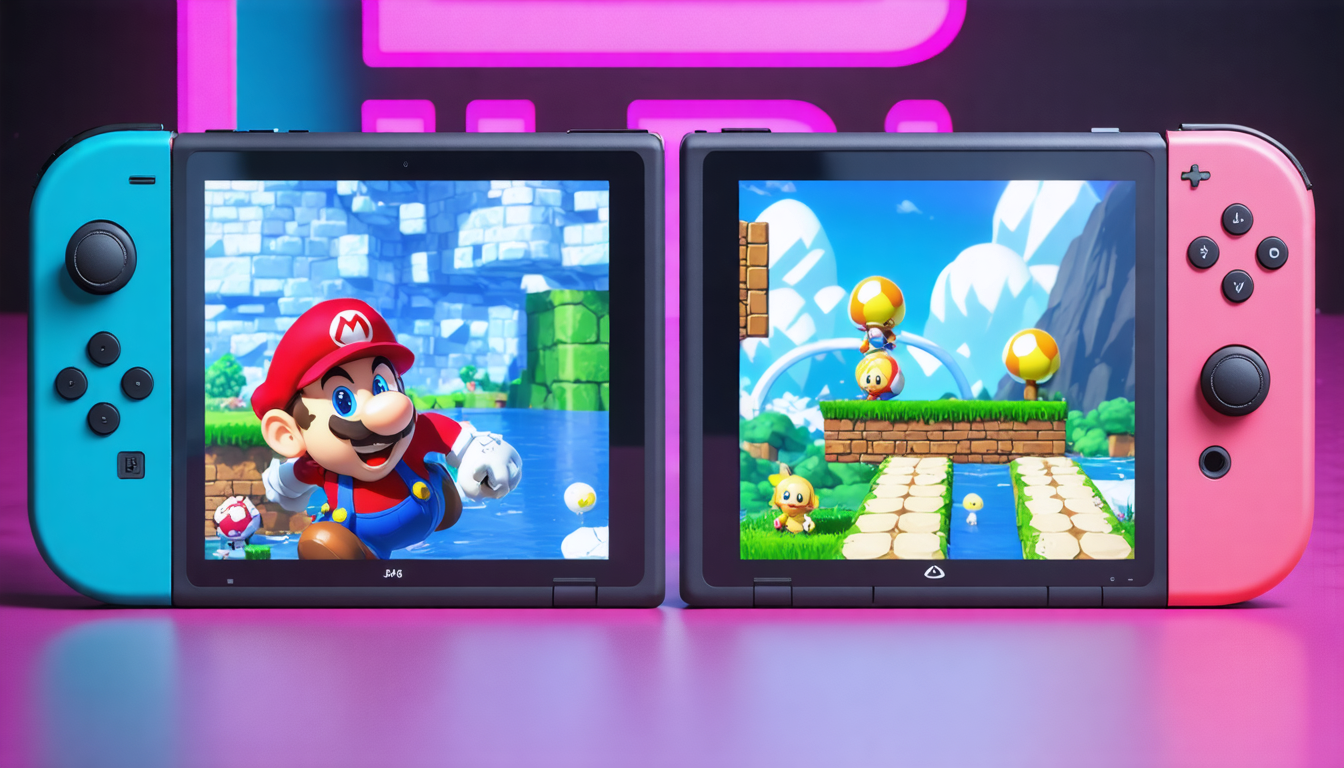
A crucial question for many players is the compatibility of games and accessories. Nintendo has ensured exemplary continuity between the two consoles: the Switch 2 retains access to all Switch games available in physical and digital formats. This means your library, whether rich or modest, remains intact and accessible on the new machine. A real relief for collectors and Nintendo game regulars who do not have to sort between old and new cartridges.
However, this compatibility is not absolute regarding accessories. For example, the removal of the infrared sensor on the Switch 2 deprives players of certain specific uses, notably Nintendo Labo, famous for its creativity and originality. Likewise, it is likely that the first-generation Joy-Con will not be compatible with the Switch 2, forcing gamers to buy the updated controllers again.
Another reassuring point: cloud saves via the Nintendo Online subscription can be transferred to the Switch 2, avoiding loss of progress. The comfort of a smooth transition is thus perfectly taken into account by Nintendo, who knows how strong the emotional bond with games is within its community.
In summary, while the Switch 2 makes a technological leap, it also respects its heritage. Backward compatibility is a real selling point for players who have already invested in the first-generation Switch and do not want to start over from scratch.
Battery life and user experience: Switch vs Switch 2, which to choose?
Battery life is a point that often held back some players when using the original Switch in portable mode. Although the battery was sufficient for short to medium sessions, long play sessions quickly became a challenge, especially for resource-hungry games.
The Switch 2 significantly improves battery life thanks to optimized energy management combined with a reinforced battery. Preliminary tests indicate that the console can now last several extra hours without sacrificing graphic quality or game smoothness. These technical advances make the Switch 2 more suited to long trips, whether by train, plane, or simply during daily commuting.
This advancement also helps smooth the overall player experience. Loading times are reduced thanks to more powerful internal hardware and a more modern architecture. Menus are more responsive, interactions more natural, offering quick access to favorite games. Finally, improved connectivity with two USB-C ports facilitates charging and connection to various accessories, a clear advantage for connected users or those concerned with gaming productivity.
This increased smoothness profoundly changes the user experience, creating a more intuitive and efficient environment, approaching a true compact gaming laptop. For demanding players, the Switch 2 therefore represents a major quality leap in playability and mobility.
Official launch, price, and business strategy: is investing in the Switch 2 worth it?
The Nintendo Switch 2 will be officially available on June 5, 2025, with a pre-order period open from April 8. Nintendo organized a Nintendo Direct on April 2, 2025, to unveil all aspects of the new console in detail, followed by an exclusive presentation at the Grand Palais in Paris from April 4 to 6. This ramp-up in communication demonstrates the strategic importance given to this launch aimed at attracting both loyal fans and new players.
In terms of price, the Switch 2 is positioned between 400 and 500 euros, compared to about 300 euros for the original Switch at launch. This increase is explained notably by the multiplication of high-tech components, improved display quality, and the new ergonomics of the controllers. A significant investment, but one that remains competitive against market standards, especially paired with the large backward-compatible catalog.
Moreover, Nintendo has ensured sufficient supply to avoid stock shortages, frequent during past releases. This logistical concern is a sign that the company wants to mark a turning point in its relationship with players, ensuring optimal availability from day one. It remains to be seen if this promise will be fulfilled on the ground.
Early feedback mentions good reception from professionals and fans, with hopes to see new flagship games such as a possible “Mario Kart 9” or “Mario Kart World,” which could fully exploit the capacities of the Switch 2 to renew Nintendo’s iconic arcade racing experience.
Game catalog and novelties: the gaming future between Switch and Switch 2
The richness of Nintendo’s catalog is one of the major strengths of the Switch consoles. With the Switch 2, this richness only grows. All existing games are accessible, and developers now benefit from a more powerful machine that opens the door to more ambitious productions. Independent creators as well as major franchises benefit from this technical flexibility to offer titles with improved graphics and enhanced gameplay.
In 2026, the community eagerly awaits exclusive titles fully exploiting the novelties of the Switch 2, notably graphic capacities and new Joy-Con handling. Some studios have already announced they are preparing games using the optical sensor and sound improvements to offer unprecedented experiences.
Several cult franchises like Pokémon, The Legend of Zelda, or Animal Crossing remain cornerstone pillars, while the potential release of “Mario Kart 9” or “Mario Kart World” promises unprecedented innovations in the series. Special attention is also given to online multiplayer titles, incorporating better support for voice communications thanks to the integrated microphone.
This content continuity combined with hardware innovations assures Nintendo and its players a prosperous future, marked by creativity and the diversity of experiences offered.
Complete comparison of the advantages and disadvantages of the Switch and Switch 2
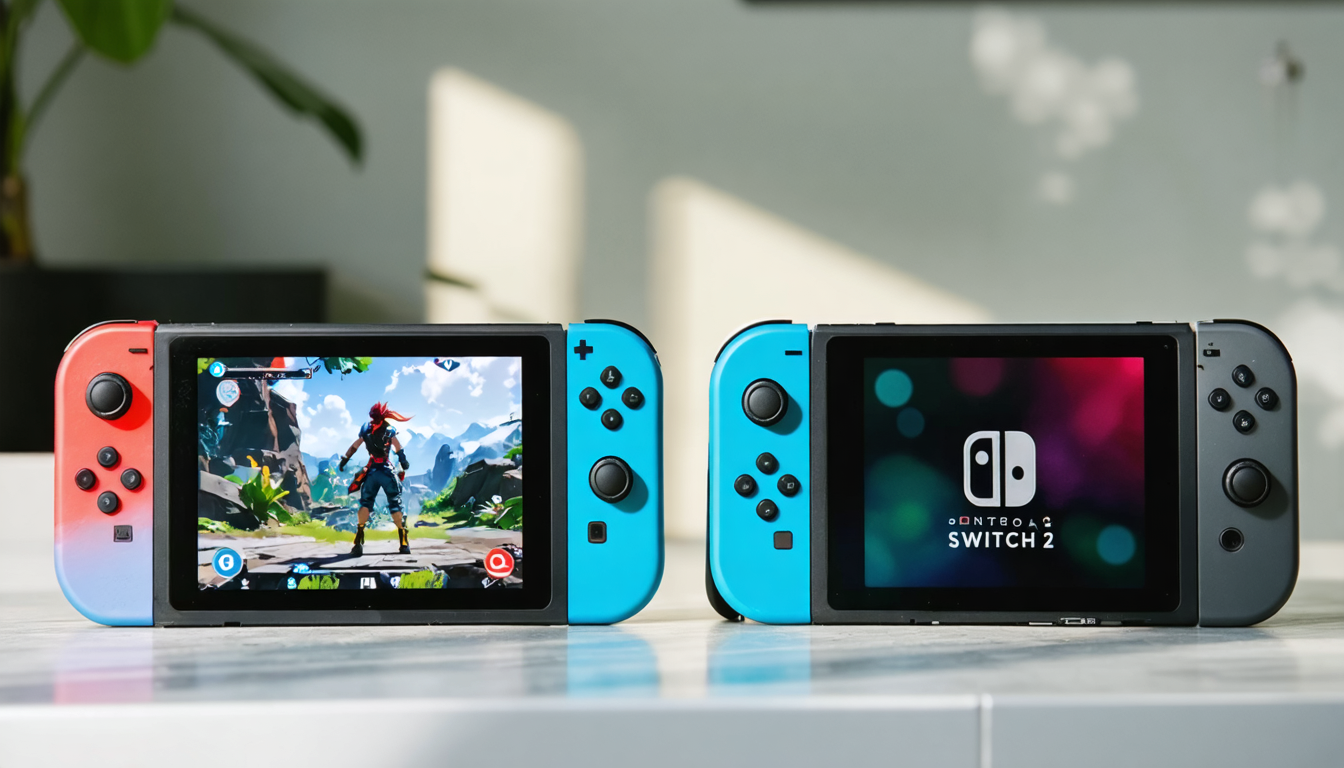
To summarize this entire comparison, it is helpful to have a clear vision of the strengths and limits of each console. This will help better direct choice according to each player’s specific needs.
| Features | Nintendo Switch | Nintendo Switch 2 |
|---|---|---|
| Design | Compact, colorful, light | Dark, premium, larger screen |
| Performance | Modest (Wii U equivalent) | Power equivalent to PS4 Pro |
| Graphics quality | 720p portable, 1080p docked | 1080p portable, 4K docked (upscaling) |
| Storage | 32 GB | 256 GB |
| Battery life | 3-6 hours | 6-9 hours |
| Joy-Con | Rail attachment, drift issues | Magnetic attachment, new optical sensor |
| Game compatibility | 100% Nintendo Switch | 100% Nintendo Switch + novelties |
| Launch price | About 300€ | 400-500€ |
This table highlights how Nintendo has managed to retain the Switch’s strengths while offering a more accomplished console better suited to current technical demands. Each console targets a different category of players: the original Switch remains an interesting option for tight budgets or casual gamers, while the Switch 2 is clearly designed for those who want to exploit the maximum potential of next-generation portable video gaming.