
Diving into the expansive universe of Assassin’s Creed is like embarking on an exhilarating adventure through time and space. This iconic saga of video games, a perfect fusion of history and fiction, invites players to explore fascinating periods where the shadow of the Assassins crosses the light of the Templars. But faced with the richness and complexity of this franchise, one question keeps coming up: is it necessary to start the series in the chronological order of historical events? Our complete guide helps you understand the importance of this chronology while offering valuable advice for starting this extraordinary narrative experience well.
The choice of starting point in the series is not limited to a simple question of release numbers. Indeed, the historical chronology of the games does not correspond to their order of publication. Thus, it is possible to venture first into ancient Egypt and then return to the Italian Renaissance, or to navigate between different centuries according to one’s desires. This freedom can be disconcerting, but it also makes the richness of the Assassin’s Creed saga. For newcomers as well as seasoned players, it is essential to understand the implications of the chosen order to approach interconnected stories where each protagonist and each era bring a new stone to the edifice.
In this guide, we offer you an in-depth dive into the Assassin’s Creed chronology, analyzing major gameplay evolutions, exploring the diversity of protagonists, and providing concrete recommendations to choose your entry point. Whether you are attracted by the fierce battles of the Vikings, the mysteries of the pyramids, or the conspiracies of the Renaissance, you will discover that the saga adapts to everyone’s desires, offering a unique adventure to each player. Join us through this temporal odyssey and prepare to relive the greatest moments of history, armed with your hidden blade and an insatiable curiosity.
- 1 Key gameplay evolutions in the Assassin’s Creed saga
- 2 Decoding the complexity of the Assassin’s Creed chronology
- 3 Protagonists: a range of styles and eras to discover
- 4 Practical advice for starting the Assassin’s Creed saga well
- 5 The mysteries of the future: what will Assassin’s Creed Shadows hold?
- 6 Exploring freedom of order in Assassin’s Creed games
Key gameplay evolutions in the Assassin’s Creed saga
Since the release of the first installment in 2007, the Assassin’s Creed saga has established itself as a pillar of adventure video games. But one of the most frequently asked questions by players concerns the gameplay evolution throughout the episodes, and its impact on the experience. Understanding these transformations is essential to decide whether to respect the chronological order or to be guided by your gaming preferences.
The early titles of the series, notably up to Assassin’s Creed III inclusive, relied on classic action-adventure mechanics. The player embodied an assassin evolving in a semi-open world, where parkour and stealth assassinations were the cornerstones of gameplay. The story revolved around a linear main plot, with few distractions from complex side quests. The focus was on interwoven narration of present and past, offering a clever blend of infiltration and exploration.
With the arrival of Assassin’s Creed Origins in 2017, the franchise took a radical turn. The RPG aspect took a predominant place in the adventure. Open worlds expanded, offering a wide range of side quests, detailed skill trees, and dialogues influencing the story progression. This new approach changed the gameplay experience: the player can now customize their style, explore freely, and live a more organic and immersive adventure.
To better visualize these changes, here is a comparative table illustrating the different phases of gameplay in Assassin’s Creed:
| Phase | Relevant Games | Gameplay Type | Key Features |
|---|---|---|---|
| Classic phase | AC 1 to AC III | Action-Adventure | Parkour, linear missions, infiltration, continuous story |
| RPG phase | Origins to Valhalla | Action-RPG | Open world, side quests, skill trees, narrative choices |
It should be noted that this evolution has sparked passionate debates within the community. Some purists cherish the more directed structure of the early titles, while new players are attracted by the freedom offered by the modern installments. Thus, choosing a play order based on the desired gameplay can prove as important as one based on historical chronology.
Decoding the complexity of the Assassin’s Creed chronology
The chronology in Assassin’s Creed is a fascinating puzzle, mixing real history and fiction with a rigor that sometimes confuses even enthusiasts. Contrary to what one might think, the release order of the games does not correspond to the sequence of narrated historical events. In other words, to follow the adventures in the chronological progression of eras, one often has to jump between games published years apart.
To help bring some order to this nebula, it is useful to remember that the history depicted in the series mostly covers periods from ancient Greece to the Industrial Revolution, including key moments like the Renaissance or the Crusades. Each game therefore focuses on a very specific era, with unique characters and storylines.
Here is a clear list of the main installments ranked according to their place in the historical chronology:
- Assassin’s Creed Odyssey – Ancient Greece (431-422 BC)
- Assassin’s Creed Origins – Ancient Egypt (49-43 BC)
- Assassin’s Creed Valhalla – Viking Era (late 9th century)
- Assassin’s Creed (the first) – Crusades (12th century)
- Assassin’s Creed II, Brotherhood, Revelations – Italian Renaissance (15th-16th centuries)
- Assassin’s Creed III – American Revolution (18th century)
- Assassin’s Creed IV: Black Flag – Golden Age of Piracy (18th century)
- Assassin’s Creed Unity – French Revolution (18th century)
- Assassin’s Creed Syndicate – Victorian London (19th century)
The next announced installment, Assassin’s Creed Shadows, will transport players to feudal Japan in 1579, once again demonstrating Ubisoft’s desire to push geographical and temporal boundaries.
This scattered organization can be confusing, but it offers rare flexibility. Players can thus choose their starting point based on their historical affinities, while appreciating the overall adventure as a mosaic of eras and cultures.
Chronology vs. Narrative Experience
It is important to specify that the narration in Assassin’s Creed does not solely follow the historical timeline of the visited eras. A second layer of story unfolds in the present, usually embodied by modern or futuristic characters who explore the genetic memories of past protagonists through the Animus. This narrative overlay further complicates understanding the ideal order to begin.
For enthusiasts who wish to know the full plot, respecting the release order may offer a smooth progression in the present-day story. However, for others, prioritizing the historical chronological order ensures optimal immersion in each universe.
Protagonists: a range of styles and eras to discover
What also profoundly distinguishes the Assassin’s Creed series is the diversity of its protagonists. Each title introduces a new assassin, often with a personality and combat style unique to them, embodying the values of the creed through their culture and era.
For example, Ezio Auditore, the hero of the Renaissance trilogy (AC II, Brotherhood, Revelations), captivates with his charisma and his evolution from a carefree young man to a wise and experienced Master Assassin. His popularity is such that he is regularly cited as the emblematic figure of the franchise. The order in which you discover his adventures can strongly influence your perception of the saga.
But let us not forget Bayek, the face of Assassin’s Creed Origins, who brings a more serious and epic tone, fitting into the mystical atmosphere of ancient Egypt. Or Kassandra in Odyssey, who, through her duality as warrior and diplomat, offers a grand adventure in ancient Greece. And what about Eivor in Valhalla, whose Viking ferocity and tactical sense perfectly embody an era of conquests and intense conflicts.
This range of characters allows players to enjoy varied gameplay and stories imbued with their own historical and cultural ambiance. The choice of protagonist can thus guide the order in which you explore the series.

Practical advice for starting the Assassin’s Creed saga well
Faced with this richness and the multitude of ways to approach the series, it is natural to feel a bit lost. Here are some tips to guide you according to your player profile and expectations:
- For complete beginners: Start with Assassin’s Creed II or Origins. These titles offer a balanced introduction between exciting history and accessible game mechanics.
- If you are a history enthusiast: Choose the chronological order of historical periods, beginning with Odyssey then Origins. This will help you perceive the evolution of conflicts and themes addressed.
- If you prefer modern RPG gameplay: Focus on recent episodes like Valhalla or Origins, which offer a more open and customizable experience.
- Diversify the experience: Do not hesitate to choose a title based on the historical or cultural context that most attracts you, even if it means playing out of chronological order.
- Follow the Ezio trilogy: if you like well-crafted stories, this trilogy remains a safe bet to discover the narrative depth of the saga.
It is important to keep in mind that the Assassin’s Creed series is designed to offer great flexibility. Each player can thus create their own path, conceived more as a multi-faceted adventure than a unique and fixed route.
The mysteries of the future: what will Assassin’s Creed Shadows hold?
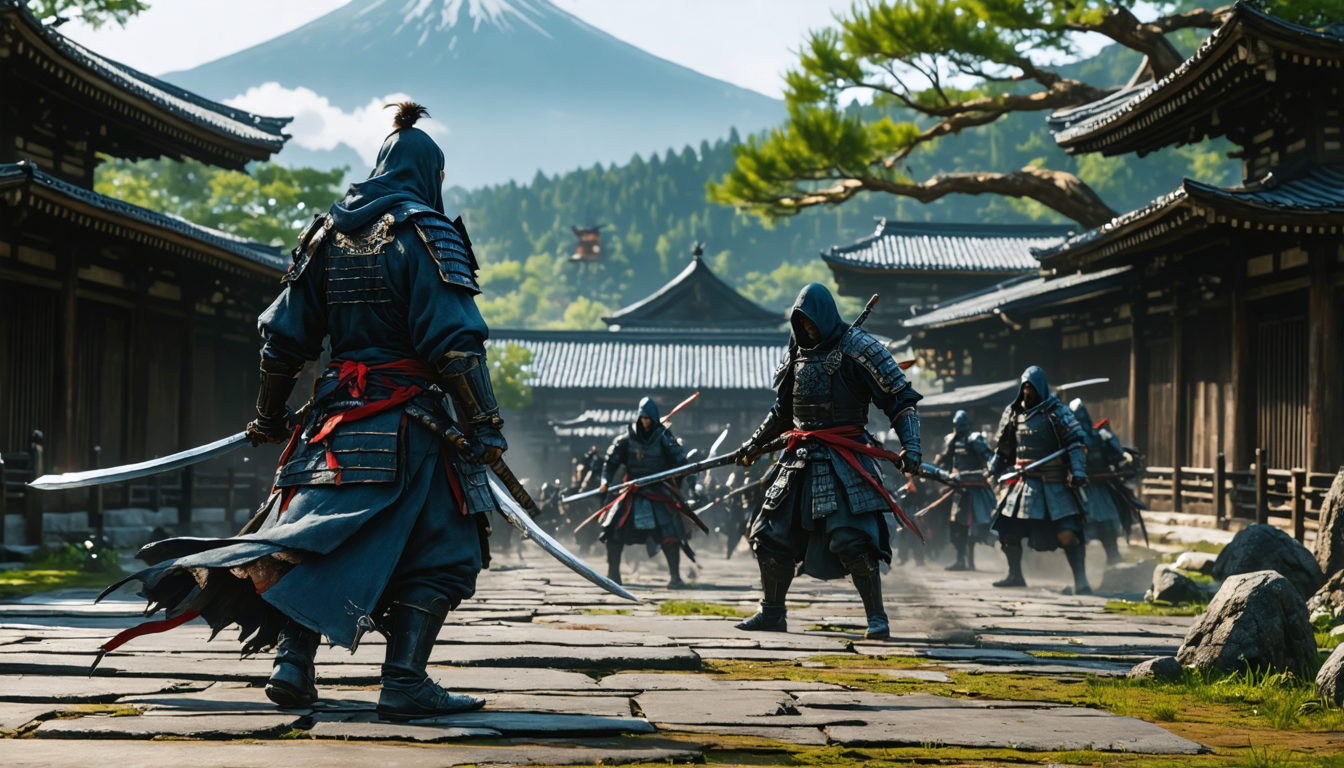
On the 2026 horizon, the series continues its spirit of innovation by announcing a new ambitious installment called Assassin’s Creed Shadows, set in feudal Japan in 1579. This choice of era perfectly illustrates Ubisoft’s desire to continue surprising by exploring less exploited historical territories, rich in myths and intrigues.
The Japanese context promises immersion in a universe full of samurai, ninjas, and clan conflicts, potentially opening new gameplay mechanics focused on stealth, strategy, and social relations. This also raises a new question for newcomers: should they then start with this unique new environment or follow the classics?
Answering this question will depend as much on your preferences as on your curiosity for an unprecedented period in the franchise. While waiting for its release, it is advisable to consolidate your understanding of the Assassin’s Creed universe through the key games already available.
Exploring freedom of order in Assassin’s Creed games
Ultimately, the richness of Assassin’s Creed also lies in its versatility. Unlike many series where the reading order is crucial, here you can explore the eras in whichever order you want. This freedom allows you to choose an entry point based on your historical tastes, the gameplay evolution you prefer, or even special curiosity for a character.
Some opt for a thematic approach, favoring medieval worlds or maritime environments depending on the titles. Others like to follow the present-day narrative progression, respecting the release order. This diversity of approaches reflects the complexity of a saga that transcends the traditional storytelling constraints in video games.
Here is a summary of the advantages of playing according to different approaches:
| Approach | Strengths | Limitations |
|---|---|---|
| Historical chronological order | Coherent temporal immersion, visible evolution of civilizations | Present-day storylines sometimes less fluid |
| Release order | Respects progression of present-day narrative, better overall understanding | Sometimes erratic jumps between eras in the past |
| Thematic choice (era or gameplay) | Personalization of experience, pleasure according to preferences | Possibility of missing links between games |
In short, the Assassin’s Creed saga suits all types of players, from novices to veterans. What truly matters is to give free rein to your thirst for exploration and adventure.