

In the era of constant overinformation and omnipresent digital entertainment, the question of being dazzled by a video game seems more complex than ever. Technological advances offer impressively fine graphics and increasingly sophisticated mechanics, but are they capable of sparking that sense of wonder that once fascinated players? Video game universes, now familiar and heavily publicized, sometimes struggle to surprise an audience saturated with information. Yet, despite this abundance, the quest for innovation and new experiences persists, crossing generations and nurturing a constant hope for renewal. Every novelty, whether technical, narrative, or communal, tries to break the routine, reshaping the perception we have of digital entertainment.
As streaming platforms and economic models reinvent themselves, integrating cryptocurrencies and decentralized technologies, the 2026 video game landscape reflects a complexity where player expectations oscillate between the desire for novelty and the need for familiar landmarks. This dynamic is set against a backdrop marked by media saturation, where every release is subjected to intense and often exhausting coverage, including reviews, teasers, and community-generated content. However, new paths to dazzlement open up, notably through interactive storytelling, daring mechanics, or the vitality of creative communities, sometimes offering unexpected and deeply immersive experiences.
- 1 How media saturation affects perception and dazzlement in video games
- 2 Technological innovation serving renewed immersion
- 3 When game mechanics become the engine of dazzlement
- 4 Communities and collaborative creativity as drivers of wonder
- 5 Economic mutations and their impact on user experience
- 6 Players’ paradoxical expectations regarding innovation and familiarity
- 7 Limits and potential of interactive storytelling to surprise
- 8 Societal issues around addiction and mental health linked to overinformation in video games
How media saturation affects perception and dazzlement in video games
The overinformation generated by the abundance of media content significantly influences how we approach video games. In 2026, every major release benefits from massive coverage: trailers, streaming demos, detailed analyses, reviews, discussions on forums and social networks. This continuous exposure has a double effect. It helps create collective excitement, but can also diminish the element of surprise essential to dazzlement.
When narrative stakes are spoiled in a few clicks or mechanics are dissected in explanatory videos, the sense of discovery is lost. Players often approach a title with preconceived ideas, reducing the impact of the in-game experience. Paradoxically, the multiplication of information sources can lead to a form of cognitive fatigue. The brain, saturated with stimuli, develops a kind of resistance to astonishment. This media saturation can thus alter the user experience and, ultimately, harm the capacity for wonder a video game can offer.
It is interesting to observe that this dynamic does not affect all audiences in the same way. Older generations, who experienced the arrival of video games in a less connected era, feel more intensely the difference between their initial experience and contemporary practices. Younger players, for their part, evolve in a native environment of overinformation, naturally modifying their expectations. They seek more experiences that renew mechanics or invest in unexplored niches, rather than pure graphical or narrative surprise.
This evolution has pushed developers to rethink how they build the user experience. Some opt for games with well-kept secrets, limiting the dissemination of key information before release. Others favor deep immersion from the very first minutes of play, based on emotions or unique interactions less easily spoiled. Managing pre-launch communication thus becomes an essential strategic lever to recreate a space for dazzlement in an oversaturated media universe.
Finally, some productions play on increased personalization to generate a unique experience for each player, limiting predictability and continually renewing interest. The use of artificial intelligence to dynamically adapt scenarios or challenges is a promising avenue to break this routine and rekindle wonder.
Technological innovation serving renewed immersion
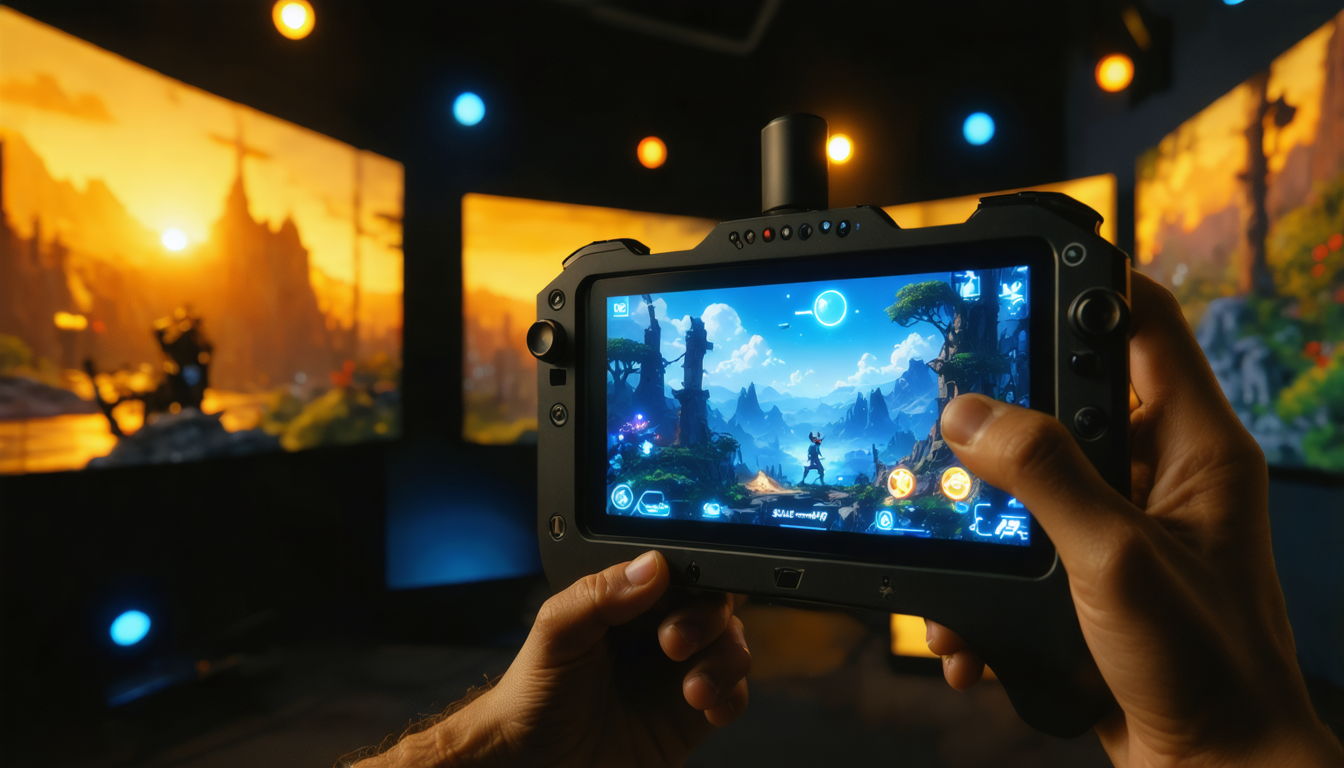
In this relentless race for novelty, new technologies play a crucial role in creating experiences capable of provoking renewed dazzlement. The latest generation graphics engines converge towards near-cinematic realism, where every detail, light, or texture helps immerse the player in a living and rich universe. These advances sometimes reach levels at which the human brain struggles to differentiate the virtual from the real, enhancing the sense of presence.
However, visual performance can only be a foundation. If it lacks depth, the experience remains superficial and quickly forgotten. That’s why seeking a balance between technical prowess and narrative quality has become fundamental. Stories told in video games today explore complex themes, with nuanced characters and branching plots, capturing the player’s attention more durably. Innovation no longer lies solely in graphical rendering, but in the ability to generate emotion and reflection.
Moreover, the emergence of virtual reality brings a breath of optimism, despite initial disenchantment. Even though accessibility remains limited, its potential for immersion is undeniable. Studios are heavily investing in improving headsets, reducing costs, and developing suitable catalogs. The goal remains to offer an experience where the player is no longer just an observer, but a true actor interacting with a living world, tangible beyond the traditional screen.
This expansion of possible experiences also leads to changes in the very design of game mechanics. Adaptive game systems, based on artificial intelligence, offer tailor-made challenges that boost engagement. Similarly, gesture or emotion recognition opens the door to authentic interactions far beyond the simple joystick. The pursuit of surprising emergence in video game experiences thus relies on this technological alliance where immersion and interaction combine.
This process is also supported by innovation in hybrid formats, mixing genres and styles, breaking the traditional framework to offer players a unique experience. These crossovers provide opportunities to explore new gaming territories, inviting the player to redefine their expectations.
When game mechanics become the engine of dazzlement
Beyond visual and narrative aspects, it is often the game mechanics that shape the memorable experience. In an oversaturated video game universe, innovation in rules, objectives, or interactions plays a central role. Games that manage to renew gameplay succeed in capturing attention for the long term and fostering real amazement.
A striking example of this trend is the rise of independent games. Freed from heavy commercial constraints, small studios experiment with original concepts, trying daring mechanics that are sometimes risky. These productions, often modest graphically, more than compensate with the freshness of their ideas and their ability to surprise.
Innovations concern asymmetric game rules, nonlinear progression systems, or innovative social interactions. Sometimes, creativity plays on the unexpected, such as real-time modification of the universe by player decisions, or the fusion of several styles to reconfigure the experience.
This kind of boldness stimulates player involvement, who feel free to explore different universes and adopt new strategies. The renewal of sensations thus depends on developers’ ability to venture off the beaten path, challenge established conventions, and escape redundancy.
Another important facet lies in interactive storytelling, where choices truly shape the unfolding of events. These branching narratives create a strong personal bond, anchoring the player in their own path. But this mechanic has its limits: producing multiple credible scenarios requires heavy investment, and sometimes the consequences of choices remain superficial, disappointing expectations.
Ultimately, mechanics remain an essential pillar of gameplay pleasure and possible dazzlement. They often act as the primary lever to reject routine and spark enthusiasm.

Communities and collaborative creativity as drivers of wonder
In the context of media saturation and overinformation, player communities play a crucial role in renewing the experience and preserving a space for dazzlement. Enthusiasts no longer content themselves with passive consumption; they create, modify, divert works, thus extending the life and richness of games.
The democratization of creation tools and integrated content editors in games opens a path to collective expression. These participatory platforms allow everyone to design, share, and bring to life alternative universes, new game modes, or even original stories. This abundance of initiatives generates very diverse, often unpredictable experiences, breaking away from classic commercial formats.
Some community-created modes surpass official expansions in popularity. They become cultural phenomena in their own right, constantly renewing interest and curiosity. Studios observe and sometimes incorporate these community innovations into their projects, recognizing this dynamic as a major source of innovation and dazzlement.
Moreover, this shared creativity helps build deep social bonds among players, transforming digital experiences into human adventures. Social interactions become a vector for emotions and surprises, contributing to the immersive richness of games.
Here are some notable examples of community contributions:
- Creation of mods that completely alter the game universe.
- Development of alternative scenarios and custom campaigns.
- Organization of contests and participatory events within the game.
- Exchange of strategies and advice via dedicated social platforms.
- Development of simple editing tools to encourage amateur innovation.
This collaborative richness constitutes an indispensable breath to maintain dazzlement in the face of a standardized and heavily publicized offer. It demonstrates that surprise can emerge from diversity and co-creation.
Economic mutations and their impact on user experience
The 2026 video game economic landscape is marked by a profound transformation thanks to the integration of new financial technologies. Digital platforms diversify, but it is especially the gradual adoption of cryptocurrencies and blockchain that disrupt consumption and interaction modes.
In related sectors, such as online casinos, these innovations enable instant deposits, guarantee confidentiality, and speed up withdrawals. Transparency of transactions and traceability, ensured by cryptographic protocols, provide new trust to users while improving the perception of fairness and equity in online gambling.
This evolution extends to video games, where microtransactions, in-game purchases, and digital marketplaces adopt decentralized solutions. This changes players’ expectations regarding user experience, who now expect more fluidity, security, and control.
Here is a summary table of the main changes induced by these mutations:
| Aspect | Traditional Model | Innovations 2026 |
|---|---|---|
| Payment methods | Bank cards, PayPal | Cryptocurrencies, decentralized wallets |
| Transaction speed | Minutes to hours | Instant or near-instant |
| Security | Standard IT security protocols | Blockchain protocols, enhanced traceability |
| Fairness control | Based on provider trust | Verification via cryptography, increased transparency |
| Accessibility | Limited to banking infrastructure | Globally open thanks to decentralization |
This economic transformation opens unprecedented opportunities to rethink the user experience, but also brings regulatory challenges. Authorities must adapt legal frameworks to these new often decentralized models, where legal uncertainty can hinder adoption.
Finally, this economic upheaval indirectly influences creativity and innovation. Studios sometimes have new decentralized funding sources, allowing them to take more risks and explore alternative formats, provided they integrate these new technologies into their strategy.

Players’ paradoxical expectations regarding innovation and familiarity
Players in 2026 display ambivalent desires that reflect the complexity of their relationship with digital entertainment. These expectations are sometimes contradictory: on the one hand, they demand innovative experiences capable of provoking dazzlement, and on the other hand, they seek a certain reassuring familiar comfort.
This duality partly stems from previously mentioned media saturation and overinformation. Too radical an innovation can unsettle and alienate. Conversely, a too classic formula risks boring and losing attention. The line between boldness and commercial safety becomes a balancing act for creators.
Many studios thus choose to incorporate nostalgia elements, revisiting proven mechanics with modernized packaging. This choice aims to gather support from a broad and varied audience, but the temptation of poorly mastered recycling can lead to a perception of lack of originality.
At the same time, some players seek to break this routine by exploring the most innovative proposals, even if they are riskier. They lean towards independent titles, complex interactive narratives, hybrid experiences, or procedurally generated universes. This diversity reflects a market fragmentation where niches gain in importance.
Here are some major trends of paradoxical expectations:
- Search for strong emotional immersion, blending emotion and gameplay.
- Desire for technical innovation, but not at the expense of accessibility.
- Growing importance of social and community sharing.
- Attachment to known universes while aspiring to discovery.
- Will for customizable experiences to avoid repetition.
Ultimately, these multiple expectations require great flexibility from studios and particular attention to how players perceive the experience. Dazzlement then becomes a delicate art, a fragile balance between continuity and rupture.
Limits and potential of interactive storytelling to surprise
Interactive storytelling today asserts itself as one of the key drivers to renew video game dazzlement. By giving the player the possibility to choose their path and shape their story, it increases their involvement and sense of ownership.
This approach, however, presents significant limits. Producing truly branching content requires massive investment in scripting and development. Each choice must be credible and have a tangible impact. If not, disappointment can quickly arise, with the offered freedom becoming an illusion.
Some games have excelled in this technique, creating a rich and personalized experience, while others suffered from a lack of coherence or superficiality of consequences. The challenge often lies in the compromise between narrative ambition and budget constraints.
Nevertheless, interactive storytelling continues to progress thanks to the aid of new technologies. Artificial intelligence, in particular, enables generating adaptive stories, integrating dynamic dialogues, and simulating believable character reactions. These advances hint at a promising future where surprise would also be driven by narrative plasticity.
This form of cognitive immersion created by multiplying possibilities enriches the emotional richness of the game, stimulating curiosity and maintaining a renewed degree of dazzlement, even in an extensively explored universe.
Societal issues around addiction and mental health linked to overinformation in video games
The rise of overinformation and digital saturation in the video game domain also raise important questions regarding players’ mental health. The initial dazzlement can sometimes slip into a form of dependence, amplified by game designs aiming to maximize engagement.
Recent research shows that prolonged exposure to an abundance of interactive content, especially among younger generations, can lead to subtler disorders than simple sedentary behavior, such as visual fatigue, anxiety, or sleep disorders. These symptoms call for increased vigilance, particularly in the context of intensive video game practice and chaotic information consumption.
The difficulty lies in managing pleasure and wonder without tipping into excess. Personal regulation tools, health professionals’ advice, and awareness about video game disorder risks become essential. The challenge is to ensure a balanced experience where immersion and surprise do not harm mental health.
Moreover, developers are increasingly encouraged to integrate responsible mechanisms, such as pause reminders, adapted game modes, and less time-consuming content architectures. Collective awareness highlights the importance of reconciling innovation, pleasure, and well-being preservation.
Thus, in a video game universe saturated with information and solicitations, the pursuit of healthy dazzlement is a shared responsibility among players, creators, and regulators to preserve the virtues of entertainment without paying a high price.