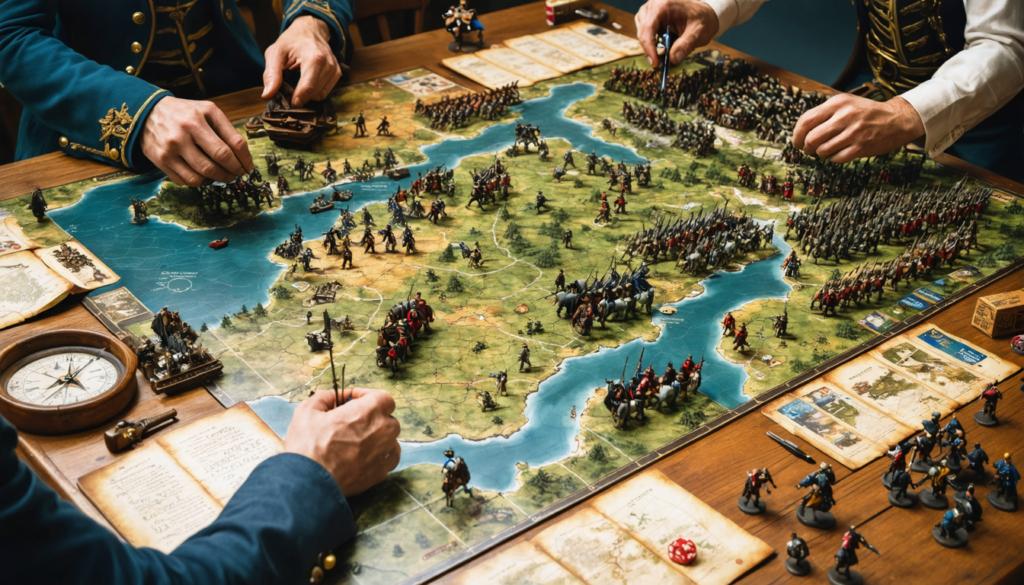
History has always fascinated with its epic tales, legendary heroes, and major conflicts that shaped the world. However, often, learning about or discovering these wars and battles is limited to a passive stance, where the viewer observes the events from a distance. In 2025, historical board gaming disrupts this dynamic, turning every player into a strategist and main actor. This playful medium invites players to relive the great battles of the past, from the Siege of Agincourt to ancient campaigns, blending immersion, tactical thinking, and passion for military events. Far from being mere entertainment, these games offer a bridge between the past and the present, allowing a full understanding of the mechanisms, stakes, and strategies that determined the course of History.
In this context, it is essential to explore how these games allow not only the rediscovery of historical facts but also to step into the shoes of commanders dealing with logistics, rough terrains, and military uncertainties. It is a fascinating journey into the heart of conflicts that have shaken the world, driven by passion, knowledge, and tactical rigor. This gaming world attracts an ever-growing audience, ranging from history specialists to strategy enthusiasts, offering a rich experience that sparks curiosity while developing strategic intelligence.
- 1 Choosing a historical era to begin immersion in board gaming
- 2 Understanding the complex mechanisms of board games for realistic military simulation
- 3 Developing tactical thinking: the key to winning famous battles
- 4 How board games allow players to embody generals and live military conquest
- 5 The fundamental role of historical research in enriching military board games
- 6 Simulations and modern technologies: towards a new era of historical board gaming
- 7 The community of enthusiasts: a driving force behind the revival of historical strategy games
- 8 Historical board games as vectors of education and cultural transmission
Choosing a historical era to begin immersion in board gaming
Starting your adventure in board games dedicated to great battles requires careful selection of the historical period to explore. The gaming universe extends across the entire human chronology, from ancient conflicts to the modern tensions of the 20th century. This diversity allows you to orient your choices according to your affinities, knowledge, and strategic preferences.
For example, some enthusiasts choose games dealing with ancient periods, where combats are often marked by brutal hand-to-hand fighting and massive use of units such as Roman legions or Greek phalanxes. These scenarios demand fine mastery of positioning and management of tight formations, offering a unique command experience. Fans find here a learning ground for classic strategies that wrote the first military pages of our history.
On the other hand, the Napoleonic period attracts players who want to relive the intensity of battles with black powder, disciplined tight ranks, and increased troop mobility. This choice offers a different complexity, where cavalry movements and artillery take central roles, creating smoother combat dynamics yet equally demanding in terms of tactics.
World War II remains unsurpassed as a favorite period in the military gaming universe. Indeed, this conflict offers an extremely wide palette of strategic options, between fierce combat on the Eastern Front, amphibious operations in the Pacific, and the combined use of armored vehicles, aviation, and infantry. The logistical aspect and diversity of theaters of operation make these games particularly rich, evoking both historical accuracy and strategic ingenuity.
Finally, medieval wars, such as castle sieges, bring a renewed dimension to tactics, highlighting fortification aspects, prolonged sieges, and siege weapons. Players here must manage both defense and conquest with technological constraints specific to the era. On another register, the Cold War offers a universe focused on diplomacy, espionage, and the precarious balance between nuclear threat and conventional warfare, thus introducing a political and psychological role within the board game.
For a successful immersion, it is crucial to choose a theme that speaks to you deeply. Passion for a historical era facilitates the learning of complex rules and guarantees enjoyment that lasts through the games. In 2025, specialty stores and online platforms abound with varied titles, suited to all levels and tactical styles, thus offering everyone the possibility to start in the period most fascinating to them.
Understanding the complex mechanisms of board games for realistic military simulation
At the heart of every board game dedicated to great battles is a complex engine aiming to recreate military and strategic reality as faithfully as possible. Realism is not just a matter of appearance but resides primarily in the subtle interaction between units, terrain, and weather conditions, thus offering each player an immersive and precise simulation.
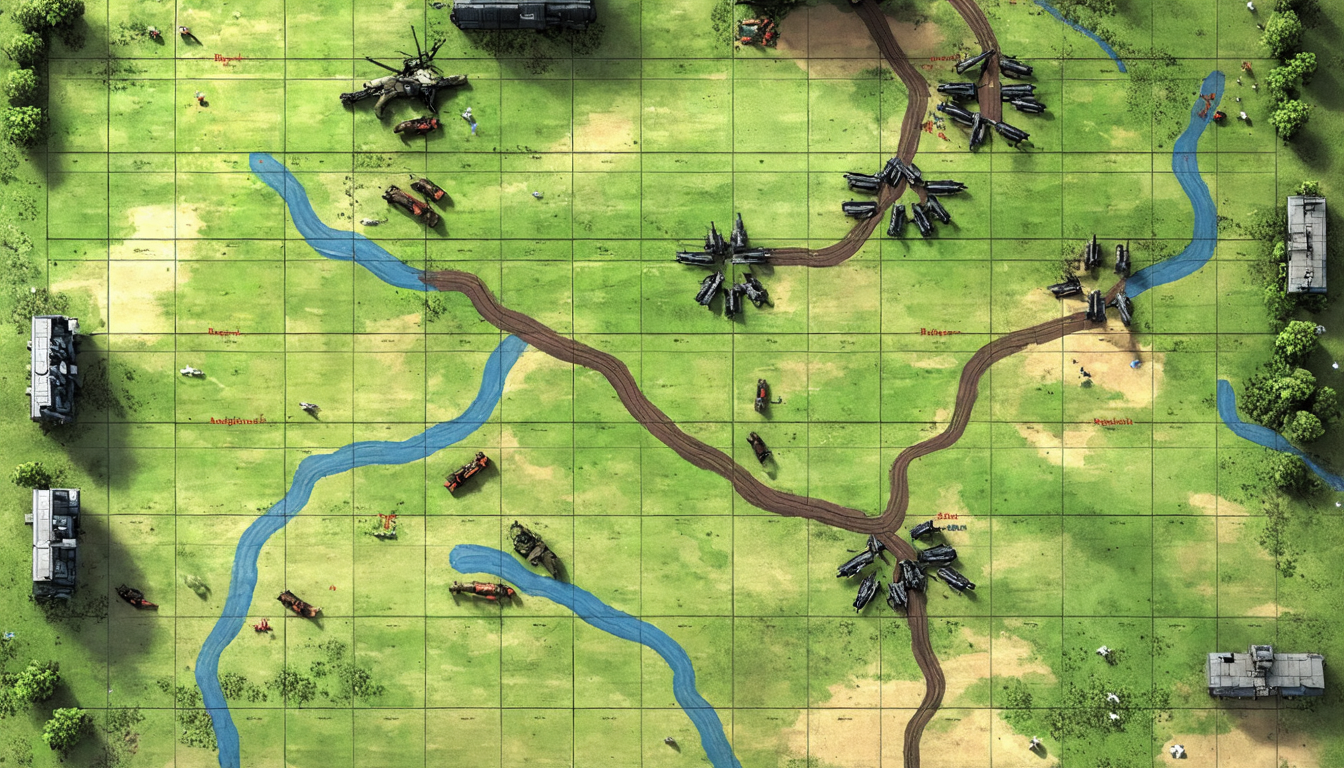
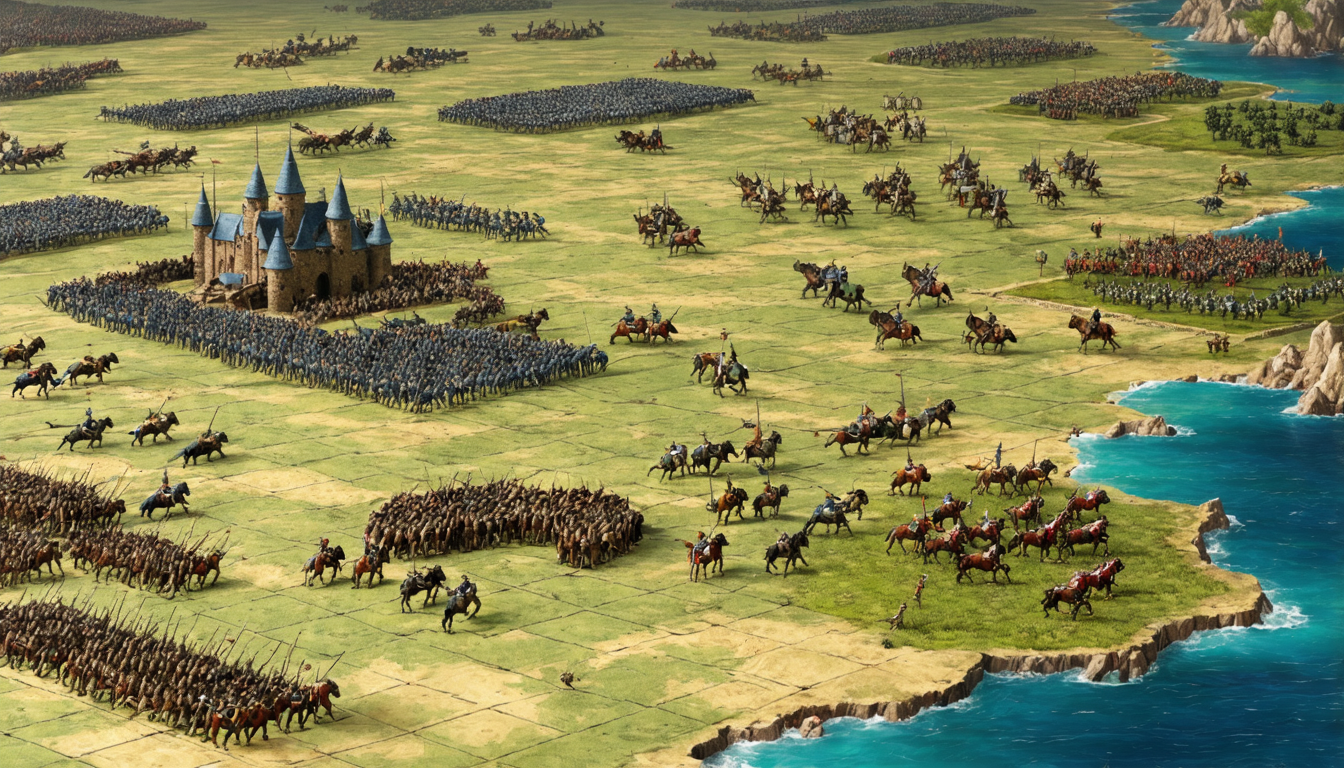
One of the major innovations is the use of hexagon-segmented boards, which effectively represent the battlefield topography. Each tile can symbolize a type of terrain with its advantages and limitations: forests providing effective cover, hills offering defensive bonuses, or rivers representing natural obstacles difficult for vehicles and troops to cross. This system forces the player to study the map professionally, anticipating movements while considering the physical constraints of the theater of operations.
The weather also plays a decisive role in the uncertainties of battle. A snowy front will slow down the progress of foot troops, recreating, for example, the difficult conditions of the Eastern Front during World War II. Likewise, mud, often neglected in other media, is taken into account, immobilizing vehicles and armored units, thereby forcing strategic adjustments. This attention to detail gives the games a tactical depth rarely matched.
Regarding units, each type reproduces its functions on the field. Infantry, in close contact, masters controlling sensitive zones, while artillery delivers warning shots at a distance, weakening enemy defenses. Cavalry excels at flanking maneuvers and rapid attacks, exploiting mobility to surprise and destabilize the enemy. The player is thus led to finely coordinate these elements to form a coherent and effective force.
Another crucial aspect players must master is logistics: without adequate supply, troops lose their effectiveness and risk defeat. The morale of the men is equally vital; a panicked unit can, for example, rout, leaving a gap in your lines. These human factors give the game a psychological dimension, enriching the simulation with elements sometimes overlooked in classical narratives.
| Military Element | Function | Tactical Effect |
|---|---|---|
| Infantry | Control of terrain, close defense | Strategic occupation of key positions |
| Artillery | Long-range strike, weakening defenses | Disorganization of enemy lines |
| Cavalry | Mobility and maneuver | Rapid attacks, flanking enemy forces |
| Logistics | Supply and support | Maintaining combat capability |
| Morale | Psychological state of troops | Impact on resistance or rout |
This richness in the mechanisms is the strength of historical board games in 2025, offering a playground as captivating as it is demanding. It becomes clear that immersing oneself in these universes requires analytical skills and anticipation beyond simply moving tokens.
Developing tactical thinking: the key to winning famous battles
In the universe of board games dedicated to historical conflicts, victory depends on a keen ability to think several moves ahead. Strategy is not just rushing headlong against the enemy but constantly scrutinizing their weaknesses, using terrain to your advantage, and deploying your forces optimally. A poorly prepared battle can quickly turn into a disaster.
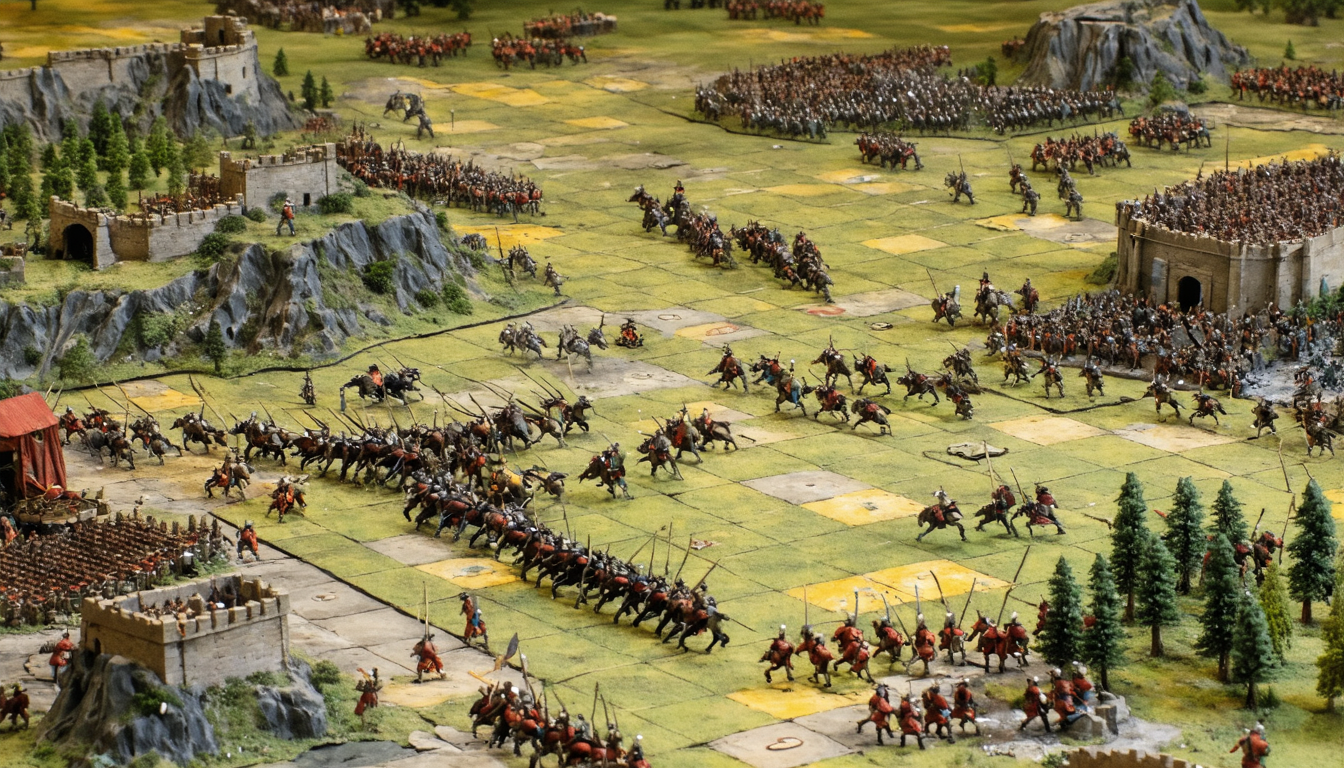
One fundamental principle taught by these games is that frontal attacks are often a costly mistake. Instead, careful observation of enemy movements and the ability to adapt one’s plan according to circumstances are essential qualities. For example, executing a flanking assault can disorganize enemy lines and open a decisive breach. This approach recalls the maneuvers of the Napoleonic campaign or ancient battles, where cunning often surpassed brute force.
Solo play is gaining popularity today because it allows players to practice without pressure, facing a sophisticated artificial intelligence. This training offers the opportunity to experiment with different strategic approaches, going beyond usual patterns, and developing personalized tactics. Without the constraint of a human opponent, one progresses at one’s own pace, which facilitates learning the subtleties of the rules.
However, the real pinnacle remains the human duel. Facing a real opponent, tension rises, imagination triggers, and reactivity becomes crucial. You are then plunged into a true intellectual face-to-face where every decision can reverse the course of the battle, creating a unique moment of intensity and pleasure. The experience gained in these matches often transfers as valuable know-how, with the tactical approach refined with each game.
Here is a list of fundamental strategies to remember to maximize your chances of success:
- Exploitation of terrain: Use reliefs, forests, and natural obstacles to reinforce defense or surprise the enemy.
- Coordination of units: Synchronize infantry, artillery, and cavalry for complementary action.
- Logistics management: Ensure continuous supply to maintain troop effectiveness.
- Weather monitoring: Adapt movements according to climatic conditions.
- Observation and anticipation: Closely follow enemy actions and foresee your reactions.
- Flexible adaptation: Quickly modify tactics in response to unforeseen events.
- Morale maintenance: Protect soldiers from panic and strengthen their determination.
How board games allow players to embody generals and live military conquest
Historical board gaming offers an immersive experience where one stops being a mere spectator and becomes a key actor of the past. Each player takes on the role of a general, leading an army charged with conquering objectives. This embodiment is at the heart of the game’s unique charm, making events more tangible and emotional.
Leading an army on a board means juggling a multitude of factors. Besides immediate tactics, the commander must consider available resources, terrain nature, and troop condition. These decisions directly impact the success or failure of the campaign, thus giving real weight to each choice.
For example, in games simulating the Battle of Waterloo, time and reinforcements management is crucial. Players must know how to hold back, reinforce fragile sectors, or launch attacks at opportune moments. This immersion in the skin of Napoleon or the Allies gives a new dimension to their understanding of historical stakes.
Historical board games do not only record combat phases. They often incorporate diplomacy, negotiation, or espionage mechanics, particularly in scenarios covering the Middle Ages or the Cold War. This complexity adds a political layer that must be mastered to achieve victory.
This narrative richness is supported by illustrations, maps, and miniatures often made with impressive attention to detail. This further increases immersion and stimulates imagination, allowing players to feel more intensely the tension of great battles.
The fundamental role of historical research in enriching military board games
The quality of a board game dedicated to a past battle largely depends on the historical accuracy underlying it. Indeed, rigorous research on weaponry, strategies, political and social context is essential to offer an authentic and credible simulation. This concern for accuracy transforms the game into a true educational immersion.
Designers rely on archives, testimonies, iconographic documents, and expert analyses to build mechanics, maps, and units. This approach ensures that the available tactics correspond to the realities of the era, as well as the geographical distribution of forces or the role of generals.
For example, taking into account troop particularities, such as Greek phalanxes with their tight formations, or the massive use of artillery during World War I, is essential to restore the dynamics of confrontations. These details enhance realism while retaining the loyalty of history enthusiasts.
Bringing the past back to life with a scientific approach in board games also helps the general public understand military stakes differently than through lectures or documentaries. The playful dimension encourages engagement and memorization, opening the way to more curiosity and deepening.
This growing trend towards exhaustive historical simulation fits perfectly within the technological and cultural context of 2025, where smart popularization is highly appreciated. Relying on a solid knowledge base increases the game’s credibility and player satisfaction.
Simulations and modern technologies: towards a new era of historical board gaming
Traditional military board gaming is experiencing a true revolution thanks to technological contributions. In 2025, creators increasingly integrate digital and interactive elements that enrich the experience while respecting the tactical and strategic essence of the physical medium.
For example, some games now include mobile applications that manage weather, logistics, or offer dynamic scenarios adapting difficulty in real time. These tools provide enhanced realism without slowing down gameplay.
Simulation also gains fidelity thanks to artificial intelligence embedded in these applications. Solo, the player faces virtual opponents capable of adopting evolving and impressive tactics, representing a stimulating alternative to traditional duels. This innovation significantly extends training and discovery possibilities.
Moreover, 3D and augmented reality technologies are beginning to make their way into this gaming world. Though still experimental, they already bring stunning visual immersion, making miniature sets and maps livelier. Designers imagine a future where board games could combine tactile and virtual elements, creating a bridge between past and future.
This technical evolution helps attract a new generation of players, sensitive to innovations while maintaining a strong connection to history and its great battles. The balance between tradition and modernity proves to be a powerful lever to sustain this fascinating universe.
The community of enthusiasts: a driving force behind the revival of historical strategy games
In 2025, the scene of historical board games is supported by a passionate and dynamic community, sharing knowledge, experiences, and tips. This social interaction, whether online or during physical meetings, is an essential driver for the development and popularity of games.
Forums, discussion groups, social networks, and streaming platforms provide a space where players exchange strategies, stories, and revisit the great simulated battles. These interactions give rise to a true collective culture around playful military history, strengthening the sense of belonging.
Moreover, dedicated tournaments and events encourage friendly competition, improving the overall level and promoting the discovery of new tactics. Friendliness reigns, and the emulation stimulates players’ creativity in implementing strategies and scripting games.
This community also ensures knowledge transmission, notably through creating guides, tutorials, and explanatory videos. It plays an important educational role, supporting newcomers and enabling them to progress quickly while enjoying every aspect of the games.
Exchanges also feed developers who integrate player feedback to refine rules and scenarios, thus ensuring increasing product quality, ever closer to historical reality and fans’ expectations.
Historical board games as vectors of education and cultural transmission
Beyond entertainment, board games dedicated to great battles have become a powerful educational and cultural transmission tool. By making history accessible and interactive, they help sensitize a wide audience to the richness and complexity of past events.
Approaching war through the lens of play pushes players to be interested in political contexts, actors’ motivations, and human consequences of conflicts. This active immersion promotes a deeper understanding than simply reading manuals or watching documentaries.
In schools and museums, these playful supports are increasingly finding their place, enriching traditional teaching methods. They allow students to concretely handle historical elements, facilitating memorization and critical thinking. This playful process is particularly effective in awakening curiosity and multiplying viewpoints on the past.
Furthermore, games encourage ethical reflection. By making decisions influencing battle outcomes, players face the moral and strategic dilemmas military leaders themselves confronted, thus giving a human dimension to sometimes heroic but also tragic historical narratives.
This approach fully contributes to safeguarding memorial heritage and disseminating a living historical culture, capable of dialogue with contemporary issues while relying on rich and nuanced knowledge of the past.