
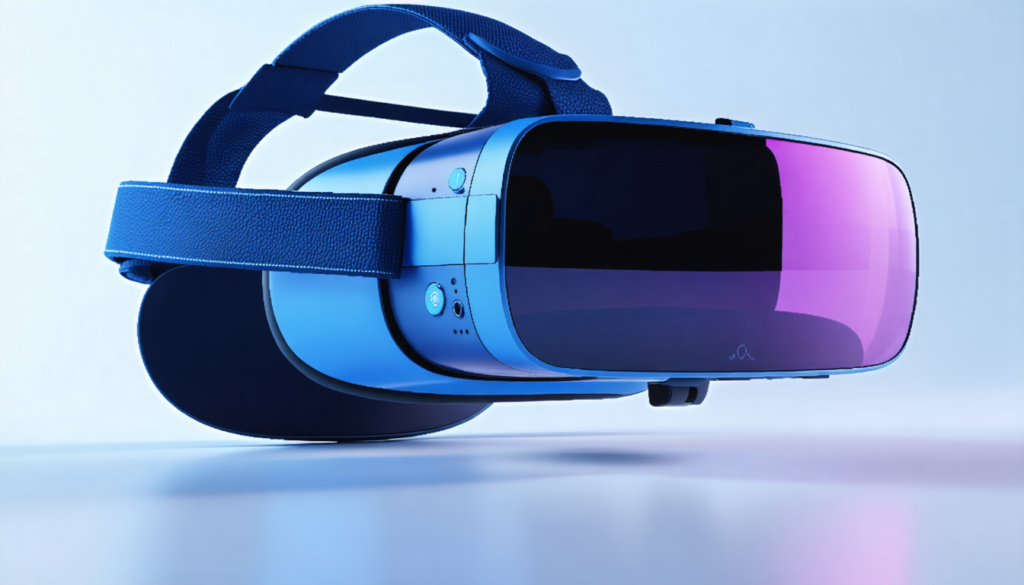
Virtual reality reached a new milestone in 2025, profoundly transforming the way we approach digital technology. With the democratization of virtual reality headsets, the immersive experience is no longer the exclusive domain of high-tech enthusiasts. Today, these sophisticated devices, integrating major advances in 3D display, motion sensors, and position tracking, offer the user an immersive dive into virtual worlds more real than life. The boundaries between the real and the digital blur, making virtual reality a fertile ground for innovation in various fields, from video games to education, medicine, and architecture.
Beyond the simple pleasure of digital escape, understanding the technical functioning of a virtual reality headset sheds light on the complexity and finesse of the embedded technologies. Between the microscopic screens placed in front of each eye, lenses that leverage optical principles to simulate depth, and multiple motion sensors that track every gesture, every glance in real-time, the VR headset is an engineering feat that pushes the limits of sensory immersion.
As visual quality continuously improves with resolutions reaching up to 2.5K per eye and refresh rates exceeding 120 Hz, the sensation of presence in a virtual environment has never been more convincing. This immersive experience is amplified by integrated spatialized audio systems, which help create a coherent universe where every detail intelligently adjusts to user movements and actions. Embarking on this discovery of the VR headset means plunging into a technology that embodies both a technical achievement and an opening towards unprecedented and promising applications.
- 1 The fundamental mechanics behind the virtual reality headset: 3D display and depth illusion
- 2 Motion sensors and position tracking: the key to natural interaction in virtual reality
- 3 Major differences between standalone VR headsets, PC, consoles, and smartphones in 2025
- 4 User interfaces and interaction: how VR headsets revolutionize virtual manipulation
- 5 Various uses of virtual reality beyond entertainment
- 6 Recommendations for safe and sustainable use of your virtual reality headset
- 7 The promising future evolution of virtual reality headsets and VR technology
The fundamental mechanics behind the virtual reality headset: 3D display and depth illusion
The core of the technical functioning of a virtual reality headset relies on a fundamental principle: creating a depth illusion to trick the brain into perceiving a three-dimensional space. This illusion is generated thanks to the use of two distinct screens, each intended for a different eye. Each screen displays a slightly offset image, mimicking how our eyes perceive the real world, with a specific viewing angle for each. This technique, called stereoscopy, is the key to giving birth to convincing three-dimensional virtual worlds.
Headsets generally feature high-resolution OLED or LCD screens with sufficient pixel density to eliminate the visible grid effect up close. From there, optimized lenses enlarge the display surface to completely fill the user’s field of view, expanding their imagination to 360°. The optical design is specially studied to limit distortion and maximize visual comfort, maintaining sharp zones even in peripheral angles.
In addition to the display, it is important to understand that the refresh rate of the images plays a crucial role. Like a smooth film, a VR headset at 120 Hz offers a fluid and natural transition between images, avoiding blur or lag that could break immersion and cause physical discomforts such as VR sickness. This is a complex technical aspect requiring powerful hardware performance, especially for headsets connected to robust PCs.
One major challenge is also mastering the latency between head movement and the adjustment of the displayed image. Too high latency erodes the immersive illusion and can cause nausea. Modern headsets therefore use synchronization algorithms and ultra-fast sensors to reduce this delay to a fraction of a millisecond.
To better illustrate, here is a table describing the main components related to 3D display and their function in the VR headset:
| Component | Role in 3D display |
|---|---|
| Screens (OLED/LCD) | Display a distinct image for each eye allowing depth perception |
| Optical lenses | Enlarge the image and correct distortion to widen the field of view |
| Position sensors | Adjust the display in real-time based on gaze and head movement |
| Refresh system | Ensures image smoothness to avoid blur and nausea |
Motion sensors and position tracking: the key to natural interaction in virtual reality
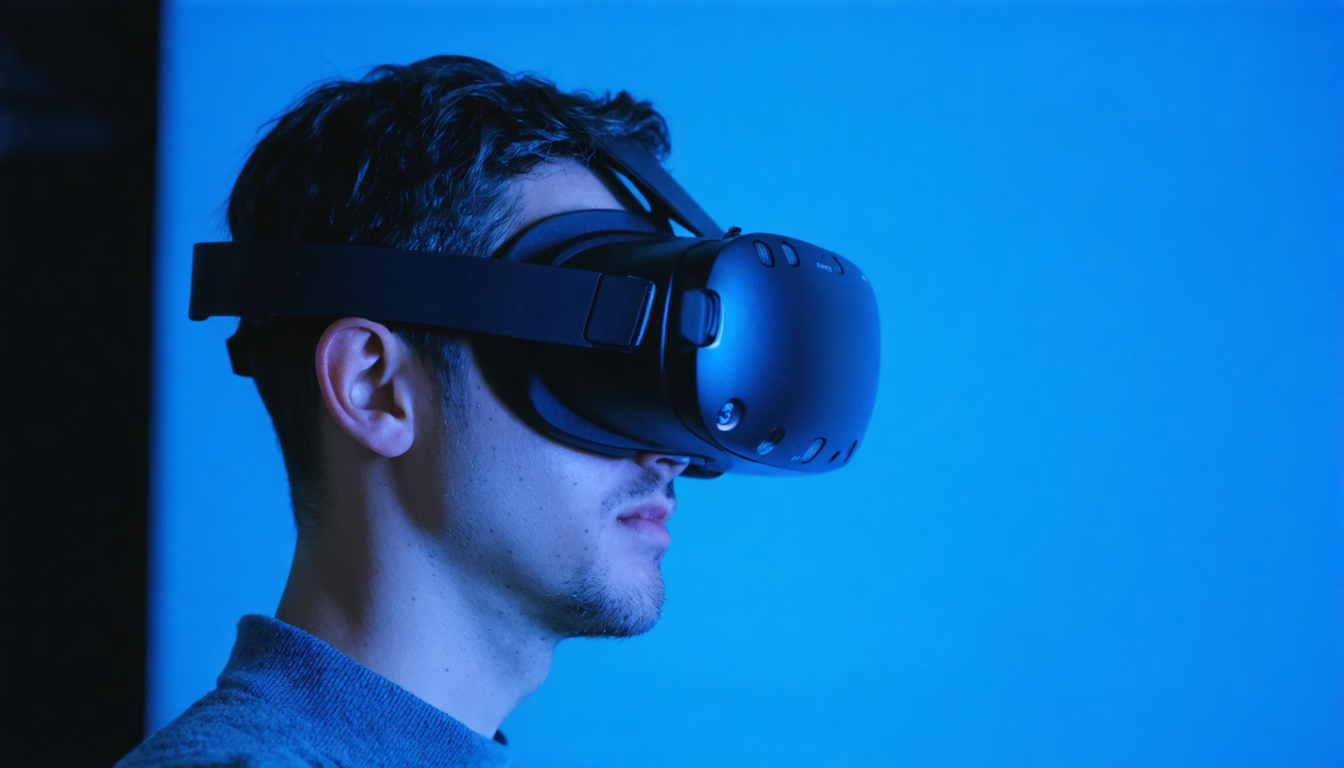
Beyond visual quality, a virtual reality headset must offer smooth and natural interaction with the virtual environment. This is where motion sensors and the position tracking system come into play, true peripheral brains of the headset. These sensors detect head movements, rotations, and tilts but also, in some cases, hands and body movements, to adapt the experience in real-time.
Accelerometers measure linear accelerations, while gyroscopes detect rotations. The whole is fused by a processor that continuously calculates the user’s exact position in space. Going further, external or internal cameras record the headset’s position in a room, allowing so-called “inside-out” tracking, which has become the standard on standalone models. At the same time, manual controllers are also equipped with similar sensors, to allow manipulation of virtual objects with surprising precision.
An essential advantage of this technology is that it removes physical barriers between the user and the virtual world. For example, in an architectural simulation, it becomes possible to move freely, kneel to examine details, or stretch out an arm to open a virtual door. This realism of interaction pushes the sensation of immersion even further.
This does not stop at motion detection: some headsets now integrate eye tracking, allowing adjustment of image sharpness where the user looks, optimizing graphical resources in real-time, and opening the way to more natural user interfaces based on gaze.
The advanced integration of sensors and position tracking prepares an ambient computing environment where the boundary between real and virtual actions becomes blurred. This progress is a major factor in the increased popularity of VR experiences in various professional sectors, where the precision of movements conditions the success of training or interventions.
Major differences between standalone VR headsets, PC, consoles, and smartphones in 2025
In 2025, the virtual reality market is rich and diverse, offering several categories of headsets catering to varied needs and budgets. It is essential to understand the fundamental differences between these categories to choose a suitable headset.
PC-connected VR headsets constitute the most powerful category. They take advantage of the high computing power of a dedicated computer to offer visually impressive experiences with very high-quality 3D display and optimal refresh rates. Emblematic examples: Valve Index or HTC Vive Pro 2, highly prized by hardcore gamers and professional users.
Console headsets, like the PlayStation VR2, offer an interesting compromise between performance and ease of use. They exploit the power of gaming consoles while remaining more accessible than PC headsets. These models often benefit from good image quality and a varied game catalog specifically designed for virtual reality.
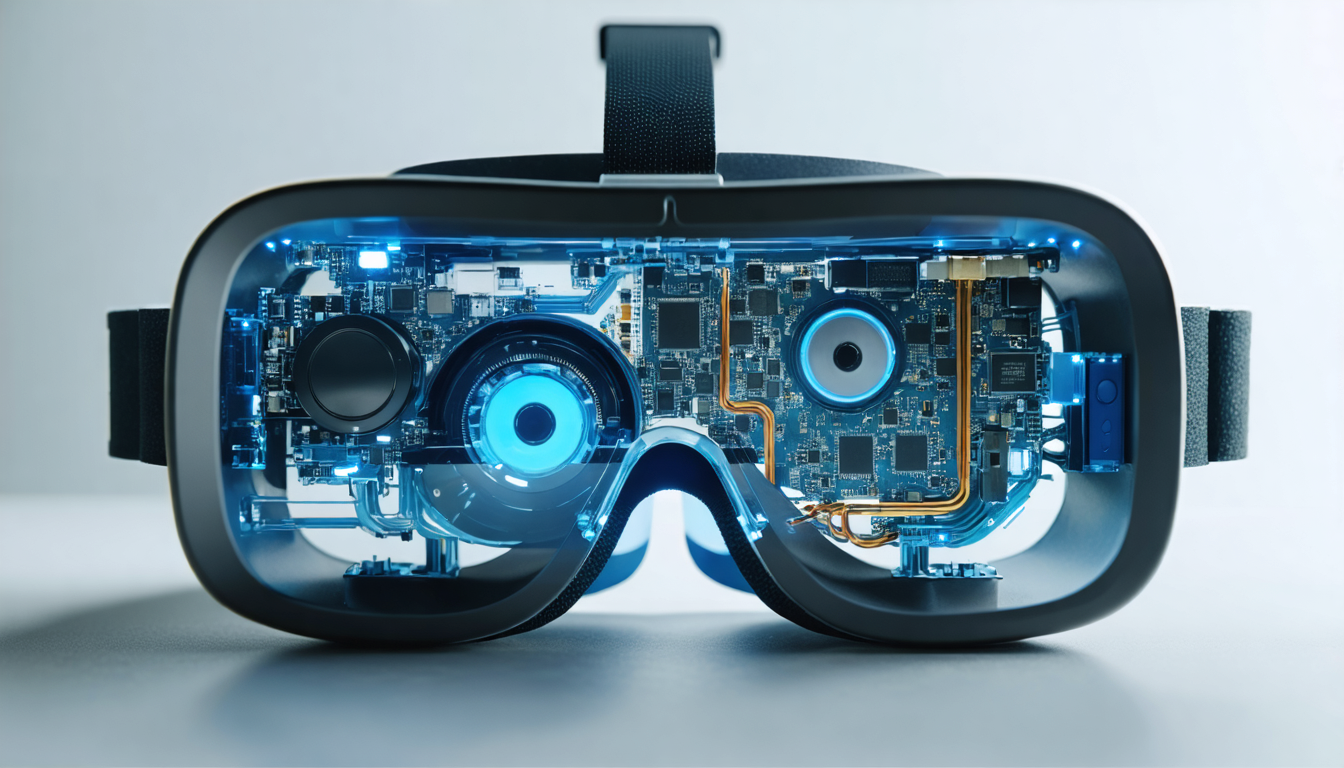
Standalone VR headsets have seen strong popularization thanks to models like the Meta Quest 3. Their strength lies in total independence from external equipment thanks to the full integration of components (processor, battery, display, sensors) in a single device. This allows optimal freedom of movement without cumbersome cables, but often with a compromise on graphical power.
Finally, smartphone VR headsets remain an economical entry point into virtual reality. They exploit the smartphone’s screen and sensors inserted into the headset. These solutions remain limited in terms of display quality and immersive experience but attract those who wish to discover VR without a heavy investment.
The choice between these headset types will mainly depend on budget, intended use, but also the desired degree of immersion. Those seeking the best immersive experience for gaming or work will favor a PC headset, whereas for occasional exploration, standalone and mobile headsets will satisfy curiosity without major technical constraints.
Comparative table of VR headsets by category
| Headset Type | Advantages | Disadvantages | Recommended Use |
|---|---|---|---|
| PC Headsets | Superior visual performance, high refresh rate, large catalog | High cost, requires a powerful PC, low mobility | High-end gaming, professional training, simulation |
| Console Headsets | Good quality, easy integration, moderate price | Less powerful than PC, console dependence | Video games, family entertainment |
| Standalone Headsets | Wireless freedom, easy access, mobile | Less powerful graphically, limited autonomy | VR discovery, casual use, travel |
| Smartphone Headsets | Economical solution, high portability | Limited visual quality, low comfort | First VR attempts, small budgets |
User interfaces and interaction: how VR headsets revolutionize virtual manipulation
One of the most fascinating aspects of VR technology is how it transforms the traditional user interface into an intuitive and natural interaction. Virtual reality headsets in 2025 integrate virtual touch interfaces, haptic controllers, and sensory feedback technologies that simulate the manipulation of objects in a three-dimensional space.
Controllers, equipped with pressure and motion detectors, allow precise grasping, moving, or manipulating of digital objects. The interface is designed to respond instantly to gestures such as grabbing a key, painting a picture in virtual reality, or playing a digital musical instrument. Gesture recognition, combined with voice recognition, further enriches interaction, making the user-machine dialogue smoother.
Another major advancement is the integration of eye tracking which adapts display and interactions based on the user’s gaze. This functionality opens the way to context menus accessible by simple look, simplifying navigation and improving ergonomics during extended sessions.
Finally, these innovations are not confined to a simple entertainment experience. In the professional field, they facilitate immersive training, remote collaboration in shared virtual spaces, and interactive prototyping. For example, in architecture, teams can jointly modify a virtual model in real-time, creating an unprecedented collaborative workflow.
Various uses of virtual reality beyond entertainment
The immersive dive made possible by virtual reality headsets stimulates a multitude of applications that go far beyond mere entertainment. Today, VR is a valuable tool in several sectors:
- Education: VR allows virtual tours of museums, historical or scientific spaces otherwise inaccessible. For example, students can explore underwater wrecks or traverse prehistoric environments, making learning more vivid and memorable.
- Medicine: Surgeons use VR simulators to practice and plan complex operations without risk to the patient. Virtual reality is also used for rehabilitation, helping patients recover mobility and coordination through adapted immersive exercises.
- Architecture and design: Visualizing a project in three dimensions allows quick detection of imperfections and optimization of aesthetic and functional choices. Virtual reality offers detailed immersion directly exploitable with clients and teams.
- Cinema and shows: Narrative experiences in VR evolve the way stories are told, placing the spectator at the center of the action and profoundly renewing the dynamic between the work and its audience.
These examples show that virtual reality is a powerful and versatile tool. Its ability to create a strong sense of immersion within digital universes is one of the major drivers sustaining its sustained growth and multiple technological innovations.
Recommendations for safe and sustainable use of your virtual reality headset
To fully enjoy your virtual reality headset while ensuring your safety and the durability of the equipment, some precautions are necessary. First, it is important to follow age recommendations. In general, use is discouraged for children under 12 years old, as their visual system is still developing and prolonged exposure could cause discomfort.
Next, good maintenance practices should be adopted. Cleaning the lenses should be done with a microfiber cloth, delicately to avoid scratching the surface. Avoid exposing your headset to direct sunlight, as this could damage the internal screens. Storage should be in a dry place, protected from dust, ideally in a dedicated case.
Regarding the physical environment, ensure you have sufficient space cleared for your VR sessions. Full immersion can make you forget physical limits, increasing risks of bumping into walls or furniture. Installing special mats or delimiting a secure zone can prevent accidents.
Finally, remember to take regular breaks, especially during long sessions, to avoid eye strain and neurological disorders related to sensory overload. Some headsets also include options to adjust brightness or refresh rate, which can help personalize your comfort of use.
The promising future evolution of virtual reality headsets and VR technology
Virtual reality headset technology continues to progress rapidly, with planned innovations promising to make the immersive dive even more realistic and accessible. Among the next steps are:
- Improvement of resolutions and micro-LED displays: these screens promise more faithful color rendering, better energy consumption, and reduced headset weight.
- Development of artificial intelligence algorithms for predicting movements and optimizing real-time graphical rendering, reducing perceptible latency.
- Advances in full body tracking, allowing full immersion by capturing every user movement and faithfully reproducing them in the virtual world.
- Integration of mixed reality combining virtual and real elements in a hybrid experience, opening new possibilities for training, design, or gaming.
These developments will undoubtedly revolutionize the way we interact with digital technologies and further expand the horizons of virtual reality, both personally and professionally.