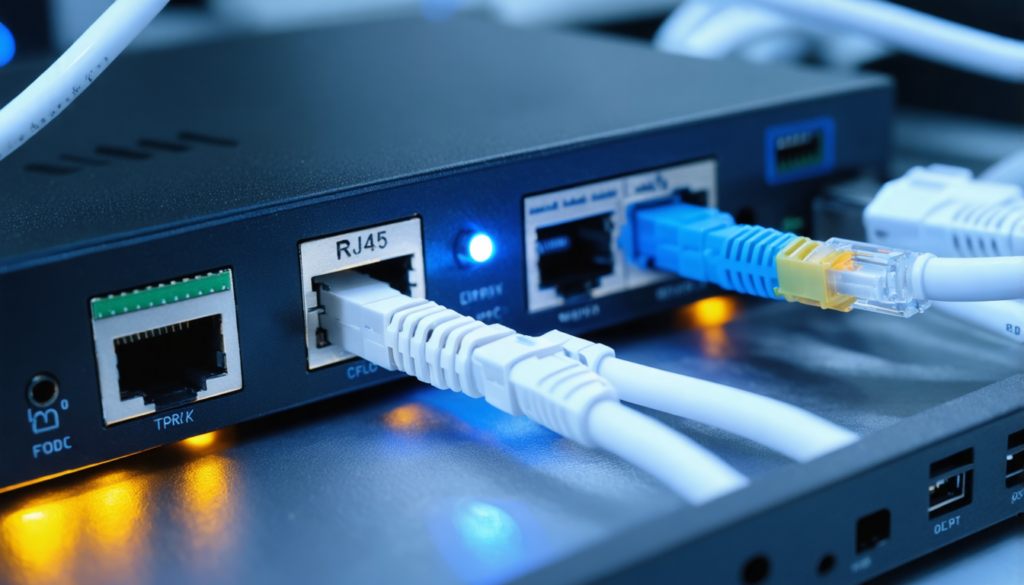
In 2026, the speed, reliability, and range of local networks have never been more crucial. Traditional RJ45 copper cable infrastructures often reach their limits when it comes to large-scale extensions or optimization. To overcome these boundaries, fiber optic to RJ45 converter technology stands out as a silent revolution. This ingenious device transforms electrical signals into light signals, thus offering the possibility of extending the reach of an Ethernet network well beyond the classic 100 meters, without sacrificing quality or transmission speed.
Whether for a residence, an office, or an industrial environment, integrating a fiber optic converter into your network installation optimizes performance while benefiting from complete immunity to electromagnetic interference. This innovation has become essential for demanding users, gamers, content professionals, or infrastructure managers keen to ensure continuous and high-performance service over long distances.
As the world of connectivity is constantly evolving, understanding the subtleties of these media converters and knowing how to choose them according to your needs is essential. Supported by concrete examples, precise criteria, and installation advice, this comprehensive report explores in detail every aspect of the fiber optic to RJ45 converter to guide you towards a controlled and sustainable network extension.
- 1 Why choose a fiber optic to RJ45 converter for your Ethernet network
- 2 Detailed operation of the fiber optic to RJ45 converter and its technical advantages
- 3 The different categories of RJ45 fiber converters: Economic vs modular
- 4 The different fiber optics suitable for RJ45 converters: single-mode or multimode?
- 5 Installing a fiber optic to RJ45 converter: key steps for a successful network extension
- 6 Essential criteria for choosing a fiber optic RJ45 converter suited to your needs
- 7 Optimize your Ethernet network thanks to the fiber optic RJ45 converter for professional and gaming applications
- 8 Tips and advice to effectively extend your local network with a fiber optic to RJ45 converter
Why choose a fiber optic to RJ45 converter for your Ethernet network
Given the constraints of RJ45 copper cable, especially its limited range to about 100 meters, businesses and individuals looking to optimize their local network are increasingly turning to fiber optics. A fiber optic converter to RJ45 acts here as an intelligent relay that converts the electrical signal into a light signal to take advantage of fiber optic benefits while ensuring smooth interconnection with standard RJ45 equipment.
This conversion is fundamental because it allows surpassing the physical limitation of copper cables which, beyond 100 meters, see their signal weaken and cause packet loss or noticeable slowdowns. With fiber optic, data transmission becomes not only faster but also more stable over distances extending up to several tens of kilometers depending on the type of fiber used.
The major appeal of this technology also lies in its almost total immunity to electromagnetic interferences that frequently disrupt copper networks, especially in industrial or densely urban environments. Consequently, network optimization relies on a reinforced Ethernet connection, more reliable and secure thanks to the use of fiber optic cable.
The essential benefits of a network extension via a media converter are multiple:
- Extension of Ethernet network links over distances impossible to cover with traditional copper, reaching up to 80 km for single-mode fiber.
- Improvement of data transmission quality with stable rates that can exceed one Gigabit per second.
- Protection against electromagnetic and radio frequency interferences, guaranteeing an uninterrupted flow.
- Enhanced security since fiber optic cannot be intercepted without visible hardware breakage, unlike copper cable.
- Durability and resilience against harsh environmental conditions, supported by certain specific industrial models.
For example, for a passionate gamer who must avoid any lag related to interference or too great a distance between the router and gaming stations, installing a fiber-RJ45 converter can guarantee reduced ping and optimal data flow. Similarly, for a professional wishing to connect a remote office without resorting to Wi-Fi solutions prone to interruptions, this solution becomes a smart choice, combining sustainability and performance.
Detailed operation of the fiber optic to RJ45 converter and its technical advantages
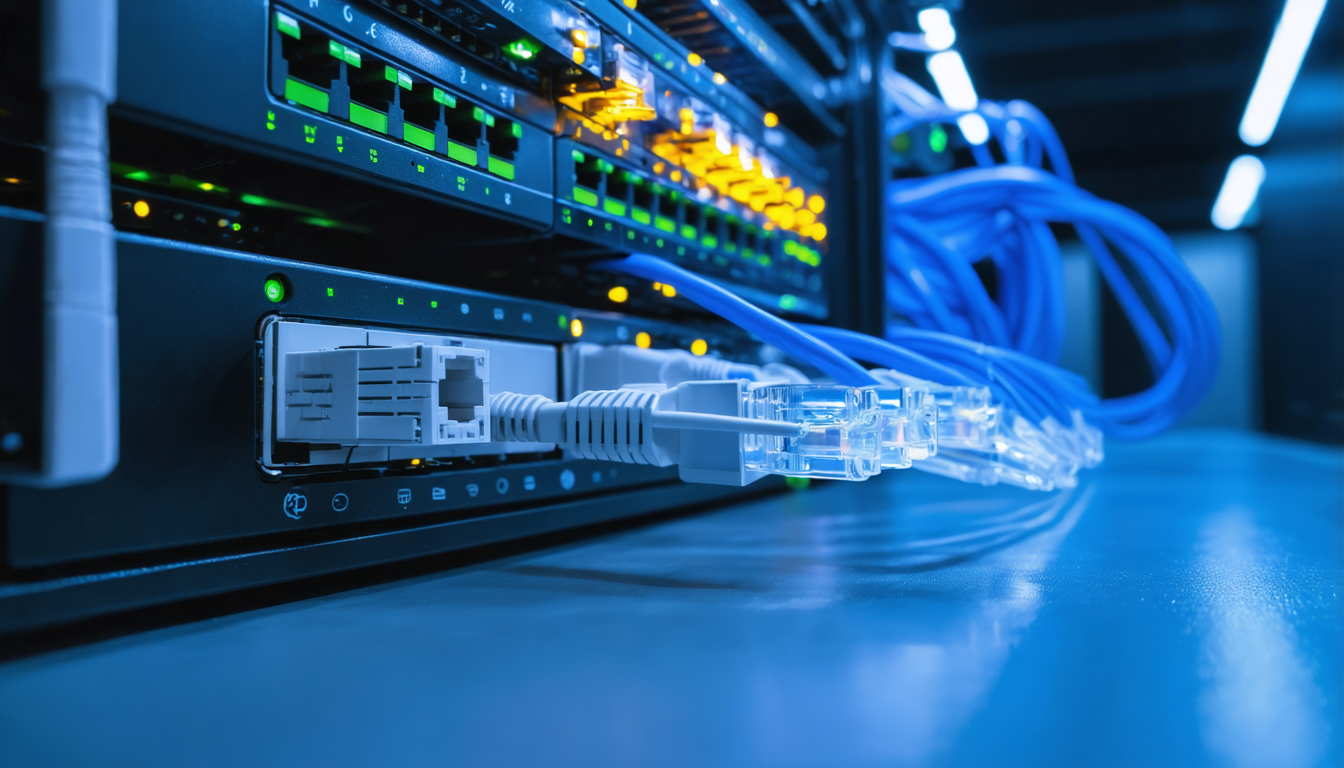
Basically, a media converter specialized in the fiber optic to RJ45 transformation links two incompatible signal types: the electrical signal carried by the copper Ethernet cable and the light signal transmitted via fiber optic. This bidirectional process requires that each end of the network link have a suitable converter capable of transmitting and receiving in both formats.
Technically, the conversion occurs in several steps:
- The electrical signal from an RJ45 device (computer, switch, router) is received by the converter.
- This signal is transformed into light pulses using specific wavelengths (usually 1310 nm for multimode and 1550 nm for single-mode).
- The light signal is transmitted through the fiber optic cable, allowing a link over several kilometers without significant degradation.
- At the other end, a second converter retransforms this optical signal back into an electrical signal, deliverable to equipment with a standard RJ45 port.
This conversion has the advantage of maintaining a constant throughput, with no packet loss, even over long distances. The converter also ensures minimal latency, crucial for real-time applications such as streaming, videoconferencing, or gaming.
Models often offer additional features such as Link Fault Pass-Through (LFP), which automatically detects link interruptions or failures and facilitates diagnosis and maintenance. Some transformers also include LEDs indicating connection or power status, allowing simple monitoring of network health.
In summary, this device is an essential link to optimize Ethernet networks and guarantee a performant, secure, and extended data transmission. Whether in a domestic or industrial setting, the reliability gained through media conversion opens the way to advanced network configurations capable of integrating fiber and copper without compromise.
The different categories of RJ45 fiber converters: Economic vs modular
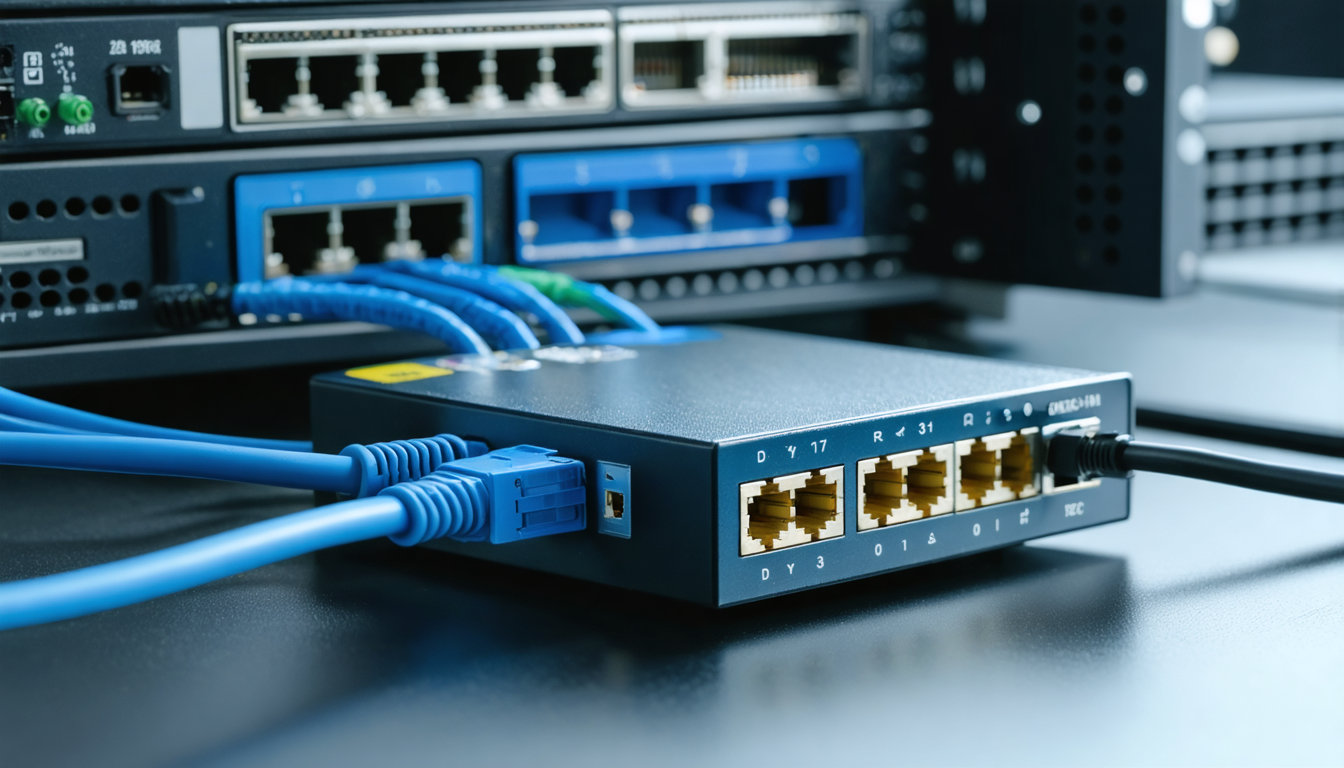
One of the first decisions to make when choosing a fiber optic to RJ45 converter concerns the type of connectors and modularity. Two main families are available on the market:
Converters with fixed connectors
These models directly integrate a specific fiber optic port, often SC (Standard Connector) type or sometimes ST. They are generally designed for a static installation where needs are not expected to evolve. Their main advantage is a more accessible price and increased ease of use. For a local network in a house or a small office unlikely to be modified, these fixed converters are perfectly suited.
Converters with SFP (Small Form-factor Pluggable) ports
Converters equipped with SFP ports offer much greater flexibility. Different SFP modules can be inserted depending on fiber length or type used (single-mode or multimode). This modularity makes them ideal for professional or evolving installations where distance or bandwidth requirements can change. They also allow better adaptation to the network environment according to needs without entirely changing the converter.
In 2026, this modularity is particularly valued by companies wishing to anticipate the evolution of their internal networks by relying on a sustainable solution.
The table below summarizes the main differences between these two categories:
| Characteristic | Fixed connectors | Modular SFP ports |
|---|---|---|
| Cost | Cheaper | Higher |
| Flexibility | Low | Very high |
| Installation | Simple, plug and play | More technical (module choice) |
| Scalability | Limited | Adaptable to future needs |
| Maintenance | Less flexible | Easier thanks to module replacement |
The choice between these models will therefore essentially depend on budget, project nature, and the perspective of local network evolution.
The different fiber optics suitable for RJ45 converters: single-mode or multimode?
The choice of fiber optic cable associated is a central element of any network optimization via converter. Two main types are used:
Multimode fiber
Designed for shorter distances, multimode fiber is generally used over a maximum range of 2 to 5 km depending on equipment. It operates mainly at a wavelength of 1310 nm. This fiber supports a high data volume at low cost, making it ideal for small businesses, extended home networks, or school campuses.
Single-mode fiber
Used for long distances ranging from 15 to 80 km, single-mode fiber often operates at 1550 nm. It offers better transmission quality over large areas and resists optical losses. This type of fiber is essential for connecting remote sites, industrial facilities, or multi-site corporate networks.
Here is a synthetic comparison table between the two types:
| Criterion | Multimode fiber | Single-mode fiber |
|---|---|---|
| Maximum distance | Up to 5 km | 15 to 80 km |
| Wavelength | 1310 nm | 1550 nm |
| Cost | Cheaper | Higher |
| Typical application | Extended local networks, campuses | Long-distance inter-site links |
Choosing the right fiber will directly impact the quality and reliability of your Ethernet connection over long distances, as well as installation and maintenance costs.
Installing a fiber optic to RJ45 converter: key steps for a successful network extension
Setting up a media converter for the fiber to Ethernet connection does not require advanced networking skills, but methodology and some precautions help avoid costly errors.
The classic procedure consists of:
- Placing a converter at each end of the network link between RJ45 devices. These converters will be connected respectively to the source device (router, switch) and to the end device.
- Connecting RJ45 cables to the converters on the network equipment side.
- Using suitable fiber optic cable (single-mode or multimode depending on distance and chosen module) to link the two converters.
- Checking the condition of connectors and ensuring their cleanliness, as the slightest dust could cause signal loss.
- Powering on the converters and checking LED indicators to confirm proper linkage.
The main advantage lies in the simplicity of this assembly, avoiding the use of additional switches on the line and not modifying the existing IP configuration or Ethernet settings. This plug and play installation greatly simplifies network optimization and allows a practical network extension, even in complex environments.
An interesting anecdote is that of a network administrator who managed to connect an annex building located 1.2 km from the main headquarters thanks to a modular fiber to RJ45 converter, without interruption or data loss during construction work.
Finally, maintenance is facilitated by built-in diagnostics and the possibility of replacing SFP modules without dismantling the whole system.
Essential criteria for choosing a fiber optic RJ45 converter suited to your needs
With the abundance of offers available on the market, finding the ideal converter can prove complex. To guide you, here is a checklist of points to analyze carefully before any purchase:
- Distance to cover: Determine the length of fiber optic cable needed. For less than 2 km, multimode is often sufficient; for longer distances, prefer single-mode.
- Required bandwidth: Analyze the volume of data exchanged. Gigabit converters (1000 Mbps) are strongly recommended in 2026, as network traffic continues to increase.
- Compatible fiber type: Ensure that ports and modules correspond to the fiber deployed on your existing network (SC, LC, ST).
- Installation environment: Choose a robust model if the equipment is exposed to temperature variations, humidity, or vibrations.
- Interoperability: Check compatibility with existing network hardware to avoid incompatibilities and facilitate integration.
Here is a synthetic list of elements to consider so as not to overlook anything:
- Estimated distance of the local network to be extended
- Maximum desired bandwidth in Mbps
- Fiber type (single-mode or multimode)
- Need for modularity
- Environmental conditions (indoor/outdoor)
- Compatibility with existing switch/router
- Budget allocated to the investment
Optimize your Ethernet network thanks to the fiber optic RJ45 converter for professional and gaming applications
In professional environments where every millisecond counts, having a stable, secure, and fast Ethernet link is essential. The fiber optic to RJ45 converter is an indispensable ally against the constraints of long distances or electromagnetically noisy environments.
In gaming, where latency and signal stability are essential, this technology guarantees a much better experience than Wi-Fi or copper cable solutions over long distances. Users report a significant decrease in ping and consistency in bandwidth, even during intensive video calls or heavy downloads.
Specifically, a company can, for example, connect its various remote departments via a fiber network with appropriate media converters. This architecture ensures that abundant data flows circulate without slowdowns.
Moreover, the durability of this infrastructure minimizes interruptions related to weather, interferences, or damaged cables, two deadly factors for the performance of traditional copper networks.
Finally, ease of maintenance and troubleshooting thanks to converter signaling (LED, LFP) optimizes reaction time in case of failure.
Tips and advice to effectively extend your local network with a fiber optic to RJ45 converter
Already experienced in installing several converters in my own home network, I have noticed that certain settings and best practices maximize performance and connection longevity. For example:
- Maintaining fiber connector cleanliness is crucial. Any dust or damage can weaken the optical signal and cause interruptions.
- Choosing a converter suited to the maximum bandwidth avoids bottlenecks. Do not underestimate your needs, especially if you work in 4K or handle large data volumes.
- Favoring certified quality fiber optic cables, well shielded and adapted to your environment (outdoor, sheathed, etc.).
- Installing converters in ventilated locations to limit overheating and optimize lifespan.
- Testing the link with dedicated tools to verify signal quality and anticipate problems.
- Documenting your installation with diagrams and technical notes to facilitate future interventions.
Once these tips are applied, you will fully benefit from an optimized and durable local network, avoiding common pitfalls linked to negligent installation.