
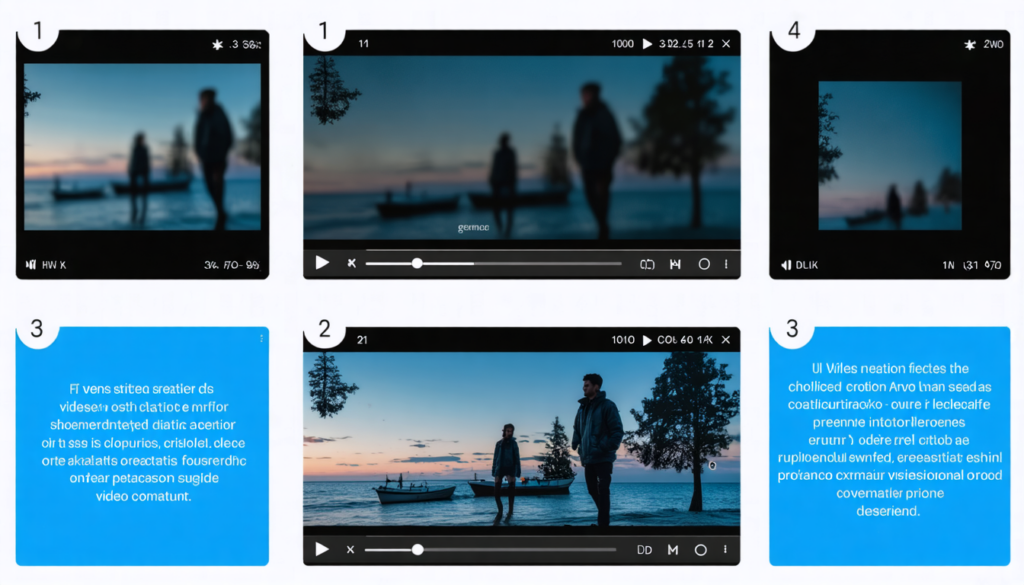
In the digital age, video production has undergone a true revolution with the emergence of video generators based on artificial intelligence. Once reserved for editing experts or teams with considerable budgets, video creation is now accessible to everyone thanks to these innovative tools. No longer is there a need for a camera, a studio, or long hours spent in front of complex software; today, a simple text is enough to generate a complete video, blending images, animations, and voice-over. This change is part of a broader movement towards automation and optimization of creative processes, disrupting practices in areas as diverse as marketing, education, or entertainment.
This innovation relies on major advances in machine learning and natural language processing, which allow translating scripts or ideas into coherent visual sequences. Facing the explosion of short formats on social networks such as TikTok, Reels, or YouTube Shorts, these tools have become indispensable to meet the ever-accelerating demand for content. But behind this apparent simplicity, the technology hides complex mechanisms that combine several artificial intelligence models, each specialized in a part of the video creation process.
For content creators, entrepreneurs, or trainers, understanding how these generators work and their secrets is essential to harness their full potential. This discovery journey offers an immersion behind the scenes of AI video creation, highlighting the technical aspects while underlining the current opportunities and limitations. By exploring the internal workings, areas of application, and future prospects, everyone can better grasp the impact of this technology on audiovisual production in 2026 and beyond.
- 1 Definition and fundamental principles of AI video generators
- 2 Key technologies at work in AI video generators
- 3 Practical process of using an AI video generator
- 4 Factors driving the rise of AI video generators in 2026
- 5 Current limitations of AI video generators
- 6 Future perspectives and evolutions of AI video generators
- 7 How to effectively integrate an AI video generator into your creative space
- 8 Secrets to succeed with your first AI video: practical tips and pitfalls to avoid
- 9 Introduction and machine learning: understanding technology better to create better
Definition and fundamental principles of AI video generators
An AI video generator is software that automates video content creation by relying on artificial intelligence. Rather than manually handling each sequence, scene, or effect, the user provides a simple instruction: a text, an image, a sound, or even a brief idea. The tool then transforms this data into complete visual content, sometimes integrating voice-over and background music. This automation is based on deep learning models trained on millions of examples, allowing them to reproduce and imitate the structure of professional videos.
Originally, video creation required many hours of editing, often with software demanding a certain level of expertise. Today, obtaining a dynamic and aesthetic sequence can take a few minutes. This evolution is not just a time saver, it is also a radical change in the very approach to creation. Now, creativity can focus on content and storytelling, while technology handles the technical and repetitive aspects.
Input sources for AI video generators
Typically, these generators use several types of inputs to build a video:
- Text or script: The user writes a script or a description of the desired content, which serves as the narrative base.
- Images: Photos or illustrations can be integrated to enrich the video or serve as aesthetic references.
- Audio: An audio file, such as a voice-over or background music, can be used to synchronize the video.
- Synthetic idea: Advanced systems can interpret a simple idea or concept presented in the form of keywords.
This variety of inputs illustrates the flexibility and power of current tools, capable of adapting to very different needs, whether marketing videos, educational content, or entertainment.
Concrete examples of daily use
The potential of an AI video generator materializes in specific cases familiar to many professionals:
- Transforming an article into video: A blogger or journalist can quickly convert their writings into video format, suitable for social platforms.
- Creating teaser videos for businesses: An online store can generate dynamic promotional videos from product descriptions.
- Training and educational content: A digital trainer creates explanatory visual content without the need for audiovisual equipment.
- Adapted advertising campaigns: Marketers generate multiple video variants to test different messages or visuals.
These cases show that these tools are not limited to simple technical innovation but respond to real needs for speed and customization in video communication.
Key technologies at work in AI video generators
The operation of an AI video generator relies on a complex technological architecture that combines several specific models, each optimized for a precise task. These modules collaborate synergistically to offer a smooth, credible, and professional rendering.
Image and video generation models: essential bases
At the core, AI models capable of generating images from textual descriptions play a crucial role. Similar to those that create digital artwork, these models assemble visual elements image by image. For video, this approach may consist of producing a succession of images very close to each other, which gives the illusion of smooth movement.
More recently, video-specific generation models allow creating directly animated sequences. These advanced systems integrate essential temporal constraints, such as continuity of movements, object stability, and dynamic lighting management. This level of sophistication avoids strange transitions between images or incoherent deformation of an object over time.
Advanced speech synthesis for a natural rendering
Speech synthesis has undergone a spectacular evolution, with AI-generated voices sounding increasingly human. Intonation, pauses, breathing, and emotions are simulated to ensure credible expressiveness. The creator only needs to provide a text and choose a voice adapted to their content; the audio track generation happens automatically and integrates into the video.
Automated editing and intelligent management of visual elements
Another essential aspect of these tools is automated editing: automatic insertion of transitions, addition of synchronized subtitles, choice of dynamic text animations, and selection of royalty-free music. This process minimizes manual work, enabling rapid production of a finalized and coherent video, even for users without deep technical skills.
| AI Technology | Description | Role in video creation |
|---|---|---|
| Image generation models | Create images from descriptive texts | Assembling images to build video scenes |
| Video generation models | Produce coherent animated sequences | Ensure temporal continuity and fluidity of movements |
| AI speech synthesis | Voices generated with natural intonation | Creation of voice-overs synchronized with scenes |
| Automated editing | Automatic assembly of visual and sound elements | Fast editing with transitions, subtitles, and animations |
Machine learning and continuous innovation
All these technologies rely on machine learning models that continuously improve thanks to the analysis of gigantic multimedia databases. This constant evolution fuels the quality of produced videos and paves the way for increasingly impressive innovations, such as the creation of speaking, intelligent, and customizable virtual avatars. It is this acceleration in 2026 that marks a key milestone in the democratization of AI video creation.
Practical process of using an AI video generator
For a user, the video creation workflow with an AI generator is remarkably smooth. Unlike the old laborious method of manual editing, production is divided into a few key steps, simple to master even for beginners.
Step 1: Choose the format and target the content
The first choice is to define which audience or platform the video is intended for. Whether it is for YouTube, a TikTok, an advertisement, or training content, the generators offer options tailored to each format. This step also guides the dimensions, duration, and overall style of the video.
Step 2: Write or import a script
The user inputs original text or imports existing content. This script represents the backbone of the video, defining key messages and the sequence of ideas. The generator then uses natural language processing algorithms to translate this text into corresponding visual sequences.
Step 3: Customize the visual style
Next, one can choose the desired graphic style: modern, minimalist, corporate, dynamic, or any other tone matching their branding or marketing objective. This determines the color palette, animations, and transitions.
Step 4: Generation and adjustments
The artificial intelligence quickly proposes a first version, often in the form of a prototype. Then, the user can modify the script, add details, change scenes or adjust the voice. The generator then regenerates the updated video, allowing for multiple iterations until satisfaction.
Step 5: Export and distribution
Once the final rendering is validated, the video is exported in a format compatible with target platforms. It can then be directly shared on social networks, integrated into a website, or used in a marketing campaign. This speed of execution significantly changes how businesses and creators manage video production.
This drastic reduction in production time frees up time for creating original concepts and strategic reflection around content, which proves valuable especially in a professional context where responsiveness is key.
Factors driving the rise of AI video generators in 2026
The spectacular growth of these tools is not the result of a simple temporary craze, but a conjunction of structural, social, and technological factors that have given a tremendous boost to their adoption.
The rise of short video content and its impact
In a digital landscape dominated by TikTok, Instagram Reels, and YouTube Shorts, short video content has become the king format to capture attention. These formats impose a high publishing frequency, generating strong demand for solutions enabling quick video creation without sacrificing quality.
Need for responsiveness and personalization in marketing
Companies are constantly seeking new approaches to test messages, visuals, and tailored communications for target audiences. AI generators allow near-instantaneous iteration of video formats, facilitating low-cost experimentation and reducing delays between idea and distribution.
Autonomy of solo creators and small teams
New generations of content creators, often isolated or in small teams, greatly benefit from these tools. Their ability to manage the entire process, from conception to publication, relies on technologies that drastically lower technical and financial barriers.
- Rapid video publishing on social platforms
- Creation of interactive educational content without expensive equipment
- Multiplication of marketing campaigns with personalized variants
- Automation of repetitive tasks in production
This context explains why AI video generators are no longer mere gadgets but becoming essential elements in the strategy of companies and individual creators.
Current limitations of AI video generators
Despite their impressive advances, these tools are not yet perfect and have significant constraints that it is essential to understand to make the most of them.
Lack of personality and soul in the video
A video entirely generated by AI may seem cold if the script lacks depth or emotion. Artificial intelligence excels in format, but creativity and originality remain human qualities difficult to fully automate. The tool acts more as a productivity amplifier, not as a substitute for creative thought.
Consistency issues in long sequences
On longer or more complex contents, visual defects may appear, such as inconsistencies in object rendering, errors in lighting management, or awkward transitions. These imperfections still limit use for premium productions but are improving rapidly thanks to continuous progress in deep learning.
Stylistic uniformity and visual saturation
The multiplication of videos created through the same generic models can cause a repetition effect or stereotyped style. This can reduce the impact and differentiation of a video in a saturated market, similar to graphic templates offered by popular platforms like Canva.
The combination of these factors highlights the need to integrate artificial intelligence into a broader creative approach, associating it with relevant human insight and thoughtful strategy.
Future perspectives and evolutions of AI video generators
The field of AI video generation is in full expansion, driven by relentless innovations promising to soon transform the user experience and audiovisual productions.
Towards extreme personalization and creation of realistic avatars
Generators capable of designing realistic virtual avatars are already being observed, which speak on camera synchronized with a script. This advance offers creators the possibility of having a virtual presenter available 24/7, in multiple languages and without the constraints of traditional filming. This option opens unprecedented perspectives in distance education, institutional communication, and multilingual content creation.
Continuous improvement in quality and fluidity
Upcoming AI models will aim to produce videos with ultra-realistic renderings, without visual continuity flaws, and dynamic management of lighting and shadows. These innovations should tend to elevate generated videos to the level of traditional human productions, reducing the perceptible gap today between AI videos and filmed videos.
Integration of video generators into hybrid workflows
Rather than completely replacing classical tools, AI generators tend to integrate into hybrid processes. For example, using generated videos as drafts or bases to then enrich with human creative interventions and traditional editing. This human-machine collaboration maximizes quality while reducing costs and delays.
| Evolution | Expected impact | Application example |
|---|---|---|
| Creation of virtual avatars | Permanent interactive and multilingual presence | Online training with virtual presenter |
| Ultra-realistic quality | Surpassing traditional human production | High-end promotional films |
| Hybrid workflows | Cost optimization and improved quality | Generated video bases and manual editing |
How to effectively integrate an AI video generator into your creative space
To fully benefit from AI video generators, adopting a thoughtful and adapted approach is essential. The tool should be seen as a partner, facilitating production and multiplying possibilities, without becoming a total automation that sacrifices creativity.
Evaluate your needs and select the right tool
First of all, it is crucial to identify your objectives: speed, quality, cost, type of content to produce. Depending on these criteria, the choice of a generator should prioritize features that best fit the project. For example, an influencer who favors short format would prioritize rapid creation functions with good social compatibility.
Encourage experimentation and iterations
One of the main advantages of these tools is the ability to quickly generate several versions of a video. Testing different scripts, visual styles, or rhythms helps refine content and adapt the message to the audience. This agile approach is particularly valuable in sectors where responsiveness is a major asset.
Combine AI with a human creative touch
While artificial intelligence can produce the basics, it is human creativity that gives soul to the video. It is therefore recommended to maintain strong editorial control, enriching scripts, customizing visuals, and ensuring message authenticity. This synthesis work will avoid the standardized effect and bring real added value.
Optimize your workflow with software integrations
Many video generators are compatible with other creative tools or platforms, facilitating import/export and automation. Integrating the AI tool into a well-oiled software chain will improve overall productivity and help master production cycles.
- Define clear and adapted objectives for the target audience
- Test different versions and styles for the video
- Maintain human supervision over content
- Use complementary tools to enrich the workflow
Secrets to succeed with your first AI video: practical tips and pitfalls to avoid
Starting video creation with an AI generator may seem simple, but some pitfalls await beginners. Good preparation and a few tricks help avoid common mistakes and get satisfying results quickly.
Careful scripting: the foundation of any successful video
The script is the foundation on which the video rests. Avoid texts that are too bare or generic that do not engage interest. Favor clear, dynamic language, and include calls to action adapted to the chosen format. A well-crafted script provides the AI with rich material to create lively images and captivating narration.
Choose a coherent and expressive voice-over
Speech synthesis has progressed, but selecting a voice adapted to tone and audience remains important. A monotone or poorly synchronized voice can break immersion. Do not hesitate to test several options and adjust proposed speed or intonation.
Customize the graphic style to avoid homogenization
To limit the “standard format” effect, it is preferable to explore customization possibilities for colors, animations, and transitions. Integrating specific images or logos also improves brand distinction and recognition.
Favor short formats for a first experiment
Short videos are easier to manage, produced quickly, and allow better understanding of the tool’s limits and assets before engaging in more ambitious projects. Furthermore, these are formats widely favored on social networks.
List of startup tips:
- Define a clear goal for the video
- Write an engaging and precise script
- Test different AI voices before final choice
- Use style customization options
- Start with a short and simple format
Introduction and machine learning: understanding technology better to create better
In-depth understanding of how AI video generators work allows fully exploiting their potential. Initiating oneself in these technologies implies mastering certain key notions of machine learning and multimedia content generation.
Basics of machine learning applicable to AI video
Machine learning is a branch of artificial intelligence that enables machines to learn from massive data without explicit programming. For AI videos, this means models have been trained on countless visual and audio sequences to recognize patterns, styles, and dynamics that make a video harmonious.
Difference between image generation and video generation
While image generation is well mastered and produces detailed static content, video generation adds a complex additional dimension: time. Each image must logically follow the next, requiring modeling of movements and object stability over the frames. This complexity explains why video models continue to progress rapidly but remain more limited than their image counterparts.
Interdisciplinary approach between linguistics, computer vision, and audio
AI video creation combines several technical fields: natural language understanding transforms scripts into visual actions, while computer vision enables image generation and adaptation. Audio synthesis finally integrates voices and sounds for a fully immersive experience.
Training to better use these tools
Numerous online resources, specialized trainings, and workshops are emerging around these new technologies. Understanding internal mechanisms, possibilities, and limits is an asset for anyone wishing to excel in AI-assisted video production.
- Notions of deep learning and neural networks
- Natural language processing (NLP) techniques
- Advanced speech synthesis models
- Practice with different generators for experience