

In 2025, the global esports scene continued to evolve with sometimes unprecedented dynamics. League of Legends (LoL) and Counter-Strike 2 (CS2) established themselves as the giants of this industry, attracting millions of viewers and generating record revenues. Their domination of major tournaments, the number of professional teams, as well as their massive presence in sports betting attest to an unprecedented popularity. However, this hegemony is accompanied by deep questions about the future of other flagship titles such as Dota 2 and Valorant, which struggle to maintain their influence on the competitive scene. The intense competition between publishers, player expectations, and technological development heavily impact the long-term viability of games.
This new balance raises crucial strategic questions: how can Dota 2, with its complex mechanics and strategic appeal, remain relevant in the face of the rapid growth of CS2 and LoL? Valorant, on its side, will it experience a resurgence of interest or continue its slowdown against competitors who innovate quickly? By combining the analyses of video game industry experts and major esports players, this article examines in depth the strengths, weaknesses, opportunities, and threats shaping the competitive scene in the coming years.
- 1 The undisputed supremacy of LoL and CS2 on the global competitive scene in 2025
- 2 The major challenges facing Dota 2 in the current esports landscape
- 3 Valorant: between ambitions and challenges to reclaim competitive players
- 4 Technological developments: a decisive lever for the future of competitive video games
- 5 The structuring of tournaments: an essential engine of esports scene vitality
- 6 The economic and social impact of esports games on their development in 2025
- 7 The challenges of player and community retention in esports 2025
- 8 Medium-term perspectives: What future for Dota 2 and Valorant against the rise of LoL and CS2?
- 9 The impact of globalization and emerging markets on the diversification of esports video games
The undisputed supremacy of LoL and CS2 on the global competitive scene in 2025
League of Legends and CS2 solidified their position as undisputed leaders in esports, attracting colossal audiences and generating exceptional revenues. The scale of their presence at major tournaments is illustrated by enormous jackpots, millions of live viewers, and worldwide media coverage.
LoL retains its status as the number one game in esports sports betting thanks to an active community of more than 130 million players worldwide. Its strategy notably relies on continuous content updates, the regular introduction of new champions, and the coherent organization of tournaments like the World Championship, whose prize pool exceeds 10 million dollars. The variety of competitive structures, from the amateur scene to professional leagues, allows a democratization that attracts a broad audience.
Counter-Strike 2, for its part, benefited from a major technical transition that managed to maintain the essence of the game while significantly improving the user experience. Its competitive ecosystem was strengthened thanks to a record prize pool of more than 32 million dollars in 2025, representing a growth of 41.5% in one year. This financial surge allowed teams to further professionalize their structures and multiply events. Teams like Vitality or T1 have become icons of this new era, embodying the perfect blend of skill, preparation, and tactical innovation.
Beyond the numbers, this success rests on perfect mastery of livestreaming and strategic media coverage. Platforms like Twitch, YouTube Gaming, and social networks play a key role in making esports accessible to a global and diverse audience. For example, the final stream of the CS2 Major gathered more than 15 million simultaneous viewers, demonstrating worldwide enthusiasm.
This domination also generates strong momentum in esports betting. LoL is now a pillar of online betting, accounting for about 60% of total esports bets in 2025, followed by CS2, which has seen a notable increase of 25%. Analysts emphasize that this trend is linked to the clarity of competition formats, the visibility of star players, and the maturity of offered services.
Finally, the LoL and CS2 ecosystems benefit from constant innovation, notably integrating technologies such as virtual reality for match analysis, or the implementation of advanced assistance tools for coaches. These investments guarantee a promising future for these licenses that continuously reinvent themselves and adapt to the expectations of the public and professionals.

The major challenges facing Dota 2 in the current esports landscape
Dota 2, long considered a reference in competitive MOBA games, now faces several obstacles in maintaining its weight in esports. Its loyal audience has remained stable, but the title struggles to attract new players and viewers, especially against the exponential growth of LoL.
The main obstacle lies in the complexity of the game mechanics and the high entry barrier. Where LoL offers a more accessible learning curve, Dota 2 demands deeper immersion and advanced tactical understanding. While this aspect has always been a strength in attracting a passionate and discerning audience, it also limits the ability to open up to a broader public.
Dota 2 tournaments, although prestigious, evolve cautiously but without major real innovations. The International continues to offer an impressive prize pool nearing 40 million dollars, which remains a record in esports, but this financial mass does not translate into a significant audience increase. Despite the quality of the spectacle, several analysts mention a stagnation phenomenon where loyalty no longer compensates for the lack of evolution in formats or communication.
Valve’s development studios seem to adopt a conservative stance, creating a gap with contemporary player expectations, notably in terms of ergonomics and accessibility. This technological inertia contributes to slowing the game’s penetration in new territories, especially in Asia where the popularity of LoL and CS2 is exploding.
Furthermore, competitive teams must face a more fragile ecosystem, with sometimes reduced budgets, growing difficulty in attracting sponsors, and diminished media coverage. While CS2 and LoL benefit from advanced optimization of broadcasts and commentary, Dota 2 struggles to renew its image.
To illustrate these issues, the following map presents comparative statistics of Dota 2’s esports audiences and popularity in 2025 according to major regions:
| Region | Average tournament audience (millions) | Number of active players (millions) | Esports market share (%) |
|---|---|---|---|
| North America | 1.5 | 2.3 | 8% |
| Europe | 2.1 | 3.0 | 10% |
| Asia-Pacific | 0.8 | 1.5 | 5% |
| Latin America | 0.6 | 0.7 | 3% |
This distribution highlights a weak presence, notably in areas where esports is booming and competition is fiercest. Successfully reversing this trend requires a profound strategic shift, with innovations both in gameplay and spectator experience.
Valorant: between ambitions and challenges to reclaim competitive players
Valorant, launched in 2020, had sparked strong enthusiasm on the esports scene thanks to its hybrid style combining precise tactics and accessible gameplay. However, in 2025, it faces a notable slowdown in its growth despite its strong potential.
One of the main causes is the rise of CS2, whose success has overshadowed the audience of tactical shooters. Valorant player retention has often suffered from the lack of renewal in the meta and the repetitive flow of competitions. This monotony has widened a gap with the dynamic vitality that CS2 displays, reinforced by technical innovation and a large network of sponsor teams.
Riot Games’ teams have focused their efforts on improving esports experiences, notably with strengthened initiatives in data capture and player support, but the game still struggles to regain its place in the hearts of fans. The emergence of young talents and the gradual structuring of circuits, however, are encouraging signs nonetheless.
Among the possible levers to revitalize Valorant are:
- Diversification of competitive game modes to bring more variety.
- Integration of narrative and visual elements to enhance spectator immersion.
- Development of partnerships with event organizers to increase visibility.
- A targeted marketing strategy focused on less exploited regions so far, notably in Latin America and Africa.
Despite these efforts, the challenge remains immense in the face of LoL and CS2’s attraction power. Valorant will need to innovate and adapt quickly to reverse the trend and motivate both pro players and the fan community to stay engaged in the long term.
Technological developments: a decisive lever for the future of competitive video games
In 2025, esports relies heavily on technological advances to enrich the experience for both players and spectators. Some developments disrupt traditional codes and redistribute the cards of competitive video games.
Virtual reality (VR) and augmented reality (AR) are beginning to establish themselves in innovative broadcast formats, allowing spectators to interact with matches in an immersive way. This technology transforms event broadcasts into interactive experiences, close to real presence, which increases fan engagement.
Additionally, AI-based analytic tools are now used to dissect strategies in real time and propose smarter, more contextual commentary. Coaches and teams benefit from valuable assistance in preparation and planning of confrontations, improving their competitiveness.
In this context, LoL and CS2 have shown a lead by quickly integrating these technologies into their flagship events. Major tournaments now offer 3D camera angles, enriched statistics, and personalized interfaces.
These innovations do not only affect broadcasts; they also influence game design. For example, some game modes explore hybrid mechanics combining AR and VR to vary strategic approaches and offer unprecedented experiences to players, while expanding spectator gaming possibilities.
This technological revolution also raises questions about accessibility, entry cost, and maintaining a balance between competitiveness and innovation. Studios must find the right alchemy to seduce their audience while remaining faithful to the essence of their licenses.
The structuring of tournaments: an essential engine of esports scene vitality
The competitive scene largely relies on a robust tournament architecture, combining format, prize pool, and media coverage. In 2025, LoL and CS2 demonstrated the major importance of well-thought-out organization in service of a game’s sustainability.
The chosen format directly influences visibility and spectacle quality. For example, the group stage system combined with a double elimination bracket in CS2 promotes suspense and viewer engagement. Similarly, LoL relies on its annual championship with strong regional stages, fueling a perpetual renewal cycle.
The prize pool acts as a powerful catalyst. It guarantees players motivating remuneration, captures sponsors’ attention, and encourages investments. The record held by CS2 – more than 32 million dollars – as well as the 40 million gathered by Dota 2 at The International perfectly illustrate this leverage effect.
Here are some characteristics of tournaments that impact the esports scene:
- Structured format: mix of group stages and knockout phases to build suspense
- Geographical distribution: taking into account the internationality of audiences
- Controlled duration: rhythms adapted to current consumption modes
- Multidimensional media coverage: streaming, TV broadcasts, derivative content
- Fan inclusion: MVP selections and community voting
This organization allowed the competitive scene to structure itself, build fan loyalty, and attract new talents. A model that inspires several other video games seeking to sustainably establish themselves in esports.
Beyond the spectacle, esports has become a true economic engine with notable social repercussions. In 2025, LoL and CS2 concentrate the majority of investments, increasing their influence and shaping behaviors in the sector
The bulk of revenues comes from streaming, media rights, sponsorship, and betting. LoL’s popularity in sports betting illustrates this evolution well: the very active community generates a colossal betting volume, energizing the overall ecosystem. CS2 shares this success with a spectacular growth in the prize pool reflecting investor confidence.
Furthermore, esports generates a wide range of jobs: professional players, coaches, analysts, event organizers, commentators, and technical developers. This diversification contributes to a thorough structuring of the sector. Startups as well as tech giants continuously invest in this environment relying on emerging trends.
On the social level, the democratization of esports also creates a space for diversity and inclusion: initiatives contribute to promoting mixed gender participation, opening the field to new voices. The impact on youth is also remarkable, in terms of motivation, teamwork, and social network creation.
Here is a list summarizing the main economic and social factors impacting esports development:
- Massive investments from large companies and publishers
- Multiplication of highly visible international events
- Creation of specialized jobs in various fields
- Community engagement and development of inclusive spaces
- The emergence of esports betting as a financial engine
The challenges of player and community retention in esports 2025
The sustainability of esports games largely depends on the ability to retain not only the player base but also the spectator community. This aspect is crucial to maintaining momentum and attracting new talents. LoL and CS2 excel in this area through constant listening to fan expectations, a balance between innovation and stability, as well as ongoing interaction via social networks.
LoL relies on interactive events directly involving the community, with contests, online gatherings, and privileged access to developers. CS2, for its part, capitalizes on fluid communication and the valorization of the game’s stars, embedding players in narratives that extend the spectacle beyond matches.
Update management is another important lever. A subtle balance is sought between novelties — such as characters or weapons introduced in small doses — and respect for fundamentals that ensure competitiveness and stability. This avoids disruptions that could destabilize players.
The diversity of participatory formats includes amateur tournaments, regional leagues, and international competitions, creating evolving pathways. These initiatives strengthen the sense of belonging and promote the creation of a strong identity around the games, necessary conditions for a sustainable ecosystem.
Medium-term perspectives: What future for Dota 2 and Valorant against the rise of LoL and CS2?
The future of Dota 2 and Valorant on the esports scene will largely depend on their ability to adapt to current challenges and respond to the evolving expectations of players and spectators. LoL and CS2 have scored decisive points in terms of innovation, structuring, and economic model, setting the bar very high.
Dota 2 will likely need to review its strategy in depth, integrating more drastic gameplay changes, modernizing its interface, and revising its competitive formats to stimulate engagement. The idea would be to attract a broader audience without betraying the tactical essence that is its strength. Furthermore, a reinforced presence in high-growth potential areas appears as a priority.
Valorant, on the other hand, aims to leverage its unique position between tactical shooter and narrative universe to differentiate itself. This will involve a deeper exploitation of technological possibilities, notably in competition presentation, and an effort to renew game mechanics. The rise of young talents must also be supported to crystallize attention on the next stars.
Here is a comparative table of strengths, weaknesses, opportunities, and threats (SWOT) related to Dota 2 and Valorant, summarizing their current position on the esports scene:
| Aspect | Dota 2 | Valorant |
|---|---|---|
| Strengths | Deep strategic gameplay, loyal community, record prize pool | Accessibility, attractive visual universe, dynamic initial growth |
| Weaknesses | High complexity, innovation stagnation, limited audience | Little renewed meta, direct competition with CS2 |
| Opportunities | Modernization, geographical expansion, new formats | Technological innovation, format diversification, talent emergence |
| Threats | Audience loss, sponsor disinvestment | Player base erosion, shooter market saturation |
These elements reveal concrete paths for both games, with an imperative need for innovation and investment to avoid disappearing from the global competitive landscape.
The impact of globalization and emerging markets on the diversification of esports video games
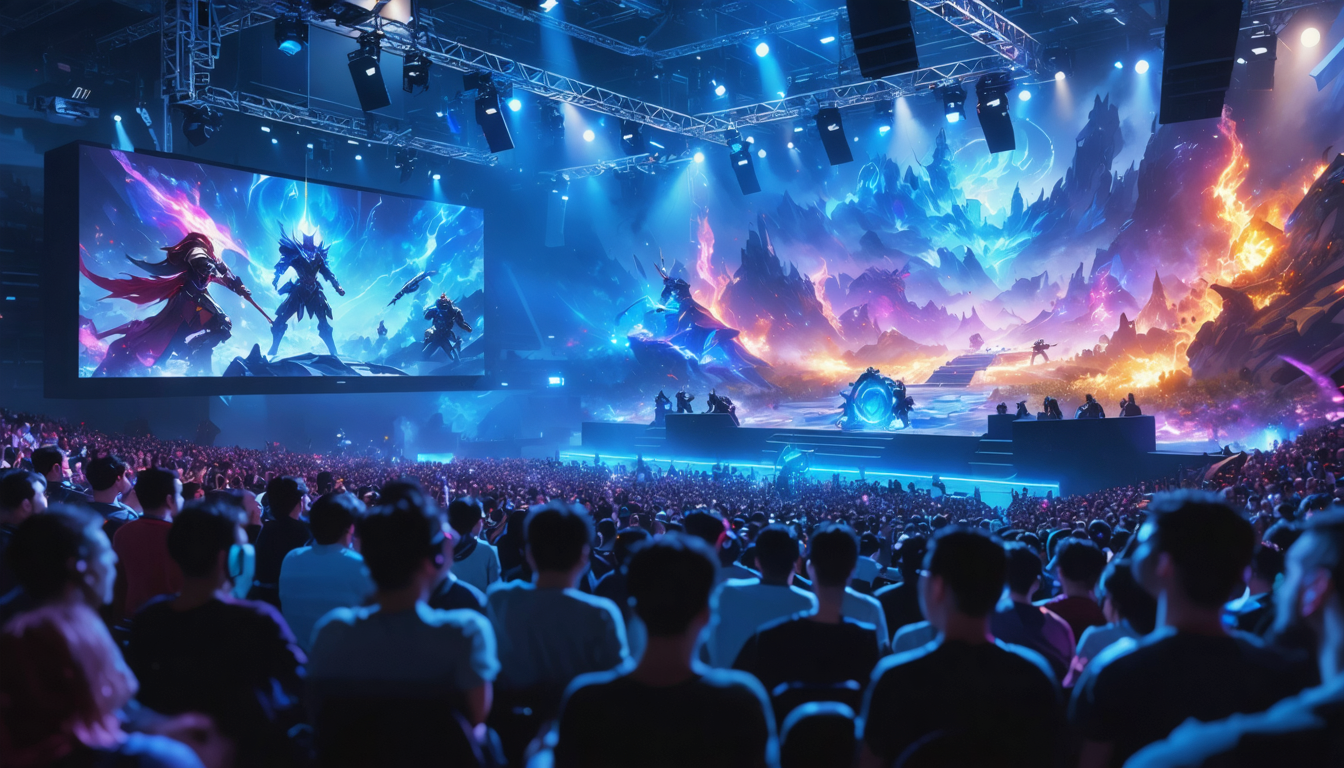
The development of emerging markets deeply modifies the balances of the competitive scene. While Asia-Pacific, Latin America, and Africa see an exponential growth in their base of players and viewers, publishers adapt their strategies to take advantage of this globalization.
LoL and CS2 anticipated this phenomenon by multiplying regional events and partnerships, engaging local communities and integrating adapted infrastructures. Valorant, on its side, is trying to leave its mark by relying on the strength of Riot Games and launching targeted marketing campaigns.
Dota 2 could, for its part, bet on stronger local alliances and differentiated positioning, notably by emphasizing its strategic and competitive aspect against a more accessible offer proposed by its competitors.
Moreover, this globalization also impacts the nature of tournaments, with increased diversity of competitions adapted to regional constraints, and a strengthened digital presence to ensure universal accessibility.
Publishers must however face the challenge of cultural, linguistic, and technological diversity to effectively reach these audiences, while ensuring fairness and quality in competitions. It is a complex but essential equation to guarantee the sector’s sustainability.