With the imminent arrival of Skins LoL 2025, the League of Legends community is preparing for an unprecedented visual revolution. In recent months, revelations about new skins 2025 have sparked curiosity and sometimes even the envy of passionate players. Riot Games developers have clearly doubled down to offer breathtaking designs that combine technical innovations, artistic creativity, and deep immersion. This evolution concerns not only aesthetics but also the dynamics of LoL skin purchases and the perception of LoL skin rarity, elements now essential in the game’s economic model. In 2026, as skins become true collectibles, questions about the impact of these LoL cosmetics on players’ finances become more pressing, especially with the proliferation of limited editions, extravagant collaborations, and advanced customization options. Esports trends are moving towards increased valorization of appearance, both in terms of personal image and team marketing strategies.
In this context, it becomes crucial to understand the reasons why these next-generation gaming skins have gained such momentum and resonate so deeply with the very essence of the LoL community. Whether you are a casual player, collector, or investor in the in-game cosmetics market, discover here the multiple facets behind the phenomenon of Skins LoL 2025 and the factors that are likely to seriously drain your wallet.
- 1 The artistic innovations at the heart of Skins LoL 2025
- 2 The economic impact of skins on the gaming market and players
- 3 Rarity and valuation of skins in the League of Legends universe
- 4 Esports trends influencing skin designs
- 5 The influence of artistic collaborations and licenses on 2025 skins
- 6 The psychology behind the appeal of LoL cosmetics
- 7 Marketing strategies behind LoL skin purchases
- 8 The social and cultural consequences of LoL cosmetics
The artistic innovations at the heart of Skins LoL 2025
The evolution of League of Legends skins is not limited to a simple superficial makeover. In 2025, Riot Games clearly rethought its creative approach, placing artistic innovation at the core of its strategy. Each skin is now a true digital work of art that leverages the latest technological advances in 3D modeling, animation, and visual effects. The design teams use cutting-edge techniques such as realistic motion capture, ultra-detailed textures, and dynamic shader systems to bring characters to life more vividly than ever.
For example, the recent “Cyber Vanguard” skin for an iconic champion features smooth animations combined with adaptive in-game reactions, creating enhanced immersion. Beyond visuals, LoL cosmetics include exclusive sound modifications, visual effects on abilities, and even unique interactions with the environment. This level of detail reflects a desire to offer a differentiated experience for players while justifying a higher price range linked to these innovations.
The creation process also involves close collaboration with fan communities and influencers, who participate in testing phases and provide essential feedback. This ensures better player buy-in and continuous adaptation to global aesthetic and cultural expectations. Thus, the new skins 2025 represent a subtle blend of creativity, technology, and community engagement, placing Riot at the forefront of global trends in video game visuals.
The economic impact of skins on the gaming market and players
The rise of gaming skins has profoundly transformed the internal and external economy of League of Legends. At a time when the free-to-play model dominates, the monetization system through skin purchases represents a major source of revenue for Riot Games. In 2025, this mechanism has become more complex, with a diversification of offers ranging from affordable skins to ultra-limited and rare editions. This strategy aims to reach a wide range of profiles, from casual players to collectors eager to own exclusive LoL skin rarity.
For players, this can sometimes lead to difficult-to-manage spending. The “FOMO” (Fear Of Missing Out) phenomenon is exacerbated by the regular release of new skins 2025 in limited quantities, creating urgency and pressure to buy. Moreover, the price surge on partner resale platforms illustrates the booming secondary market around some legendary cosmetics. A rare or collector skin can see its value multiply, fueling a parallel economy where money and skins intertwine closely.
This dynamic also influences how players perceive their long-term engagement. Investments in these cosmetics become as much an aesthetic choice as a genuine economic decision. The link between skin valuation and esports performance also highlights an important social dimension. Many professional teams or streamers invest in prestigious skins to polish their image and strengthen their personal brand, creating a real ecosystem around these virtual items.
List of key economic factors of Skins LoL 2025 :
- Limited edition and rarity: creating exclusivity and increasing value.
- Event marketing: synchronized releases with major tournaments to maximize impact.
- Customizable components: multiple options encouraging multiple purchases.
- Cross-media integration: promotions through series, music, and artistic collaborations.
- Secondary economy: resale market between players and price speculation.
- Loyalty strategies: rewards and battle passes linking progression and cosmetics.
Rarity and valuation of skins in the League of Legends universe
One of the fundamental elements of skin success concerns their LoL skin rarity. In 2025, Riot has adopted a clever approach to distributing this rarity in order to maintain desire and curiosity around cosmetics. Skins are now divided into several categories, from the most common to the exclusive, with specific criteria based on their availability, effects, and release context.
Added to this stratification is the phenomenon of “legendary” or “ultimate” skins, whose level of detail and features far surpass standard versions. These skins have a high price positioning and are generally accompanied by a unique story, unprecedented animations, and sometimes even integrated narrative content within the game. This visual and technical luxury contributes to cultivating a sense of prestige among owner players.
At the same time, rarity directly influences social dynamics within the community. Owning a rare skin becomes a marker of belonging and a status symbol, which can strengthen champions’ virtual identity. Some players allocate a significant budget to LoL skin purchases to access these contents, while others prefer patience or participation in exclusive events allowing them to obtain these cosmetics for free or at a reduced price.
This well-balanced rarity policy guarantees constant demand and stokes passions while legitimizing the free-to-play economic model through a variety of proposals suited to all desires and means. In 2026, skin valuation has become a key indicator of the game’s health, both financially and socially.
Table of skin rarity categories and their characteristics:
| Category | Availability | Average Price | Particular Features |
|---|---|---|---|
| Basic | Regularly available in store | 800 RP (Riot Points) | Simple cosmetic modifications, no additional animations |
| Epic | Limited or thematic releases | 1350 RP | Customized animations and visual effects |
| Legendary | Special edition, sometimes reissued | 1820 RP | Animations, sound effects, advanced visual modifications |
| Ultimate | Very rare, often unique | 3250 RP | Integrated story, interactive content, dynamic responsiveness |
Esports trends influencing skin designs
The link between the competitive universe and Skins LoL 2025 is stronger than ever. The growing importance of esports has shaped not only players’ aesthetic expectations but also marketing strategies around cosmetics. Major tournaments, such as the World Championship, serve as showcases where new creations are unveiled to an international audience. These events generate massive excitement and immediate demand for skins linked to teams, star players, or season themes.
Designers also draw inspiration from cultural and narrative movements arising from the esports scene to translate strong emotions, federating symbols, and shared experiences into their creations. This synergy strengthens community engagement and allows Riot Games to maintain dynamic and targeted communication about its LoL cosmetics.
A striking example is the “Esport Legends” series launched in 2025, offering customized skins in the colors and graphic styles of professional teams. This collection has established itself as a commercial success and confirmed the attractive power of skins as conveyors of personal identity while strengthening the connection between amateur and professional players.
Beyond specific skins, esports trends also influence reward mechanisms, now including competitive passes offering exclusive cosmetics based on tournament performance or community engagement quotas. This approach creates a virtuous loop where design and competition feed each other, consolidating the central place of skins in LoL culture.
The 5 esports trends impacting skin creation:
- Designs inspired by teams’ and players’ graphic universes
- Specific animations linked to key competition moments
- Battle passes including cosmetics to unlock according to performance
- Limited editions linked to live events
- Collaborations between Riot Games and esport organizations to co-create skins
The influence of artistic collaborations and licenses on 2025 skins
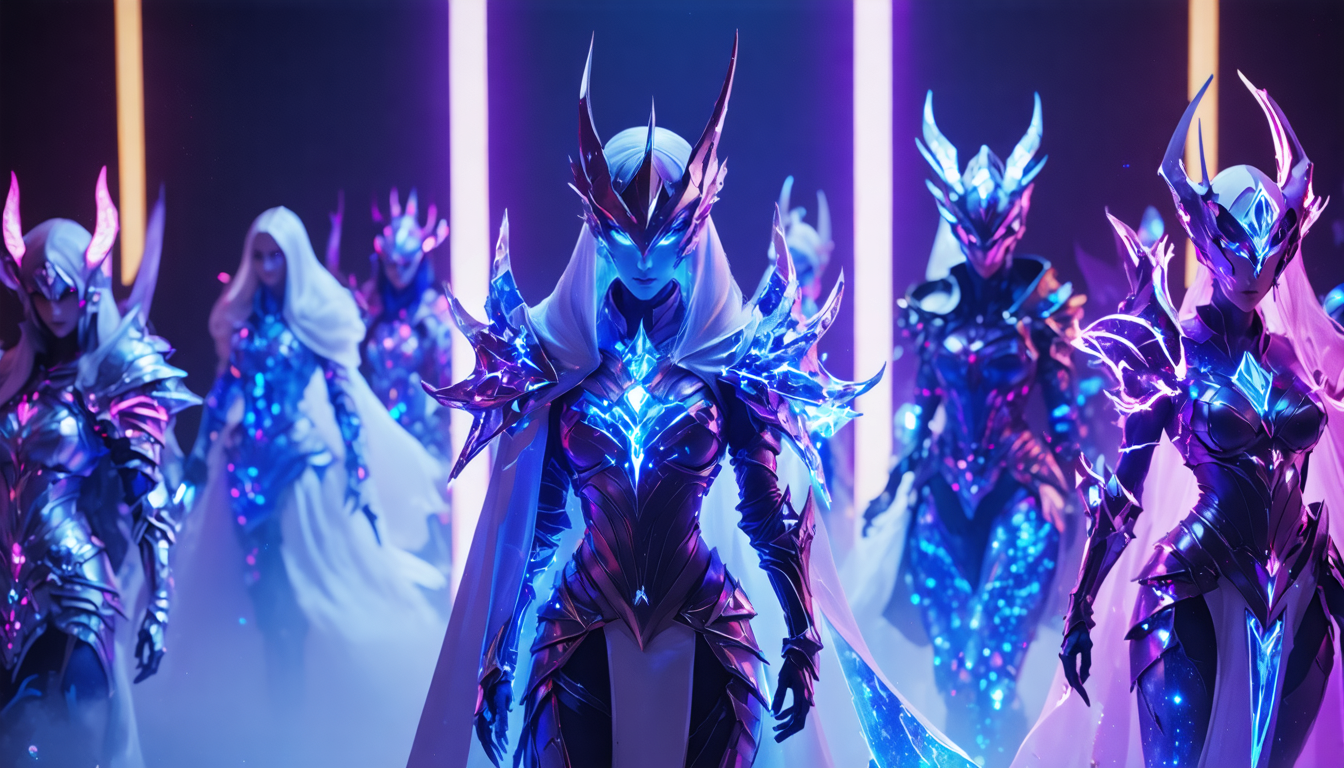
One of the striking factors of this new generation of League of Legends skins is based on artistic collaborations and the integration of external licenses. In 2025, Riot Games has multiplied partnerships with renowned artists, animation studios, and even iconic brands from popular culture. This trend aims to offer LoL players cosmetics that go beyond the strictly video game framework, with rich and diverse universes.
For example, the collaboration with a famous digital art collective gave rise to a “Neo-Renaissance” skin series where each model is a fusion between classical aesthetics and futuristic technologies. Moreover, well-known licenses from cinema, animation, or music have enabled the creation of themed skins, enhancing the appeal of these unique cosmetics.
These partnerships also serve as a powerful marketing lever allowing to reach a broader audience, sometimes unfamiliar with League of Legends. The effects are observed both in terms of visibility on social networks and media, and in the sales figures of skins from these collaborations. Players are seduced by the rarity and originality brought, which acts as an additional engine to drive spending around LoL skin purchases.
Finally, these initiatives open creative horizons previously little explored, with the incorporation of original music, narrative animations, and unprecedented in-game elements. This diversification of the catalog lays the foundation for a more immersive and multifaceted experience.
The psychology behind the appeal of LoL cosmetics
The enthusiasm around Skins LoL 2025 not only touches the visual aspect but is rooted in a fine understanding of psychological mechanisms related to acquisition and possession of digital objects. Money and skins maintain a complex relationship where the player seeks not only to beautify their avatar but also to assert their identity and place within the community.
Social psychology scholars agree that skin purchasing often responds to fundamental needs such as social recognition, desire for originality, and the pleasure of customization. These needs are amplified in a competitive universe like League of Legends, where appearance plays a role in building virtual reputation.
Moreover, the feeling of exclusivity generated by limited editions stimulates a form of immediate gratification, reinforced by social pressure. Reward mechanisms linked to progression or one-off events promote sustained engagement, while maintaining psychological tension that encourages recurring purchases.
This addictive dimension can sometimes pose risks, especially for younger or vulnerable audiences, leading Riot Games to intensify its efforts in transparency, microtransaction regulation, and player education. In this sense, understanding the psychological drivers behind the enthusiasm for LoL cosmetics is essential to grasp their success and effects on the community.
Marketing strategies behind LoL skin purchases
Purchasing LoL skins is inseparable from the marketing strategies deployed by Riot Games. In recent years, the company has refined a very targeted approach, blending digital communication, live events, and influencer campaigns. This orchestration aims to maximize the impact of each new skins 2025 release and create a true experience around these products.
Campaigns rely on immersive storytelling, spectacular teasers, and strong presence on social networks, notably YouTube, Twitch, and TikTok. These platforms are used to reveal powerful trailers, detailed making-ofs, and to mobilize influential content creators who comment on and endorse these skins to millions of fans.
Additionally, synchronized launches with major esports events exploit the emotion generated by competitions to encourage impulsive buying. Players also benefit from pre-orders and exclusive offers, fostering a sense of urgency and privilege.
Battle passes are also an essential vector, mixing progression, objectives, and unlockable cosmetics. This formula stimulates both engagement and monetization while offering tangible rewards for time invested in the game. In summary, the marketing strategy around skins has become a complex science that combines art, psychology, and business to capture players’ attention and wallets.
Beyond the playful and economic aspects, League of Legends skins also shape a true culture around the game. These virtual items play a role in social construction by creating fashions, codes, and shared identities. Players use their skins as a means of expression, whether to reflect their personality, tastes, or belonging to a community.
This cultural dimension intensifies in online interactions, where champions’ appearances become a visual language influencing perceptions and behaviors. Some skins quickly become iconic and symbolize eras, events, or movements within the community. For example, releases linked to female, environmental, or charitable causes have given rise to collections transcending simple entertainment.
Moreover, skins contribute to the game’s media coverage and visibility, enriching League of Legends’ cultural spectrum by breaking down barriers between virtual and real. The popularity of skins inspires fan arts, cosplay, debates, and exchanges, constituting an additional interaction mode between players and creators.
This social and cultural influence pushes Riot to continuously renew its offers to stay in phase with evolving mindsets and global trends. Skins are no longer just cosmetics but powerful cultural markers, shaping the LoL community in the digital age.