
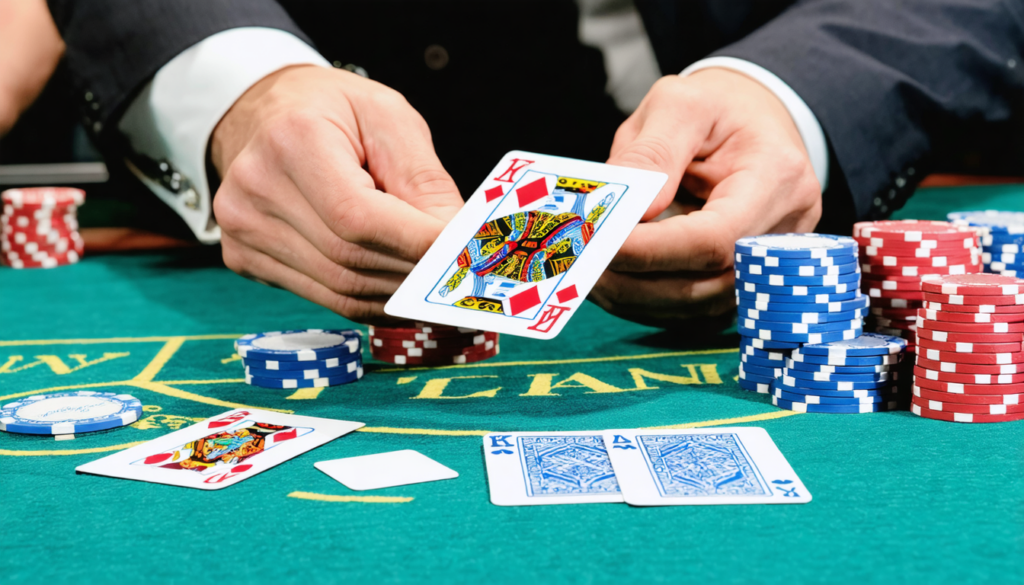
In the world of casinos, whether physical or online, Blackjack has established itself as one of the most captivating card games. This popularity comes from its unique blend of chance, strategy, and psychology, attracting both beginners seeking discovery and seasoned players looking to refine their technique. In 2025, the passion for this iconic game remains strong thanks to its accessibility and the multiple customization options offered by digital platforms. Mastering the rules of Blackjack is the indispensable first step, not only to fully enjoy the game but especially to optimize your chances of victory against the dealer, a true rival at the table.
This comprehensive guide is intended for all players eager to understand the mechanisms of this discipline in depth. It explores not only the fundamentals of the card game but also the subtleties that make the richness and complexity of Blackjack. Not to mention the new strategies adapted to the digital environment of modern casinos. Even before placing your bets, knowing how the rules work, which actions are recommended, and how to interpret hands gives you a considerable advantage. By exploring the variants and mistakes to avoid, this article guides you step by step to make the right choices at every phase of the game.
- 1 Understanding the fundamentals of Blackjack: basic rules and key card values to start well
- 2 Strategic options in Blackjack: how to choose between hitting, standing, doubling, or splitting
- 3 Dealer’s fixed roles and rules in Blackjack: understanding his mechanism
- 4 Calculating winnings and probabilities: mastering the art of profitability in Blackjack
- 5 Popular Blackjack variants: specific rules and new strategic challenges
- 6 Common mistakes in Blackjack to absolutely avoid to protect your bankroll
- 7 Basic Blackjack strategy: the key asset to maximize your chances against the dealer
- 8 Understanding the different hands in Blackjack to adapt your playing strategy
Understanding the fundamentals of Blackjack: basic rules and key card values to start well
Blackjack, also known as “21,” is a card game that seems simple but is rich in strategies. The main objective is to get a hand with a value as close as possible to 21, without ever exceeding it. The game is generally played with several decks, using between 6 and 8 decks per round in modern casinos, which slightly complicates card counting and influences the strategy to adopt.
Numbered cards from 2 to 10 retain their face value, each number representing a precise number of points. The face cards – Jack, Queen, and King – all count as 10 points. The Ace has a unique versatility, being able to count as either 1 or 11 points depending on what benefits the player. For example, a hand composed of an Ace and a King is a natural Blackjack, totaling 21 points with only two cards, a particularly favorable outcome. However, if the hand contains an Ace and other cards totaling more than 21 when counting the Ace as 11, the Ace’s value automatically switches to 1 to avoid going over.
The course of a game follows a well-defined sequence: after the initial bet, each player receives two cards, as does the dealer. One of the dealer’s cards remains hidden, creating an element of mystery and tension. At this point, strategic decisions begin, based on reading the visible cards – especially the dealer’s card. The possible actions are: drawing an additional card (Hit), standing with the current hand (Stand), doubling the initial bet with one additional card (Double Down), or splitting two identical cards into two separate hands (Split). Mastery of these actions allows better control of risk-taking and increases chances of success.
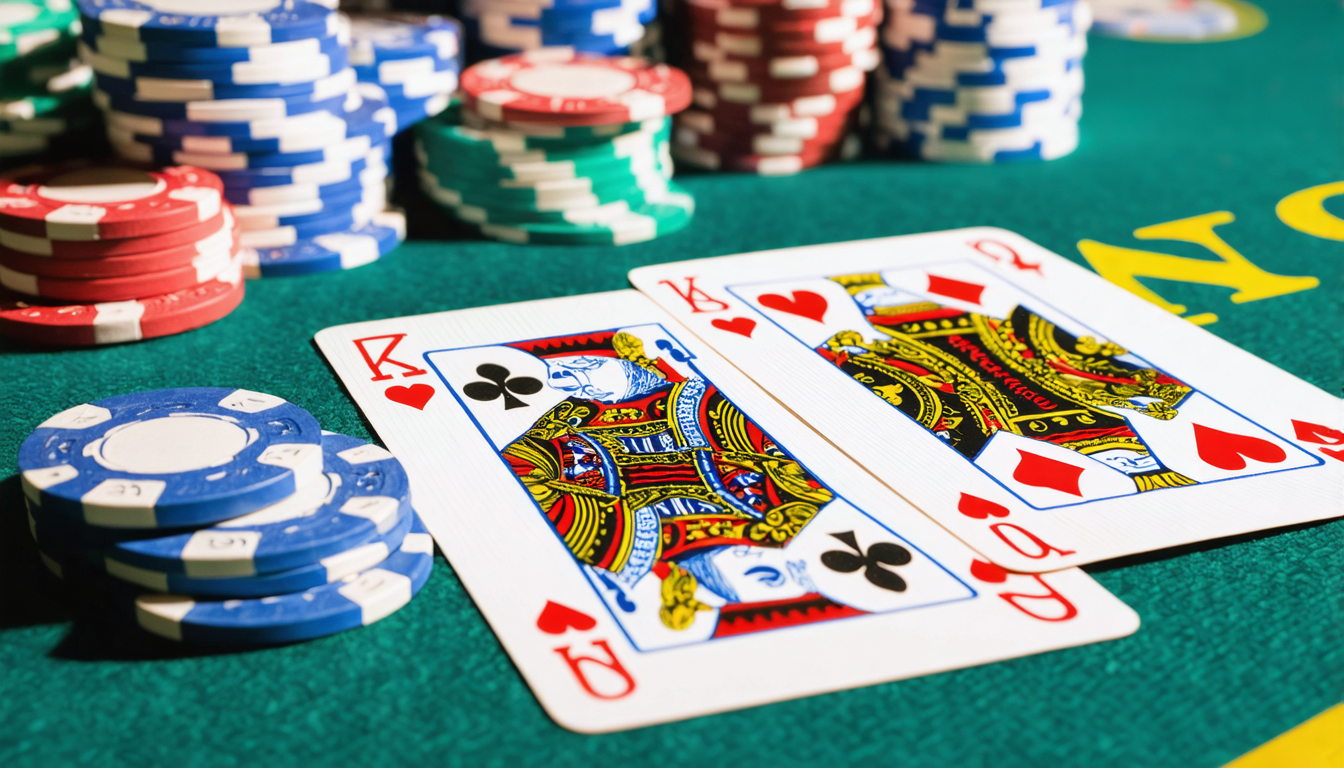
Strategic options in Blackjack: how to choose between hitting, standing, doubling, or splitting
Beyond the basic rules, decision-making in Blackjack is what gives the card game its full depth. Knowing when to hit, stand, double, or split pairs is essential to optimize your chances while limiting losses. Each choice must be based on the value of the player’s hand, the dealer’s visible card, and the underlying mathematical probabilities.
Hit is generally recommended when the hand total is low, for example 11 or less. This option aims to get closer to 21 without risking going over. It is the most frequent decision but must be made cautiously once the hand approaches 17 or higher, as going over 21 – called “bust” – means an immediate loss.
Stand means the player wants to keep the current hand. This decision is imposed as soon as the card total is satisfactory, such as between 17 and 21. Putting confidence in one’s hand is a tactically relevant choice, especially when the dealer’s visible card is weak (between 2 and 6), because the dealer must draw until 17, increasing the risk they will bust.
Double Down consists of increasing the initial bet in exchange for the obligation to receive only one additional card. This strategy is recommended when the player holds a 10 or 11, betting on the high probability of drawing a 10-valued card to reach a total close to 21. This tactic can significantly increase winnings but also the risks in case of an unfavorable draw.
Split is a strategy that applies when the two initial cards have the same value. The player then splits these two cards into two separate hands, doubling the bet and the chances. Splitting a pair of Aces, for example, offers the possibility to attempt a double Blackjack, which is particularly advantageous. Conversely, some pairs like two 10s should rarely be split as a total hand of 20 is already very strong.
List of main strategic options in Blackjack
- Hit: choose an additional card to improve the hand.
- Stand: keep your hand and request no more cards.
- Double Down: double the bet and receive only one card.
- Split: divide two identical cards into two separate hands.
- Surrender (depending on variants): forfeit half the bet to stop the hand.
Dealer’s fixed roles and rules in Blackjack: understanding his mechanism
The dealer plays a particular role in Blackjack games, as he is not a human adversary with a variable strategy but follows strict rules set by the casino. His behavior is predictable and is an integral part of the game techniques that participants must incorporate.
At each turn, the dealer must draw a card until reaching at least 17 points. In many online casinos, he must stand on a “soft” 17, meaning a hand containing an Ace counted as 11, for example Ace + 6. This rule significantly influences the player’s strategy, as knowing the threshold allows anticipating the dealer’s actions.
If the dealer exceeds 21, all players still in the game automatically win the hand, which can turn the course of play. Conversely, if the dealer obtains a natural Blackjack (Ace + 10-valued card on the initial deal), only players with a matching Blackjack push. Others lose their bet, emphasizing the critical importance of watching for this eventuality.
This rigid and mechanical nature of the dealer’s rules offers the player a unique strategic opportunity: to anticipate the probability that he will bust or obtain a strong hand based on his first visible card. This dynamic is what makes Blackjack so exciting, as the battle is not only against chance but also against an opponent whose behaviors are programmed and therefore predictable.
Calculating winnings and probabilities: mastering the art of profitability in Blackjack
Precise knowledge of the Blackjack payout system is essential for any player who wants to master not only the game’s rules but also the financial aspects related to bets. In 2025, casinos continue to offer classic tables, but it is crucial to understand well how each situation influences your profitability.
Natural Blackjack – the best possible hand with an Ace and a 10-valued card – usually pays high winnings of 3 to 2, meaning the bet pays 150%. This advantageous payout rewards the player for obtaining this rare combination.
Classic win occurs when the player’s hand is closer to 21 than the dealer’s without exceeding it. This win is generally expressed by a payout ratio of 1 to 1, the bet being simply doubled.
In the case of a tie (push), the game is a draw: the player’s bet is refunded without gain or loss. This scenario occurs if the player’s hand is identical to the dealer’s, except if a natural Blackjack is in play where special rules apply.
Table of main scenarios and Blackjack winnings
| Situation | Outcome | Winnings/Bet |
|---|---|---|
| Natural Blackjack (Ace + 10 points) | Immediate win | 3:2 (150%) |
| Classic win against dealer | Win without Blackjack | 1:1 (100%) |
| Tie (push) | Bet refunded | 0 (bet refunded) |
| Player busts over 21 | Immediate loss | -100% (loss) |
Understanding these outcomes helps better apprehend risks and adjust playing techniques based on probabilities. Savvy players know when it is appropriate to adopt aggressive strategies and when it is better to play cautiously to preserve their capital.
Popular Blackjack variants: specific rules and new strategic challenges
Blackjack is far from a fixed game; it adapts and evolves in modern casinos through multiple variants that enrich the player’s experience while offering challenges and particular rules. In 2025, innovation favors these variations, especially in online establishments.
One of the most trendy variants is Live Blackjack. This live version puts you face to face with a real dealer via webcam, merging the convenience of online play with the authenticity of a physical table. The tension and suspense are heightened, as is the transparency of the dealer’s actions.
European Blackjack differs in the timing of card dealing: the dealer only receives the second card after all players have finished their turns, and there is only one visible card for the dealer during the players’ turns. This approach changes strategies, especially regarding the sense of risk and order of draws.
American Blackjack often corresponds to the classic and best-known version, where the dealer receives two cards at the start, one face-up. This facilitates direct risk assessment and requires precise risk analysis during the player’s turn.
Among other variations, there is Speed Blackjack which, true to its name, is played at an accelerated pace, with sessions reduced to less than 15 seconds each, promoting dynamic and intense gameplay.
Blackjack Switch offers an interesting innovation by allowing the player to participate with two hands simultaneously, with the possibility to swap cards between them to improve chances of forming a winning hand. This variant requires additional mastery of the rules to fully benefit from it.
Finally, versions like Pontoon, Spanish 21, or Xtreme 21 + 3 bring their own specifics, such as side bets and additional bonuses that especially attract gambling enthusiasts looking for permanent novelties.
Common mistakes in Blackjack to absolutely avoid to protect your bankroll
Knowing what not to do in Blackjack is just as crucial as knowing the best practices. Many beginner players fall into classic traps that can quickly compromise their capital and gaming pleasure.
The tendency to hit after 17 is one of the most widespread mistakes. By continuing a hand that is already high, the risk of busting over 21 increases significantly without the probability of winning justifying this risk-taking.
Not splitting pairs strategically is another major source of loss. For example, systematically splitting pairs of Aces or 8s is advised because it increases the chances of getting two good hands instead of suffering from a weak hand or busting over 21. Conversely, splitting pairs of 10s is almost always a mistake, as a hand of 20 is particularly strong.
The insurance option is often tempting when the dealer shows an Ace, but it remains a risky strategy to avoid in the long term. This side bet is generally unfavorable for the player, even if it can sometimes limit losses on a difficult hand. Its precise understanding is therefore recommended before using it.
Finally, exhibiting poor bankroll management is a recurring problem. Betting more than 5% of your bankroll on a single hand can jeopardize continuity of play and make recovery after a losing streak difficult. Strict betting discipline and a defined loss threshold are essential protections.
List of mistakes to avoid for playing Blackjack calmly
- Hitting with a hand over 17 points
- Not splitting strategic pairs (Aces and 8s)
- Taking insurance systematically
- Betting more than 5% of bankroll on a single hand
- Ignoring the specific rules of the played variant
Basic Blackjack strategy: the key asset to maximize your chances against the dealer
The basic strategy is the essential foundation for mastering Blackjack. It is based on a set of empirical rules, validated by probability calculations, indicating the best action to take depending on the player’s card combination and the dealer’s visible card. Applying this method reduces the house edge to less than 1%, an extremely favorable threshold compared to other gambling games.
A strategic chart summarizes the different decisions: hit, stand, double, or split, depending on 32 common starting combinations based on the dealer’s card. For example, if the hand is between 12 and 16, the strategy recommends standing if the dealer’s visible card is weak (from 2 to 6), because there is a high chance that the dealer will bust. On the contrary, if the dealer’s card is high (7 or more), it is generally advised to hit, seeking to improve your own hand.
However, rigor in applying the chart must be complemented by good bankroll management. It is advised never to bet more than 5% of your funds in a single play to protect your capital while capitalizing on gains obtained. Setting a maximum loss threshold not to be exceeded is also a prudent strategy that prevents engaging in too large losses.
The methodical integration of this basic strategy is for players the safest way to master Blackjack rules and optimize their long-term winnings, in an environment that can sometimes seem unpredictable.
Basic Blackjack strategic decision chart
| Player’s situation | Dealer’s visible card (2-6) | Dealer’s visible card (7-Ace) |
|---|---|---|
| Hand between 12 and 16 | Stand | Hit |
| Hand between 10 and 11 | Double Down | Hit |
| Pair of Aces | Split | Split |
| Pair of 8s | Split | Split |
Understanding the different hands in Blackjack to adapt your playing strategy
A key to mastering Blackjack is to precisely analyze the nature of the hands you can form. Differentiating natural, hard, or soft hands helps choose the best playing technique and understand the options available.
The Natural Blackjack is the ideal combination: an Ace paired with a ten-point card, obtained right from the initial deal. It guarantees an almost immediate win and benefits from the superior 3:2 payout. This hand is rare, but every player dreams of hitting it.
Hard hands correspond to hands without an Ace or with an Ace counted as 1. For example, 10 and 7 form a hard 17. These hands offer less flexibility because they limit the possibility of drawing a new card without risking busting.
Soft hands include an Ace counted as 11 points, for example Ace + 6 = soft 17. This flexibility allows the player to draw cards without risking going over 21 because the Ace can be recalculated as 1 if necessary. These hands offer greater strategic leeway and can influence the decision to double or hit.
Understanding these typologies gives players a framework to adjust their strategy and a decisive advantage in conflicting situations at the table. Experience and practice allow better anticipation of favorable or unfavorable outcomes depending on the type of hand.