

At a time when online strategy games are exploring new tactical depths, Open Front establishes itself as a true benchmark in 2026 in the realm of real-time strategy games. Freely accessible on browser and mobile, this game revolutionizes the genre with its subtle mix of territorial conquest, resource management, and dynamic diplomacy. Open Front’s unique mechanics are based on a gigantic hexagonal map where every decision can upset the balance of power. Whether you are a veteran of strategy games or a novice seeking a challenging experience, this comprehensive guide will immerse you in the core game rules, techniques for getting started, and advanced methods to master Open Front. From precise troop management to building international trade routes, discover how to exploit every aspect of the game to maximize your chances of victory.
The Open Front experience recalls the golden age of classic games such as Warcraft 3 or RISK, but integrates the capabilities of modern platforms to offer smooth and immersive gameplay. Each game, lasting anywhere from ten to sixty minutes, pits up to 16 human players against a relentless artificial intelligence, guaranteeing impressive replayability. The social aspect plays a key role, as alliances are not just an option; they often become an indispensable strategic lever. This guide offers you a progressive immersion into the universe of Open Front, enabling you to start calmly, avoid common mistakes, and adopt a winning approach throughout your games.
- 1 Understanding the fundamentals of the Open Front game: rules and battlefield
- 2 Mastering slider management: adjusting troops and population for a winning strategy
- 3 Building and optimizing your infrastructure to dominate Open Front
- 4 Diplomacy and alliances: an essential pillar for mastering Open Front
- 5 Advanced techniques to start quickly and progress efficiently in Open Front
- 6 Defense and attack: tips to balance your real-time strategy
- 7 Open Front on mobile and browser: an accessible game for all without microtransactions
Understanding the fundamentals of the Open Front game: rules and battlefield
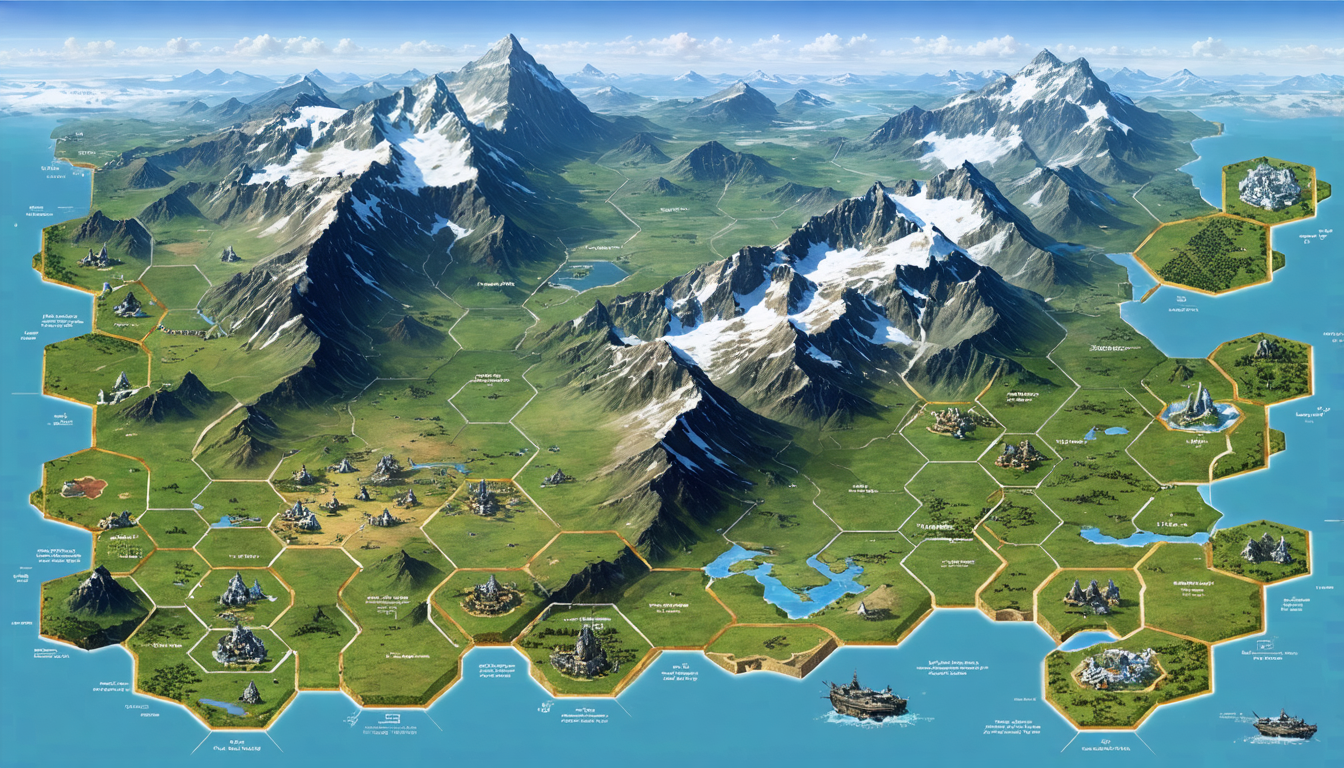
At the heart of Open Front is a vast map made up of hexagonal territories to conquer. The main objective is clear: control at least 80% of the non-irradiated lands to ensure victory. This challenge forces players to adopt a dual strategy, combining rapid expansion and defensive consolidation. Each conquered territory increases your resources and population but also opens potentially vulnerable fronts. Unlike classic strategy games that often rely on turns, Open Front focuses on real-time management where every click can have a lasting impact on the course of the battle.
The terrain, divided into different zones, imposes its own constraints and advantages:
- Plains: perfect for rapid progression thanks to easy conquest, these territories offer limited protection against enemy attacks.
- Mountains: provide enhanced defensive levels due to their natural positioning but slow down development and require strategic patience.
Moreover, movement and conquest are managed through a slider system that regulates the proportion of troops sent with each move and distributes the population between soldiers and workers. This dual management demands a fine reading of the real-time situation, under penalty of quickly being overrun by more cautious or aggressive opponents. The stress of maintaining balance acts like a real dramatic tension reminiscent of genre classics, but with simplified ergonomics accessible to all.
The importance of initial choices is often underestimated, while the selection of the starting point can influence the entire game. An opening strategy in the plains offers rapid but fragile dominance, whereas starting in the mountains encourages building an impregnable fortress by relying on patience and defense. These elements lay the essential foundations to master to start well on Open Front and gain an early lead over your rivals in the first minutes.
Mastering slider management: adjusting troops and population for a winning strategy
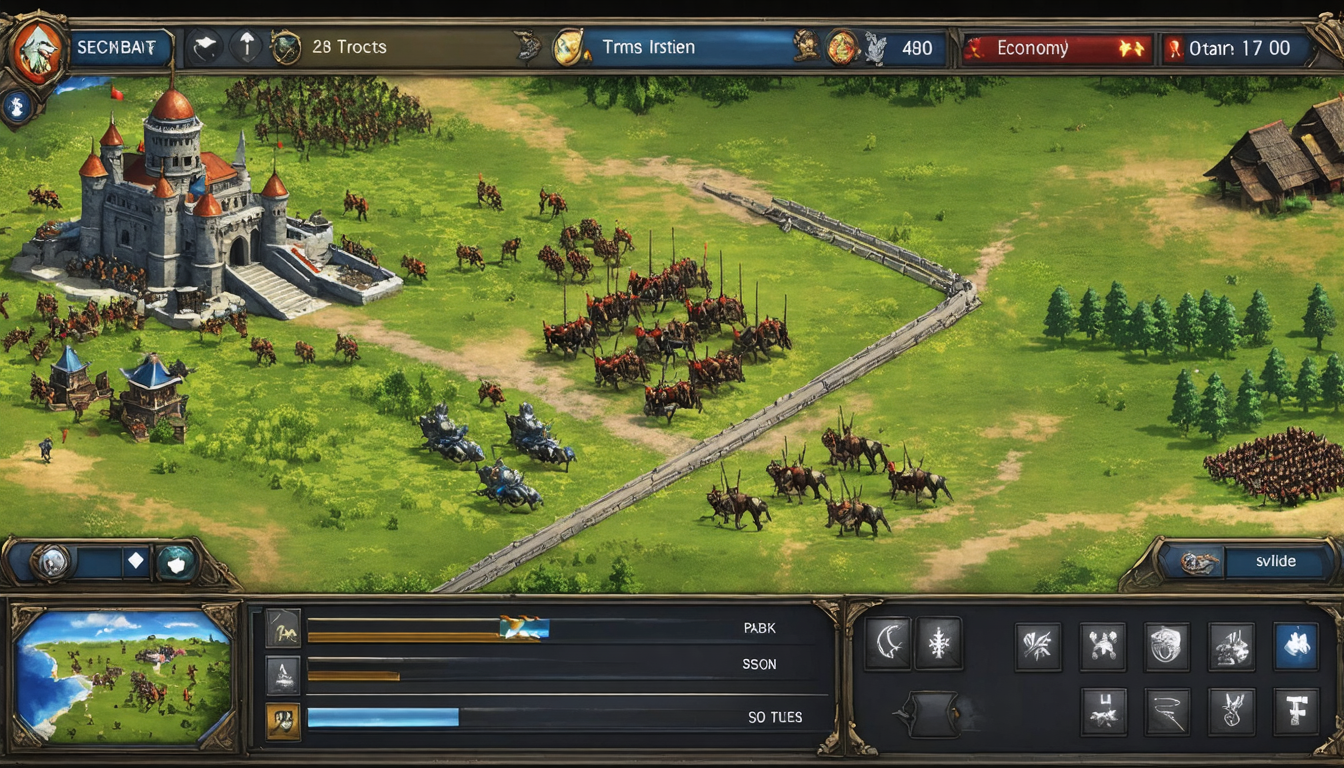
The dynamic management of sliders in Open Front is undoubtedly one of the most captivating subtleties of the game. These two sliders, located respectively at the top and bottom of the screen, govern not only the composition of your forces but also the pace of your territorial expansion. Knowing how to manipulate them precisely often marks the boundary between dazzling victory and crushing defeat.
The lower slider: steering offensive power with finesse
This slider determines the percentage of troops sent with each click on an adjacent hex to conquer. A low value allows slow and controlled progression, prioritizing the security of existing borders and preserving forces to defend your territories. Conversely, a high setting produces a rapid and aggressive offensive but exposes your rear if the defense is not solid enough. Fine control of this slider requires constant adaptation to enemy movements and opportunities appearing on the map.
The upper slider: balancing soldiers and workers for a sustainable economy
The second slider manages the distribution of inhabitants between soldiers, who fight and seize territories, and workers, who produce gold. This resource is the keystone of your development, enabling the construction of strategic buildings essential to victory. An excess of soldiers can lead to a depleted economy, while too high a proportion of workers reduces defensive and offensive capacities.
To illustrate, an early game phase will often see a ratio close to 50/50 to lay the foundation for population and military strength. When you sense a threat or want to launch a decisive offensive, it is wise to shift towards a majority of soldiers. Conversely, in quiet periods, directing the population toward workers will accelerate gold production and enable you to strengthen your infrastructure.
| Situation | Soldier slider | Troops sent slider | Recommended strategy |
|---|---|---|---|
| Initial defense | 50% | 30% | Prudent progression, maintaining solid borders |
| Major offensive | 70-80% | 70% | Massive conquest, rapid territory capture |
| Economic phase | 30% | 20-40% | Increased gold production, building construction |
| Critical situation | 90% | 60-80% | Last offensive or defensive resort |
An often overlooked tip is to finely adjust the troops sent slider in vulnerable zones, thus limiting unnecessary risks in case of simultaneous counterattack. This duality between caution and aggressiveness forms the backbone of Open Front’s strategy and allows effective management of human resources integrated within the game population.

Building and optimizing your infrastructure to dominate Open Front
Resource management does not stop at the balance between soldiers and workers. The gold collected by your workers is truly the fuel of your empire. The strategic construction of key buildings shapes your ability to gain military and economic dominance. It is therefore essential to invest at the right time and in the right infrastructures to ensure steady progression.
The main constructions to know are the following:
- Cities: increase the maximum population by about 25,000 inhabitants per unit, essential for expanding your troops and workers.
- Defense posts: turn a territory into a stronghold, deterring enemy attacks with their reinforced defensive capabilities.
- Missile silos: allow long-range strikes on enemy positions, including massive bombings like H-bombs to inflict considerable damage.
- Ports: unlock naval gameplay by enabling the construction of merchant and warships, as well as establishing profitable trade routes between allies.
A virtuous cycle occurs when cities allow you to increase your population which produces more gold, which you then invest in other structures to defend and attack more efficiently. It is recommended to always prioritize the construction of cities and ports early on because they maximize your economic potential while opening unique strategic opportunities related to maritime trade.
Naval trade, made possible through ports, adds a surprising layer of depth. When two allies each own a port, ships automatically trade, generating significant additional income. This revenue increases with the distance between ports, a rule that encourages forming global rather than local alliances.
In this ever-changing environment, the right choice of buildings can radically shift the balance of power. This mechanic encourages players to consider both short and long term by adapting to enemy actions but also to new opportunities, such as opening new maritime routes or deploying unsuspected strategic defenses.
Diplomacy and alliances: an essential pillar for mastering Open Front
If Open Front is sometimes seen as a simple conquest game, this minimalist vision overlooks a fundamental aspect: diplomacy plays a crucial role. Forming alliances at the right moment can make the difference between a dazzling victory and a crushing defeat. The integrated diplomatic system offers comprehensive tools to forge partnerships, coordinate efforts, and respond to external threats.
Alliances are not just symbolic commitments; they provide concrete support:
- Troop reinforcements: ability to send soldiers to an attacked ally to support them effectively.
- Resource and gold sharing: monetary flow between partners to balance economies and facilitate constructions.
- Target marking: quickly communicate common objectives to coordinate offensives and better exploit enemy weaknesses.
- Simplified communication: sending emojis and quick messages to streamline interaction without slowing down the game pace.
A winning strategy consists of establishing alliances with geographically distant players. This avoids direct competition over nearby territories and maximizes income potential through maritime trade routes since the greater the distance, the more profitable the trade. This international economic model requires an elaborate diplomatic approach and a tactical spirit of mutual aid that goes beyond mere combat.
However, betrayal is an integral part of the game and can arise at any moment. Open Front’s famous slogan “Create alliances, betray your friends, and expand” reflects this constant tension. It is always better to anticipate potential duplicity, monitor enemy movements even among allies, and consider defensive alternatives in case of a sudden blow. This complexity makes Open Front a game where psychology and strategy blend to shape human-glorious battles.
Advanced techniques to start quickly and progress efficiently in Open Front
For novices eager to enter the arena equipped and confident, there are several proven techniques that facilitate initiation and support rapid progress. Avoiding classic mistakes allows you to gain fluidity and efficiency from the very first games. Here are some practical tips to incorporate into your approach:
- Do not rush: favor reasoned deployment with moderate expansions rather than excessive territory grabbing that leaves your borders open to counterattacks.
- Constantly monitor sliders: adjust the soldiers/workers ratio depending on the context: more offense when attacking, more production during calm phases.
- Choose your starting terrain wisely: test several areas to define your preferred playstyle, between rapid growth and robust defense.
- Establish alliances early: even a tacit alliance can save you from multiple aggressions.
- Exploit trade routes: favor distant partners to maximize gold gain, a major economic lever.
This initiation guide invites progressive learning and encourages observing best practices from experienced players. With regular practice, integrating these techniques will become instinctive, and your gameplay will gain cohesion and strength.
Defense and attack: tips to balance your real-time strategy
Facing the unpredictable and fast pace dynamics of Open Front, it is essential to maintain a constant balance between bold attacks and solid defenses. Throwing yourself headlong into conquest can expose your territories to vulnerability, while an overly defensive posture slows your economic and military expansion.
The key lies in constant observation of enemy movements and timely adjustment of your force composition. Here is a list of recommendations to manage your confrontations effectively:
- Have sufficient garrisons: never leave your main borders without a well-sized defense troop.
- Vary offensives: alternate between quick strikes on weak points and massive assaults to destabilize your opponents.
- Use long-range strikes: missiles fired from silos can eliminate defenses before launching a ground offensive.
- Exploit terrain relief: mountainous positions offer major defensive advantages not to be overlooked.
- Support your allies: sending reinforcements at the right moment can reverse the course of a decisive battle.
This real-time tactical management requires composure and constant anticipation. Successful players often combine vigilance, flexibility, and technical mastery of the functions offered by Open Front.
Open Front on mobile and browser: an accessible game for all without microtransactions
One of Open Front’s great strengths in 2026 is its multi-platform compatibility. Whether you are on the move, at home, or at the office, you can access the game for free via a web browser or through an independently developed dedicated mobile app. This accessibility is especially appreciated by players who want a serious game without the constraints of heavy installations or closed systems.
The absence of microtransactions in Open Front constitutes a refreshing change in the mobile gaming landscape, often saturated with pay-to-win mechanisms. Here, every player evolves under the same economic and tactical conditions, making each victory fully deserved and every defeat a learning experience. The business model based solely on free access guarantees a fair and competitive game, favoring strategic space rather than monetary power.
The smoothness of the experience, combined with controls adapted for touch screens or mouse, attracts a wide audience, from beginners to demanding veterans. This also contributes to enriching the Open Front community, which now counts several thousand active players every day. By focusing effort on gameplay and accessibility, Open Front demonstrates that gaming excellence does not necessarily require excessive spending.