
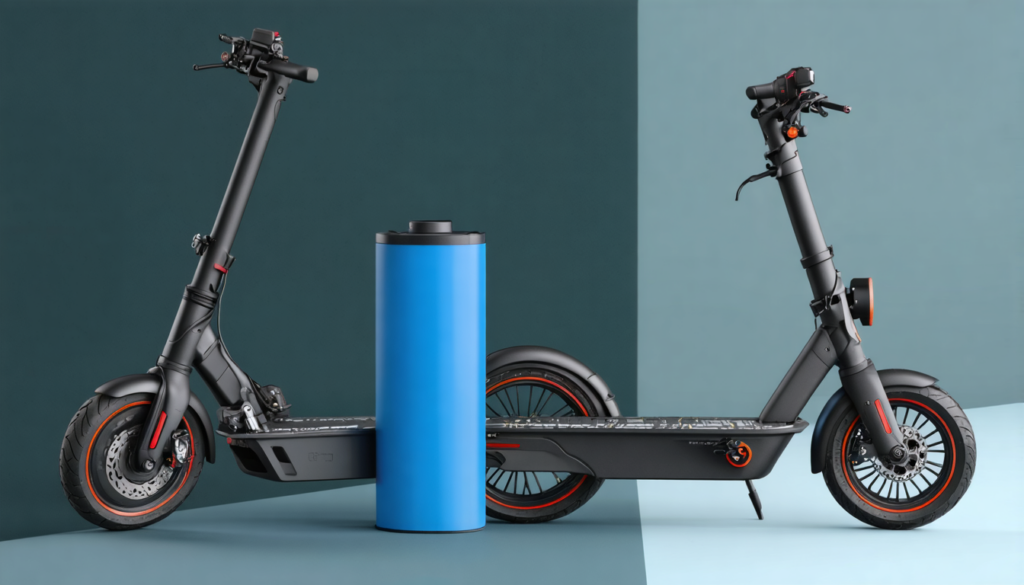
With the explosion of electric urban mobility, the electric scooter is establishing itself as an essential, practical, and ecological means of transport. However, behind its apparent simplicity, a central element determines its autonomy and performance: the battery. While its role is fundamental, its cost can be surprising, especially during replacement or repair. In 2026, understanding well the electric scooter battery price as well as the technical and maintenance specifics becomes essential for all passionate or daily users. From capacity to technologies, from refurbishment options to brand choices, every aspect influences the budget to anticipate.
In this universe where innovation is constantly progressing, some lithium-ion batteries show impressive performance, but at what exact cost? This comprehensive report sheds light on the different realities of the electric battery cost, preparing you to make an informed choice with full knowledge. An overview of models, their estimated lifespan, and tips to optimize both investment and longevity awaits you.
- 1 Evaluating the electric scooter battery price: what factors influence the bill?
- 2 Understanding the major differences between types of electric scooter batteries
- 3 The cost of charging a battery: numerical analysis to save money
- 4 Replacement or refurbishment: which option to prioritize for your electric scooter battery?
- 5 Spare parts and repairs: optimizing electric scooter battery maintenance costs
- 6 Electric scooter battery brands: Xiaomi, Vsett, Kugoo, and Wispeed under the magnifying glass
- 7 Where to buy your electric scooter battery with fast and reliable delivery?
Evaluating the electric scooter battery price: what factors influence the bill?
Understanding why the price of an electric scooter battery varies considerably is crucial to avoid any unpleasant surprises when purchasing it. In 2026, several fundamental criteria guide this cost, notably:
- Battery capacity (expressed in watt-hours, Wh): the larger the capacity, the greater the potential autonomy, but the price rises quickly.
- Voltage: batteries typically range between 24V and 60V, with a direct impact on power and also on price.
- Technology used: lithium-ion batteries, widely favored for their lightness and performance, are more expensive than lead batteries, which are still present on some economical models.
- Brand and compatibility: some batteries, specially designed for specific models like Xiaomi or Vsett, can be more expensive due to their quality and demanding integration.
To better understand these elements, here is a summary table presenting price ranges according to capacity and estimated battery lifespan:
| Battery type | Capacity & Voltage | Average price (€) | Estimated lifespan |
|---|---|---|---|
| Standard lithium-ion | 200-350 Wh, 24V-36V | 150 – 300 | 2 to 3 years |
| High capacity lithium-ion | 400-600 Wh, 36V-60V | 300 – 500 | 3 to 4 years |
| Lead-acid | 200-300 Wh, 24V-36V | under 150 | 1 to 2 years |
This table reflects a current trend: the search for a higher battery capacity to increase autonomy, while the price can almost triple depending on the characteristics.
Many entry-level electric scooters carry lead batteries, which explains price gaps, but they are often not recommended if you want regular and durable use. The larger initial investment in a quality lithium-ion battery guarantees a better experience in the medium term.
Understanding the major differences between types of electric scooter batteries
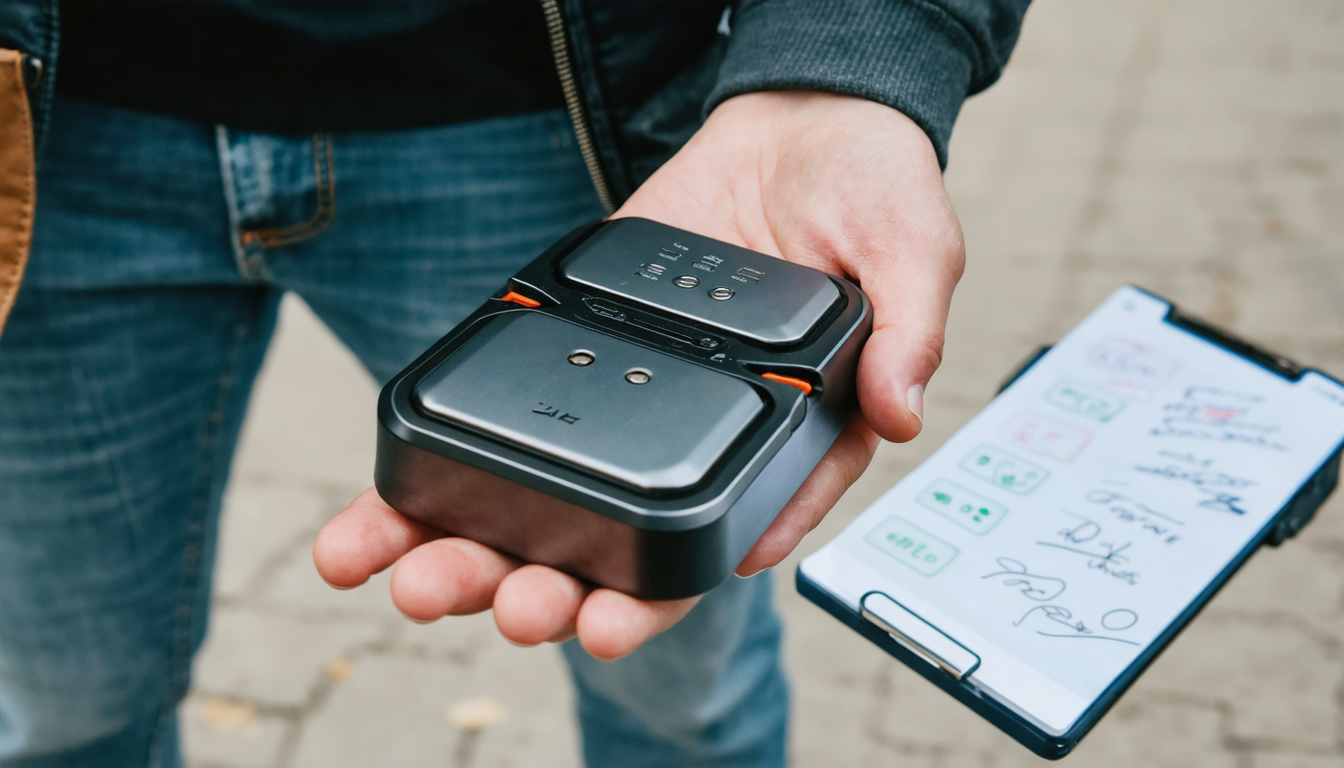
Battery choices are not limited to price: each type offers its technical specificities. Two main families mainly oppose:
Lithium-ion batteries: the standard from now on
These are the most common and best adapted to modern requirements; they combine lightness, good autonomy, and fast charging. A quality lithium-ion battery allows on average to travel between 20 and 50 kilometers depending on capacity, which suits urban trips perfectly.
In terms of durability, the average battery lifespan for lithium-ion is between 2 and 3 years, with a number of charge cycles around 500 to 700 before significant capacity loss. This represents a satisfactory balance between performance and long-term cost, especially as charging is economical.
Lead batteries: an economical but limited alternative
Older and heavier, these batteries tend to lose their capacity quickly and are mainly intended for economical vehicles or light use. Their attractive price (<150€) may seem tempting, but at the price of reduced autonomy and shorter longevity.
In practice, these batteries rarely suit intensive urban users. For most, the shift to lithium-ion batteries marks considerable progress, notably in 2026, where quality and ecological standards have become essential.
- Lithium-ion batteries: light weight, fast charging, long lifespan, high price.
- Lead batteries: lower cost, reduced autonomy and lifespan, substantial weight.
The cost of charging a battery: numerical analysis to save money
Beyond the purchase price, it is key to understand the electric battery cost in use, particularly for charging. Contrary to what many think, this cost remains marginal and encourages favoring electric mobility.
Concretely, the calculation of the price for a full charge is simple:
Charging cost = (Battery capacity in Wh / 1000) × Price per kWh
For example, for a 300 Wh battery with an average kWh rate of €0.15:
(300 / 1000) × 0.15 = €0.045 per full charge
In other words, less than 5 cents for a charge that can make your scooter run up to 30 km, depending on the model’s efficiency.
Extrapolating over 100 km traveled, the estimated electricity cost remains extremely low, around €0.18, which places it far ahead of traditional thermal solutions. This represents a significant economic advantage for urban dwellers in 2026, where every euro counts against rising energy prices.
Small savings made at each recharge quickly add up over a year, making the electric scooter all the more attractive.
The different types of chargers and their impacts
To maximize the life of your battery, the choice of charger is crucial. There are several options:
- Standard chargers: compatible with most 36V and 48V batteries, they offer balanced and safe charging.
- Fast chargers: intended for those who do not want to waste time, they reduce charging time but can slightly reduce battery lifespan in the long term.
- Portable external chargers: perfect for mobile users and frequent travelers, allowing charging on the go without having to stay at home.
To preserve your battery, caution dictates following the manufacturer’s instructions carefully and avoiding frequent charges with fast chargers on an aging battery.
Replacement or refurbishment: which option to prioritize for your electric scooter battery?
When a battery wears out or loses capacity too quickly, the user faces several solutions, each with its advantages and constraints:
Complete battery replacement
This is the simplest and most reliable method, even if it often appears the most expensive. In 2026, the new battery replacement price generally ranges between €150 and €500, depending on type and capacity. You often need to add about thirty euros for labor if you call a professional.
This option guarantees optimal use with a new battery, which will quickly regain its full power and autonomy, a wise choice especially for intense use or a high-end scooter.
Purchasing a refurbished battery: an economical alternative
Refurbished batteries offer a more accessible solution, often between €250 and €400, thanks to partial replacement or component refurbishment. It’s a compromise between cost and performance. This battery type typically offers a shorter warranty but often suffices to extend your device’s lifespan at lower cost.
Refurbishing the current battery
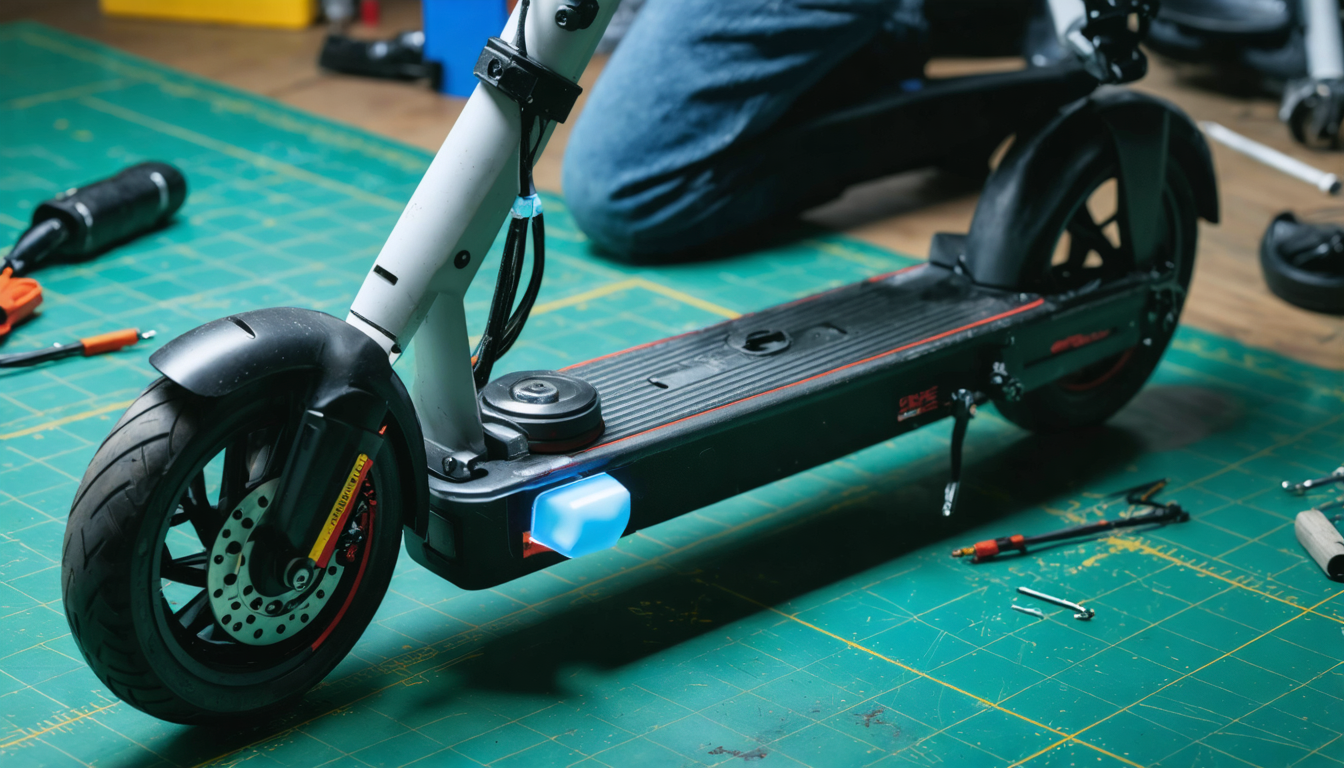
Sometimes, only cell replacement or specific maintenance can revive your battery. This ecological and economical solution requires some know-how or support from a equipped professional. It saves time and resources, avoiding complete battery waste.
Thinking of regular maintenance and minor repairs can significantly extend battery lifespan, similar to the care given to a precious electronic device. A well-maintained battery will accompany your urban and leisure trips longer.
Spare parts and repairs: optimizing electric scooter battery maintenance costs
Instead of systematically replacing the entire battery, it is sometimes possible to work on specific components:
- Cell replacement: change only defective or worn cells to restore good capacity.
- Inspection and checking: diagnose and repair loose connections or damaged circuits.
- Additional external battery: some models allow adding a portable battery to extend autonomy without touching the main battery.
Specialized retailers like Barooder or Micro offer diagnostic and repair services, helping to control maintenance costs while limiting electronic waste. In all cases, checking battery compatibility with your model before buying or repairing remains an essential reflex.
Electric scooter battery brands: Xiaomi, Vsett, Kugoo, and Wispeed under the magnifying glass
In 2026, several brands dominate the electric scooter battery market, each with its specificities:
Xiaomi
Known for the reliability and easy availability of its batteries, Xiaomi offers products adapted to a wide range of mainstream models. Their spare parts are often less expensive and easy to replace, facilitating maintenance.
Vsett
This premium brand offers high-capacity batteries, notably suited for long-distance travel. These batteries have a higher price but offer autonomy and robustness that attract intensive users.
Kugoo
Kugoo markets models for all budgets, with specific batteries depending on voltage and capacity. Depending on models, charger and spare parts compatibility may be limited, pushing some to prefer purchases from official dealers.
Wispeed
A brand situated between mid-range and high-end, Wispeed maintains a good balance between performance, autonomy, and battery price. Their batteries are designed to optimize lifespan while offering sufficient power for urban trips.
Before choosing a battery, your decision must take into account budget, desired autonomy, compatibility, and brand-related quality.
Where to buy your electric scooter battery with fast and reliable delivery?
To ensure a worry-free acquisition and quick delivery times, several options are available:
- Local specialized stores: they often offer personalized advice and on-site warranties.
- Specialized online platforms: sites like Barooder or Micro ensure updated stocks, technical advice, and express delivery.
- Official brand resellers: buying on official sites like Xiaomi or Vsett guarantees authenticity and manufacturer warranty, but availability can vary according to models.
Whatever your choice, it is recommended to consult customer reviews and verify the warranty offered to avoid any disappointment on a component as crucial as the battery.