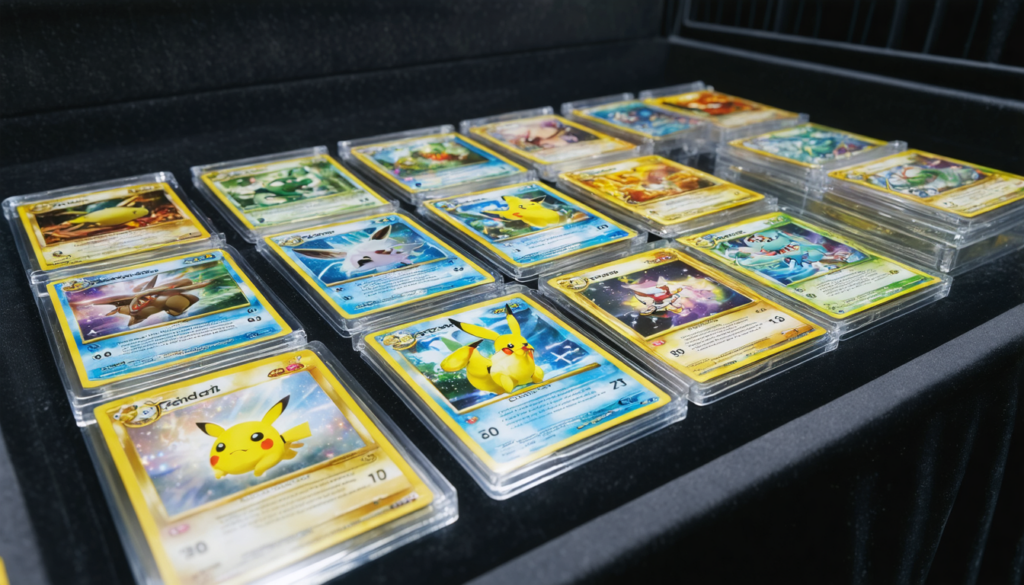
Since their creation in the 1990s, Pokémon cards have always captivated the imagination of both children and adults. Long considered mere play objects, these cards have now become collectible treasures for thousands of enthusiasts around the world. Today, the enthusiasm for rare and valuable Pokémon cards has greatly intensified, contributing to the birth of a dynamic and rapidly expanding market. Whether it’s the first limited editions from the 1990s or exclusive promotional cards, some pieces reach extraordinary values, sometimes worthy of the greatest works of art.
The phenomenon is such that many rare cards are now considered real financial investments. Some have seen their value explode, multiplying their initial price by hundreds or even thousands. Collectors closely monitor every new sale to not miss the next gem, while some investors do not hesitate to bet colossal sums to acquire these treasures. The Top 10 rarest and most expensive Pokémon cards perfectly reflects this trend, placing at the top a mythical card that has become legendary, coveted by the world’s greatest collectors.
- 1 The Pikachu Illustrator: the number one Pokémon card in auctions and rarity
- 2 The five rarest and most expensive cards after the Pikachu Illustrator
- 3 The criteria that determine the value of a rare Pokémon card
- 4 The boom of the Pokémon card market in the 2020s and its impact in 2026
- 5 How to distinguish a real Pokémon card from a counterfeit, a crucial issue for value
- 6 The complete Top 10 rarest Pokémon cards and their values in 2026
- 7 Pokémon cards as an investment: a double-edged opportunity
- 8 Future prospects for rare Pokémon cards and the trading card game market
The Pikachu Illustrator: the number one Pokémon card in auctions and rarity
Among all existing Pokémon cards, the Pikachu Illustrator undoubtedly holds the first place in terms of value and rarity. This unique card reached a record price of 5.275 million dollars during its sale to Logan Paul in 2021, a figure that makes it the ultimate jewel for collectors. Its singular story begins in 1998, when the Japanese magazine CoroCoro held an art contest. Winners were awarded this exceptional card, designed in only about twenty copies, giving the card an almost mythical exclusive character.
The value of the Pikachu Illustrator stems as much from this extreme rarity as from the illustration itself. Drawn by Atsuko Nishida, the original creator of Pikachu, the card shows the iconic character creating other Pokémon. This artistic representation is unique, giving it a timeless charm, especially since it is kept in excellent condition in most of the copies still in circulation. Currently, it is estimated that between 20 and 39 copies exist worldwide, with only 24 confirmed in circulation, a figure that continues to delight buyers and enthusiasts.
This phenomenon makes the Pikachu Illustrator much more than a simple collectible item: it is a true cultural and artistic icon in the Pokémon card universe, capable of crossing generations while remaining a symbol of prestige and exclusivity.
The five rarest and most expensive cards after the Pikachu Illustrator
If the Pikachu Illustrator is the undisputed star, there are several other cards with impressive values that complete the Top 10 rarest and most expensive Pokémon cards. These cards often come from the first editions or are from exceptional promotional campaigns, which explains their rarity and high demand. Here is a detailed list of the most notable cards just after the Pikachu Illustrator:
- Prototype Blastoise: A unique prototype transformed into a coveted object, sold for about 336,000 euros in 2021.
- Card No. 1 Trainer: This emblematic card, awarded during tournaments, is worth around 84,000 euros.
- Charizard 1st Edition: A franchise symbol, in perfect condition and graded PSA 10, it can reach a price around 50,000 euros.
- Rayquaza Gold Star: A shiny and rare card, highly sought after, valued around 18,000 euros.
- Magikarp Tamamushi University: A surprise for many, this blue fish alone can be worth nearly 16,000 euros in good condition.
These cards are sought after not only for their rarity but also for their history and importance in the Pokémon universe. Passionate collectors often compete during auctions to add these legendary pieces to their collection, thereby enhancing their prestige and value.
| Pokémon Card | Estimated Value (€) | Particularity | Number of Known Copies |
|---|---|---|---|
| Pikachu Illustrator | 5,000,000 | CoroCoro contest promo card, limited edition | 20 to 39 |
| Prototype Blastoise | 336,000 | Unique prototype, first edition | Unknown / Rare |
| No. 1 Trainer | 84,000 | Tournament trophy card | Several dozen |
| Charizard 1st Edition | 50,000 | First edition, PSA 10 essential | Thousands (but rare in perfect condition) |
| Rayquaza Gold Star | 18,000 | Shiny and rare promo card | Hundreds |
| Magikarp Tamamushi University | 16,000 | Japanese university card, very limited | Less than 50 |
The criteria that determine the value of a rare Pokémon card
Several factors come together to define the value of a Pokémon card in the collecting world. Understanding these criteria helps appreciate why some cards become extremely valuable assets while others remain at more modest prices.
Age and original limited edition
Cards from the very beginning, dating from the 1996-2000 period, are often the rarest due to their age and natural limitation. The first printings, like the famous 1st edition, had a much more restricted print run and are therefore highly sought after today.
Condition and professional grading
A card freshly taken out of its packaging is not necessarily worth as much as a twenty-year-old card in perfect condition. This is where professional grading by organizations like PSA (Professional Sports Authenticator) or PCA comes in. A card graded PSA 10 — perfect condition, no marks — can see its value multiplied by ten or more. For example, a Charizard 1st edition PSA 10 can be worth much more than an identical damaged copy. These grades have become the ultimate reference for any serious collector.
Intrinsic rarity and number of copies
Of course, the rarer a card is, the less available it is on the market. Some limited print runs, like trophy or promo cards distributed at exclusive events, were printed in only a few dozen copies. This extreme rarity is a powerful driver for price increases.
Popularity and symbolism of the Pokémon
Certain Pokémon, like Pikachu or Charizard, enjoy popularity that far exceeds the simple card game. These iconic Pokémon naturally attract higher demand, influencing the valuation of their cards. For example, the mere presence of a legendary or starter Pokémon on a card can make it much more desirable.
Promotional and exclusive nature
Finally, the promotional origin of a card plays a fundamental role. Cards distributed at tournaments, special events, or as prizes in contests are often found in very limited quantities, which drives their value up. The Pikachu Illustrator, awarded during an art contest, is a perfect example, with its exclusivity linked to the original event.
Summary of value criteria according to PSA
| PSA Grade | Condition | Impact on Value |
|---|---|---|
| 10 | Perfect | Multiplied by 10 or more |
| 9 | Almost perfect | Multiplied by 5 to 8 |
| 8 | Very good condition | Multiplied by 2 to 7 |
| 1 to 7 | Good to poor condition | Little or no impact |
The boom of the Pokémon card market in the 2020s and its impact in 2026
The Pokémon card market has experienced explosive growth over the past few years, notably boosted by the global pandemic which led many collectors to rediscover their hidden treasures. The phenomenon caused a real price surge, with sales reaching unprecedented heights. This context favored a new generation of investors attracted by the potential capital gains of these collectibles.
In 2026, the market remains dynamic and mature, with regular auctions and international transactions involving millions of euros. Platforms specialized in reselling autographed, graded, or limited edition cards have seen their traffic skyrocket, while experts now evaluate every detail, every tiny flaw that can considerably lower or raise the value of an item.
This rise in power also implies increased professionalization of market players, between passionate collectors, financial investors, and specialized resellers. Real-time information flow, evaluation platforms, and dedicated social networks now enable unprecedented transparency, making the market more accessible but also more competitive. New sales records continue to be broken, confirming the constant and growing interest in these mythical cards.
How to distinguish a real Pokémon card from a counterfeit, a crucial issue for value
With the value reached by certain Pokémon cards, counterfeits have become a real plague in the market. To avoid costly mistakes, it is essential to learn how to distinguish an authentic card from a fraudulent reproduction, a must-know subject for any serious collector or investor. Vigilance is necessary, as even experts can sometimes be fooled without thorough examination.
Several technical aspects help validate the authenticity of a card:
- Quality of paper and printing: Original cards are printed on a specific paper with high-quality inks. They have a particular grain and thickness that are difficult to faithfully replicate.
- Graphic details and colors: Colors on authentic cards are bright, uniform, and exactly respect the original shades. Fakes often show faded colors or mistakes in details.
- Back of the card: This verso is often the first clue. Good cards show a back with perfect colors, clear contours without smudges.
- Holographic elements: Original holographic cards have specific patterns and a unique shine that is difficult to reproduce.
- Presence of official stamps or edition numbers: Some rare cards bear specific marks allowing reliable identification.
For the most expensive cards, it is strongly recommended to have the card certified by experts or to buy only via known and recognized platforms to avoid any unpleasant surprises.
The complete Top 10 rarest Pokémon cards and their values in 2026
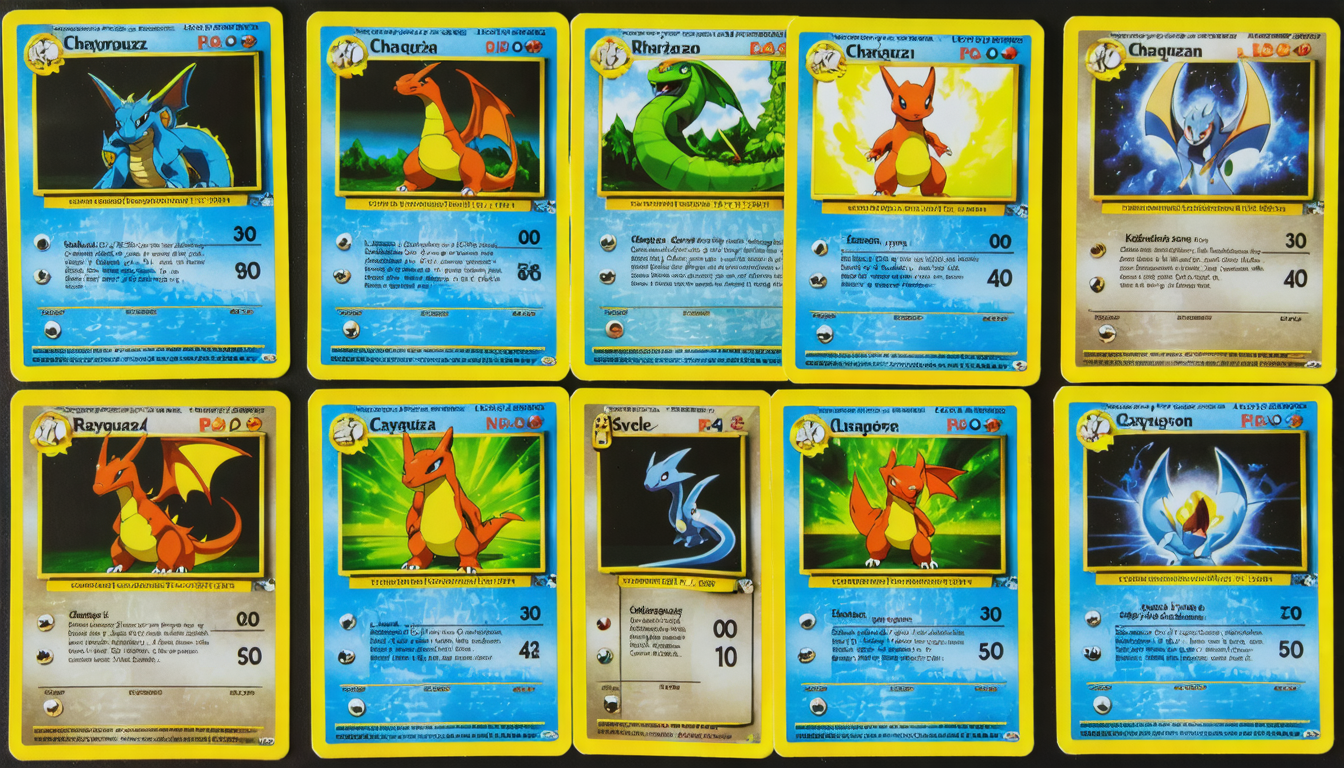
Here is the updated 2026 ranking of the 10 rarest Pokémon cards, along with their estimated market values. This Top 10 reflects rarity, origin, and popularity of each piece, symbolizing the elite of Pokémon collecting.
| Rank | Card | Estimated Value (€) | Particularities |
|---|---|---|---|
| 1 | Pikachu Illustrator | 5,000,000 | Limited edition CoroCoro contest, 20-39 copies |
| 2 | Prototype Blastoise | 336,000 | Unique prototype card from tests |
| 3 | No. 1 Trainer | 84,000 | Very rare tournament trophy |
| 4 | Charizard 1st Edition PSA 10 | 50,000 | Iconic, sought after cards in perfect condition |
| 5 | Rayquaza Gold Star | 18,000 | Shiny and limited promo |
| 6 | Magikarp Tamamushi University | 16,000 | Very rare Japanese university card |
| 7 | Eevee 1st Edition PSA 10 | 15,000 | Popular evolution, mint condition |
| 8 | The No. 2 Trainer | 14,000 | Similar trophy card to No. 1, but more common |
| 9 | Arcanine Gold Star | 12,000 | Shiny and very limited version |
| 10 | Mewtwo 1st Edition Holographic | 11,000 | Mythical, prized in antique edition |
Pokémon cards as an investment: a double-edged opportunity
Today, buying rare Pokémon cards often amounts to an alternative financial investment. This market, which combines passion and speculation, attracts both collectors and investors seeking high returns. Some cards reach such a value that they far exceed their initial cost and compare to financial assets like artworks or rare wines.
This trend raises some important questions, however. First, the market is very volatile. The value of a card can depend on many external factors: the evolution of Pokémon’s popularity, trends in the collectibles market, or even the discovery of new copies or counterfeits. Second, the costs related to certification, conservation, and securing a collection can be high and must be considered in any investment strategy.
To succeed in this field, it is essential to:
- continuously stay informed about market trends,
- favor cards graded by professionals like PSA,
- buy only from reliable and certified sellers,
- master the art of keeping cards in impeccable condition.
An emblematic example is the journey of collectors who have seen the value of their cards explode over the past ten years, sometimes multiplying their initial investment by 2500%, especially for first edition PSA 10 cards. Nevertheless, investing in Pokémon cards remains a field that demands passion, patience, and caution, under penalty of financial disappointments.
Future prospects for rare Pokémon cards and the trading card game market
As the Pokémon franchise continues to thrive worldwide, interest in rare cards does not seem to wane. The 2026 market benefits both from the nostalgia of the first players, now adults, and the massive arrival of new collectors attracted by the historical and artistic dimension of the cards. Specialized companies even diversify their services by offering certificates of authenticity accompanied by enhanced physical protections for cards, aimed at securing these precious assets.
Expectations also focus on the gradual integration of digital technologies in the trade of Pokémon cards. With the rise of NFTs (non-fungible tokens), some collectors now explore the hybrid universe where physical and digital cards coexist, opening new perspectives for virtual limited editions. This marriage of tradition and innovation could well redefine the collecting experience for the next generation.
Finally, international events, live auctions, and museum exhibitions dedicated to rare Pokémon cards amplify the notoriety around these treasures. This dynamic encourages the preservation of Pokémon heritage while stimulating competition and the desire to invest in this market.